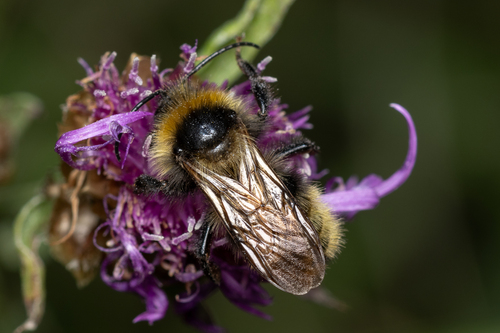
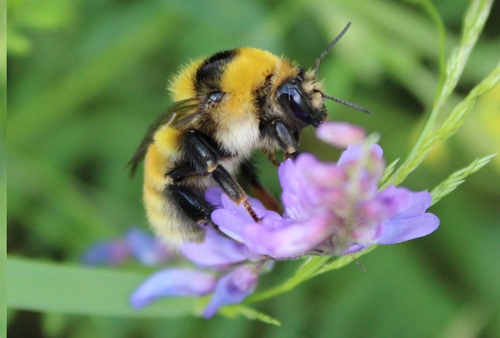
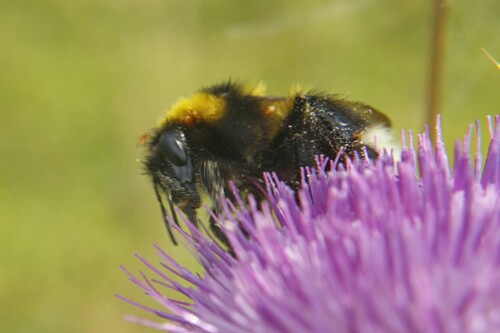
German Yellowjacket
Daily sighting probability <5% · Rare
at Novosibirsk

In 3 days ~10% in a week ~30%

5 Verified sightings at Novosibirsk
329 In all 16 parks From 2019 to 2026
September Best month
☀️ Diurnal When it's spotted

About the German Yellowjacket

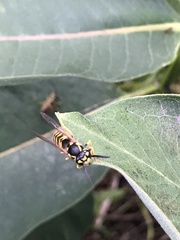
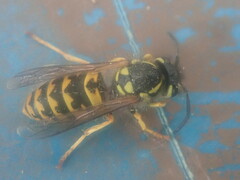
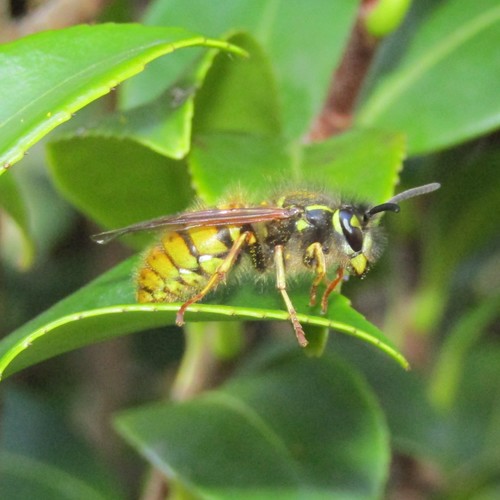
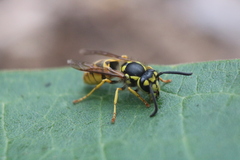
Vespula germanica, known colloquially as the European wasp, German wasp, or German yellowjacket, is a species of wasp found in much of the Northern Hemisphere, native to Europe, Northern Africa, and temperate Asia. It has spread and become well-established in many other places, including North America, South America (Argentina and Chile), Australia, South Africa, and New Zealand. German wasps are part of the family Vespidae and are sometimes mistakenly referred to as paper wasps because they build grey paper nests, although strictly speaking, paper wasps are part of the subfamily Polistinae. In North America, they are also known as yellowjackets.

Vespula germanica belongs to the genus Vespula, which includes various species of social wasps that are found throughout the Northern Hemisphere. In North America, these wasps are most commonly known as yellowjackets, but this name also applies to species within the sister genus Dolichovespula. Members of Vespula are often confused with other genera, especially the paper wasp Polistes dominula. Colonies of V. germanica share many characteristics with those of V. vulgaris (common wasp) and V. pensylvanica (western... Wikipedia →

Global Distribution

Parks Where Found

# Park Country Daily sighting probability
1 Kosciuszko National Park 🇦🇺 Australia
~20%
2 Blue Mountains National Park 🇦🇺 Australia
~20%
3 Nahuel Huapi National Park 🇦🇷 Argentina
~20%
4 Sierra Nevada National Park 🇪🇸 Spain
~20%
5 Wilsons Promontory National Park 🇦🇺 Australia
~10%
6 Grampians National Park 🇦🇺 Australia
~10%
7 Great Otway National Park 🇦🇺 Australia
~10%
8 Bavarian Forest National Park 🇩🇪 Germany
~10%
9 Snowdonia National Park 🇬🇧 United Kingdom
~10%
10 Fiordland National Park 🇳🇿 New Zealand
~10%
11 Table Mountain National Park 🇿🇦 South Africa
~10%
12 Wadden Sea National Park 🇩🇪 Germany
~10%
13 Pyrénées National Park 🇫🇷 France
~10%
14 Cévennes National Park 🇫🇷 France
<5%
15 Shenandoah National Park 🇺🇸 United States
<5%
16 Sierra de Guadarrama National Park 🇪🇸 Spain
<5%

Cities Where Found

# City Country Daily sighting probability
1 Ankara 🇹🇷 Turkey
~20%
2 Yerevan 🇦🇲 Armenia
~20%
3 Berlin 🇩🇪 Germany
~20%
4 Tehran 🇮🇷 Iran
~20%
5 Algiers 🇩🇿 Algeria
~20%
6 Jerusalem 🇮🇱 Israel
~10%
7 Istanbul 🇹🇷 Turkey
~10%
8 Athens 🇬🇷 Greece
~10%
9 Tashkent 🇺🇿 Uzbekistan
~10%
10 Toronto 🇨🇦 Canada
~10%

Before you go

What are the chances of seeing a German Yellowjacket in Novosibirsk?

Rare

Under 5% of wildlife watchers report a German Yellowjacket sighting in Novosibirsk on a given day, based on 5 verified sightings from GBIF citizen-science data. It is the 190th most-seen of the 216 insects we can rate there. Over three days the chance rises to about 10%, and over a week to about 30%, if each day is a fresh chance.

When is the best time to see a German Yellowjacket in Novosibirsk?

April–May and August–September

In those months about 10% of wildlife watchers report a German Yellowjacket in Novosibirsk on a given day, against under 5% in June–July and October–March, the lowest months.

What time of day is best to see a German Yellowjacket?

Between 1 and 4 pm

Across all the parks we cover, that three-hour window holds the most German Yellowjacket sightings with a recorded time, and about 9 in 10 of them come between 6 am and 6 pm: it is a daytime animal.

Is Novosibirsk the best place to see a German Yellowjacket?

67th of 73

Of the 73 cities where we can rate German Yellowjacket sightings, Novosibirsk ranks 67th at under 5%. The best odds are in Ankara (Turkey, about 20%), Yerevan (Armenia, about 20%) and Berlin (Germany, about 20%).

Where does the German Yellowjacket sighting chance come from?

GBIF citizen-science records

It is estimated from how often the German Yellowjacket is recorded against all the insects logged in Novosibirsk (5 verified sightings), calibrated against known sighting rates. Figures are rounded to the nearest 10% because citizen-science data supports honest approximations, not decimals, and months with records from fewer than five people show "—". How it works.

← Back to Novosibirsk