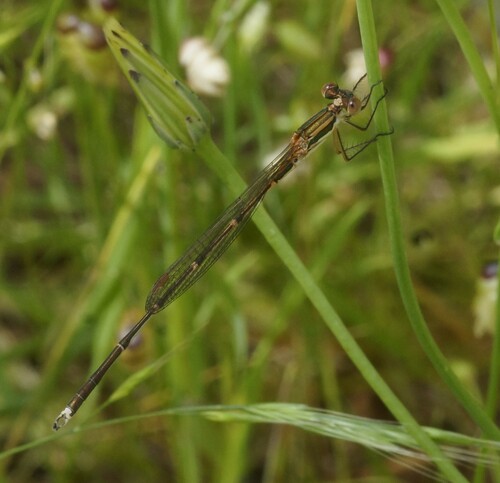
Blue Skimmer

Blue Skimmer

Orthetrum caledonicum

Daily sighting probability ~20% · Possible
at Perth

In 3 days ~60% in a week ~80%

254 Verified sightings at Perth
309 In all 12 parks From 2019 to 2026
February Best month
☀️ Diurnal When it's spotted

About the Blue Skimmer

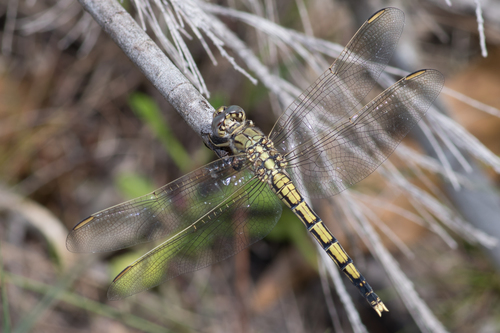
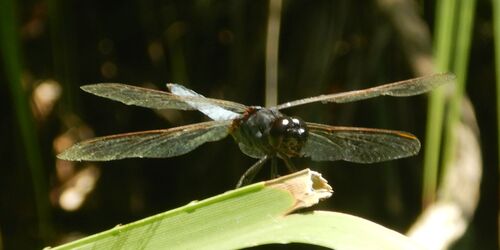
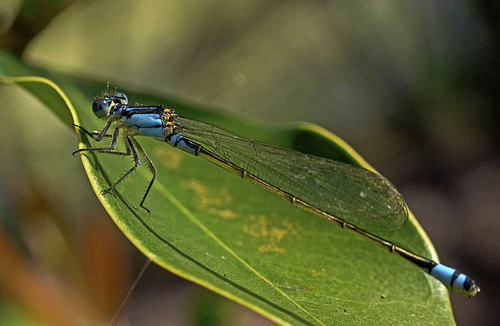
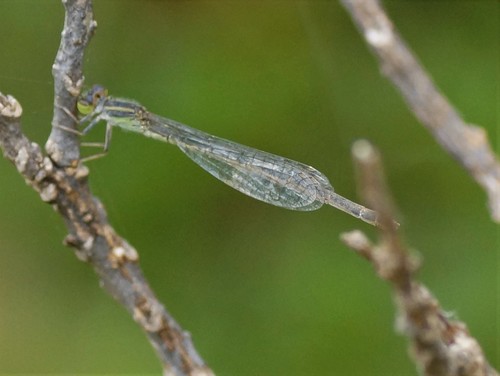
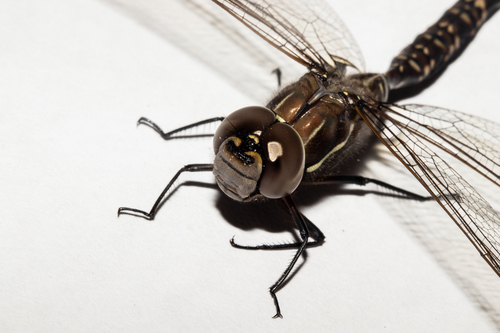
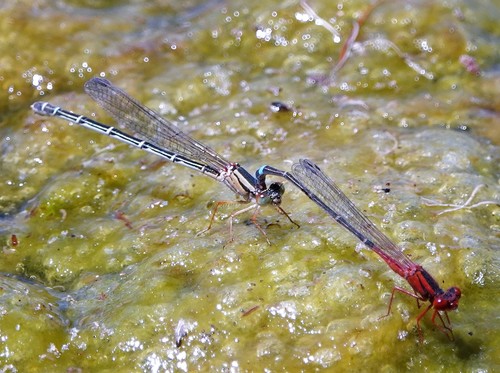
Orthetrum caledonicum, the blue skimmer, is a common Australian dragonfly in the family Libellulidae. Males have a powder blue thorax and abdomen pruinescent blue when mature. The females are brownish grey in colour while the teneral are yellow with black markings. They are medium in size, with a body length of 4.5 cm (2 in) and a wingspan of 7 cm (3 in).

The species is widespread throughout mainland Australia and extending to Tasmania. It is also found in New Guinea, New Caledonia, Loyalty Islands and Lesser Sunda Islands. It inhabits a range of still and flowing water habitats including temporary waters.

The genus name Orthetrum is derived from the Greek ὀρθός (orthos, "straight") and ἦτρον (ētron, "abdomen"), referring to the parallel-sided abdomen of the genus. The species name caledonicum is named for New Caledonia, where the original specimens of the species were collected.

Media related to Orthetrum caledonicum at Wikimedia Commons Wikipedia →

Global Distribution

Parks Where Found

# Park Country Daily sighting probability
1 Nitmiluk National Park 🇦🇺 Australia
~40%
2 Lamington National Park 🇦🇺 Australia
~30%
3 Hattah-Kulkyne National Park 🇦🇺 Australia
~30%
4 Flinders Ranges National Park 🇦🇺 Australia
~30%
5 Springbrook National Park 🇦🇺 Australia
~20%
6 Kakadu National Park 🇦🇺 Australia
~20%
7 Litchfield National Park 🇦🇺 Australia
~10%
8 Grampians National Park 🇦🇺 Australia
~10%
9 Royal National Park 🇦🇺 Australia
~10%
10 Blue Mountains National Park 🇦🇺 Australia
~10%
11 Booderee National Park 🇦🇺 Australia
~10%
12 Great Otway National Park 🇦🇺 Australia
~10%

Cities Where Found

# City Country Daily sighting probability
1 Brisbane 🇦🇺 Australia
~20%
2 Perth 🇦🇺 Australia
~20%
3 Sydney 🇦🇺 Australia
~10%
4 Melbourne 🇦🇺 Australia
~10%

Before you go

What are the chances of seeing a Blue Skimmer in Perth?

Possible

About 20% of wildlife watchers report a Blue Skimmer sighting in Perth on a given day, based on 254 verified sightings from GBIF citizen-science data. It is the most-seen of the 275 insects we can rate there. Over three days the chance rises to about 60%, and over a week to about 80%, if each day is a fresh chance.

When is the best time to see a Blue Skimmer in Perth?

February and March

In those months about 40% of wildlife watchers report a Blue Skimmer in Perth on a given day, against under 5% in June to August, the lowest months. Those are among Perth's driest months, with about 20 mm of rain a month against 130 mm in July.

What time of day is best to see a Blue Skimmer?

Between 10 am and 1 pm

Across all the parks we cover, that three-hour window holds the most Blue Skimmer sightings with a recorded time, and about 9 in 10 of them come between 6 am and 6 pm: it is a daytime animal.

Is Perth the best place to see a Blue Skimmer?

Among the best

Of the 4 cities where we can rate Blue Skimmer sightings, Perth ranks 2nd at about 20%, level with the leaders once rounded. The best odds are in Brisbane (Australia, about 20%).

Which relatives of the Blue Skimmer live in Perth?

Same family: Libellulidae

The closest relatives of the Blue Skimmer that you can see in Perth (family Libellulidae, Skimmers) are Wandering Percher (about 20%) and Scarlet Percher (about 10%), with each one's daily chance of a sighting.

Where does the Blue Skimmer sighting chance come from?

GBIF citizen-science records

It is estimated from how often the Blue Skimmer is recorded against all the insects logged in Perth (254 verified sightings), calibrated against known sighting rates. Figures are rounded to the nearest 10% because citizen-science data supports honest approximations, not decimals, and months with records from fewer than five people show "—". How it works.

← Back to Perth