American Snout

American Snout

Libytheana carinenta

Daily sighting probability ~10% · With luck
at Phoenix

In 3 days ~40% in a week ~70%

147 Verified sightings at Phoenix
1,056 In all 17 parks From 2019 to 2026
November Best month
☀️ Diurnal When it's spotted

About the American Snout

Libytheana carinenta also called the American snout butterfly or common snout butterfly is a member of the subfamily Libytheinae in the brush-footed butterfly family, Nymphalidae. This species is found in both North and South America. The larval host plants are Celtis species on which the eggs are laid singly. Massive migrations of this species often attract attention in the Texas and Mexican newspapers.

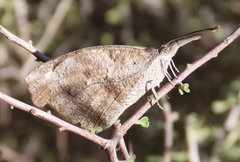
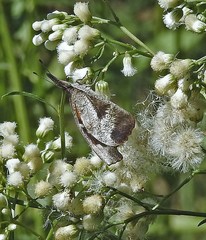
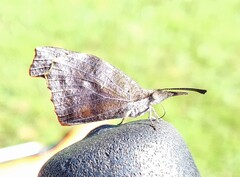
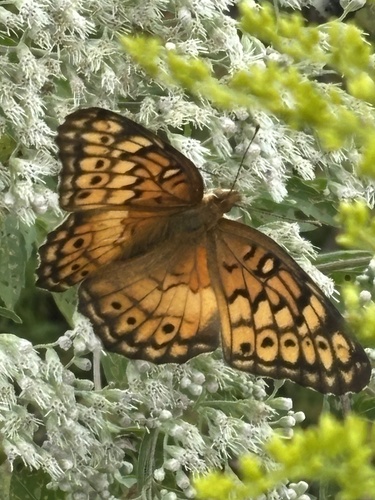
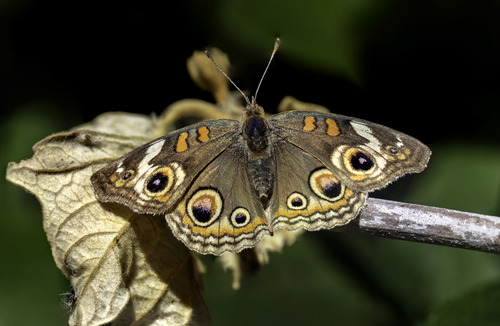
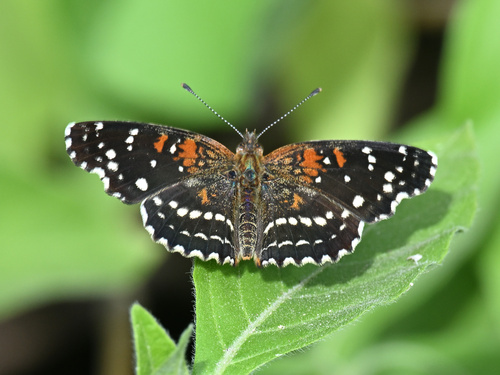
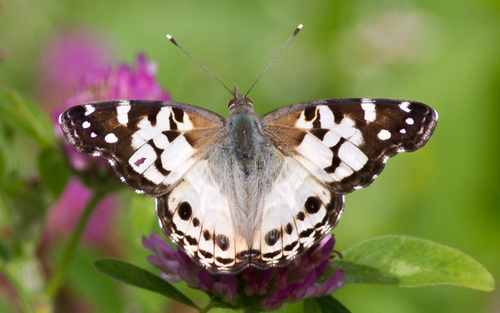
Snout butterflies have prominent elongated mouthparts (labial palpi) which, in concert with the antennae, give the appearance of the petiole (stem) of a dead leaf. Snouts often take advantage of this superb camouflage by hanging upside down under a twig, making them nearly invisible. Wings are patterned black-brown with white and orange markings. The forewings have a distinctive squared off, hook-like (falcate) tip.

The caterpillars appear humpbacked, having a small head, swollen first and second abdominal segments, and a last abdominal segment which is tapered and rounded. They are dark green with yellow stripes along the top and sides of the body, and have two black tubercles on the top of the thorax. Their food is the common hackberry (Celtis occidentalis) tree... Wikipedia →
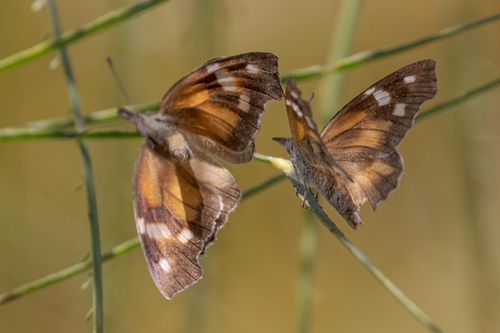
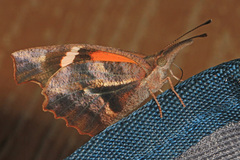
Global Distribution

Parks Where Found

# Park Country Daily sighting probability
1 Saguaro National Park 🇺🇸 United States
~30%
2 Big Bend National Park 🇺🇸 United States
~30%
3 Congaree National Park 🇺🇸 United States
~30%
4 Point Pelee National Park 🇨🇦 Canada
~20%
5 Cumbres de Monterrey National Park 🇲🇽 Mexico
~20%
6 Iguaçu National Park 🇧🇷 Brazil
~10%
7 Iguazú National Park 🇦🇷 Argentina
~10%
8 Joshua Tree National Park 🇺🇸 United States
~10%
9 Grand Canyon National Park 🇺🇸 United States
~10%
10 Iberá National Park 🇦🇷 Argentina
~10%
11 Death Valley National Park 🇺🇸 United States
~10%
12 Padre Island National Seashore 🇺🇸 United States
~10%
13 Zion National Park 🇺🇸 United States
~10%
14 Great Smoky Mountains National Park 🇺🇸 United States
~10%
15 Shenandoah National Park 🇺🇸 United States
~10%
16 Bahía de Loreto National Park 🇲🇽 Mexico
~10%
17 Calakmul Biosphere Reserve 🇲🇽 Mexico
~10%

Cities Where Found

# City Country Daily sighting probability
1 Torreón 🇲🇽 México
~20%
2 Monterrey 🇲🇽 México
~20%
3 Mesa 🇺🇸 United States
~20%
4 Austin 🇺🇸 United States
~20%
5 San Antonio 🇺🇸 United States
~20%
6 San Luis Potosí 🇲🇽 México
~20%
7 Toluca 🇲🇽 México
~10%
8 Phoenix 🇺🇸 United States
~10%
9 Cordoba 🇦🇷 Argentina
~10%
10 Dallas 🇺🇸 United States
~10%

Before you go

What are the chances of seeing an American Snout in Phoenix?

With luck

About 10% of wildlife watchers report an American Snout sighting in Phoenix on a given day, based on 147 verified sightings from GBIF citizen-science data. It is the 10th most-seen of the 264 insects we can rate there. Over three days the chance rises to about 40%, and over a week to about 70%, if each day is a fresh chance.

When is the best time to see an American Snout in Phoenix?

October and November

In those months about 30% of wildlife watchers report an American Snout in Phoenix on a given day, against under 5% in May to July, the lowest months.

What time of day is best to see an American Snout?

Between 11 am and 2 pm

Across all the parks we cover, that three-hour window holds the most American Snout sightings with a recorded time, and nearly all of them come between 6 am and 6 pm: it is a daytime animal.

Is Phoenix the best place to see an American Snout?

8th of 24

Of the 24 cities where we can rate American Snout sightings, Phoenix ranks 8th at about 10%. The best odds are in Torreón (México, about 20%), Monterrey (México, about 20%) and Mesa (United States, about 20%).

Which relatives of the American Snout live in Phoenix?

Same family: Nymphalidae

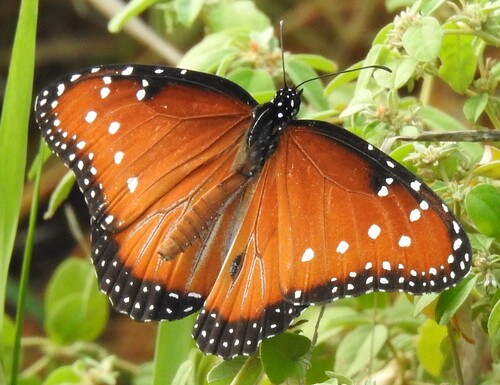
The closest relatives of the American Snout that you can see in Phoenix (family Nymphalidae, Brush-footed Butterflies) are Queen (about 40%), Monarch (about 20%) and Gulf Fritillary (about 10%), with each one's daily chance of a sighting.

Where does the American Snout sighting chance come from?

GBIF citizen-science records

It is estimated from how often the American Snout is recorded against all the insects logged in Phoenix (147 verified sightings), calibrated against known sighting rates. Figures are rounded to the nearest 10% because citizen-science data supports honest approximations, not decimals, and months with records from fewer than five people show "—". How it works.

← Back to Phoenix