

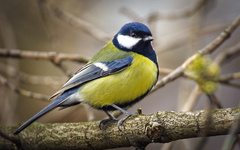
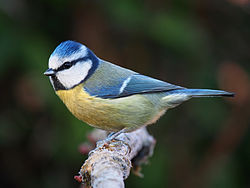


Completed
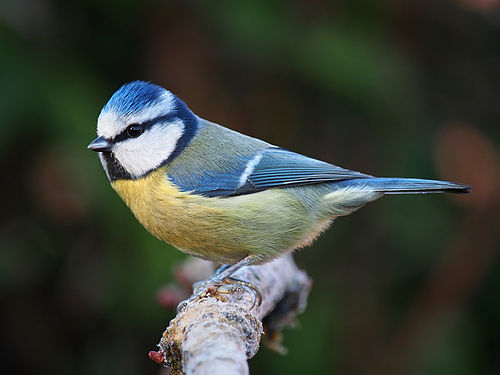

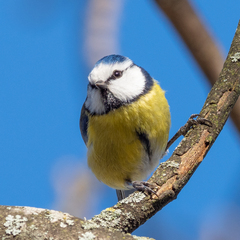



Blue Tit
Cyanistes caeruleus
Silhouette: Wouter Koch · PhyloPic
- KingdomAnimalia (Animals)
- PhylumChordata (Chordates)
- ClassAves (Birds)
- OrderPasseriformes (Perching Birds)
- FamilyParidae (Tits, Chickadees, and Titmice)
- GenusCyanistes (Blue and Azure Tits)
- SpeciesCyanistes caeruleus (Blue Tit)
In 3 days ~50% in a week ~80%
1,068 Verified sightings at Porto
19,213 In all 27 parks From 2019 to 2026
December Best month
☀️ Diurnal When it's spotted
About the Blue Tit
The Eurasian blue tit (Cyanistes caeruleus) is a small passerine bird in the tit family, Paridae. It is easily recognised by its blue and yellow plumage and small size. The Eurasian blue tit is a widespread and common resident breeder throughout temperate and subarctic Europe and parts of western Asia. It inhabits deciduous or mixed woodlands, often with a high proportion of oak, and it is usually non-migratory. They typically nest in tree holes but readily adapt to using nest boxes when necessary. Their main rivals for nests and in the search for food are the larger, somewhat more common great tits (Parus major).
The Eurasian blue tit's diet consists mainly of insects and spiders. Outside of the breeding season, they also eat seeds and other plant-based foods. These birds are known for their acrobatic abilities; they can grip the outermost branches of trees and shrubs and hang upside down while searching for food.
The Eurasian blue tit was first described by Carl Linnaeus in 1758 in the 10th edition of his Systema Naturae under the binomial name Parus caeruleus. Parus is the classical Latin for a tit and caeruleus is the Latin for dark blue or caerulean. The type locality... Wikipedia →
Recent sightings of Blue Tit in Porto
LIVEiNaturalistGlobal Distribution
Parks Where Found
Cities Where Found
| # | City | Country | Daily sighting probability |
|---|---|---|---|
| 1 | Manchester | 🇬🇧 United Kingdom | |
| 2 | Moscow | 🇷🇺 Russia | |
| 3 | Birmingham | 🇬🇧 United Kingdom | |
| 4 | Cologne | 🇩🇪 Germany | |
| 5 | Prague | 🇨🇿 Czechia | |
| 6 | Sofia | 🇧🇬 Bulgaria | |
| 7 | Warsaw | 🇵🇱 Poland | |
| 8 | Berlin | 🇩🇪 Germany | |
| 9 | Paris | 🇫🇷 France | |
| 10 | Stockholm | 🇸🇪 Sweden |
Zoos & Centres Where Found
| # | Zoo / Centre | Country | |
|---|---|---|---|
| 1 | Alpenzoo Innsbruck | 🇦🇹 Austria | |
| 2 | Ogród Zoologiczny w Katowicach | 🇵🇱 Poland |
Closest Relatives at Porto


Before you go
What are the chances of seeing a Blue Tit in Porto?
Possible
About 20% of wildlife watchers report a Blue Tit sighting in Porto on a given day, based on 1,068 verified sightings from GBIF citizen-science data. It is the 30th most-seen of the 175 birds we can rate there. Over three days the chance rises to about 50%, and over a week to about 80%, if each day is a fresh chance.
When is the best time to see a Blue Tit in Porto?
April and December–February
In those months about 30% of wildlife watchers report a Blue Tit in Porto on a given day, against about 10% in June and July, the lowest months.
What time of day is best to see a Blue Tit?
Between 8 and 11 am
Across all the parks we cover, that three-hour window holds the most Blue Tit sightings with a recorded time, and about 9 in 10 of them come between 6 am and 6 pm: it is a daytime animal.
Is Porto the best place to see a Blue Tit?
46th of 55
Of the 55 cities where we can rate Blue Tit sightings, Porto ranks 46th at about 20%. The best odds are in Manchester (United Kingdom, about 80%), Moscow (Russia, about 80%) and Birmingham (United Kingdom, about 80%).
Which relatives of the Blue Tit live in Porto?
Same family: Paridae
The closest relatives of the Blue Tit that you can see in Porto (family Paridae, Tits, Chickadees, and Titmice) are Coal Tit (about 40%) and Great Tit (about 40%), with each one's daily chance of a sighting.
Where does the Blue Tit sighting chance come from?
GBIF citizen-science records
It is estimated from how often the Blue Tit is recorded against all the birds logged in Porto (1,068 verified sightings), calibrated against known sighting rates. Figures are rounded to the nearest 10% because citizen-science data supports honest approximations, not decimals, and months with records from fewer than five people show "—". How it works.
