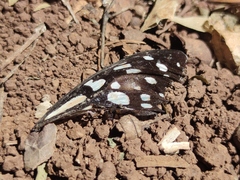
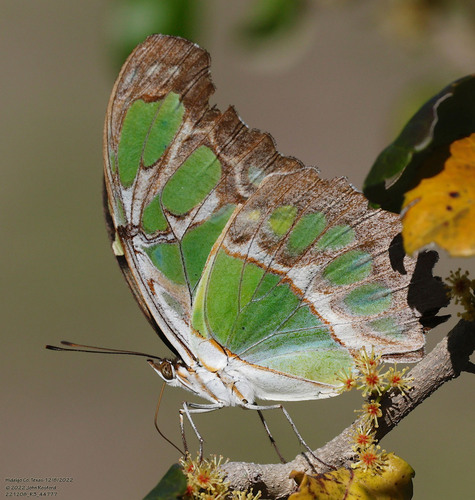
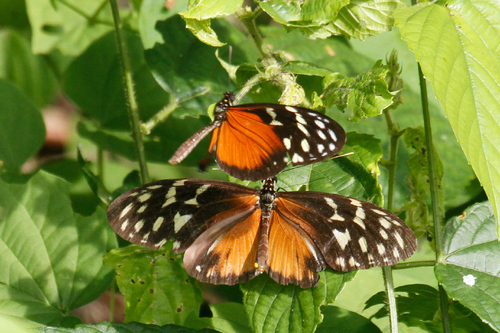
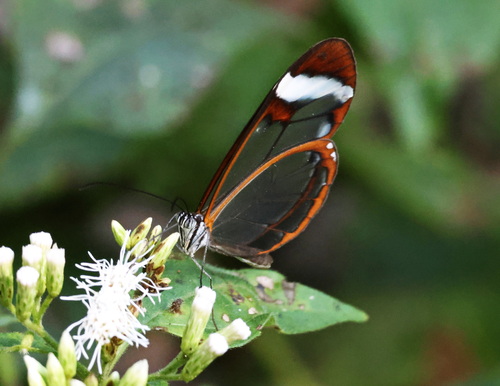
Blue Monarch

Blue Monarch

Tirumala petiverana

Daily sighting probability ~20% · Possible
at San José

In 3 days ~40% in a week ~70%

75 Verified sightings at San José
399 In all 24 parks From 2019 to 2026
December Best month
☀️ Diurnal When it's spotted

About the Blue Monarch

Tirumala petiverana, the blue monarch, is a butterfly of the family Nymphalidae. It is widespread in tropical and subtropical Sub-Saharan Africa. Their habitat consists of Afromontane, lowland and riverine forests as well as moist savanna.

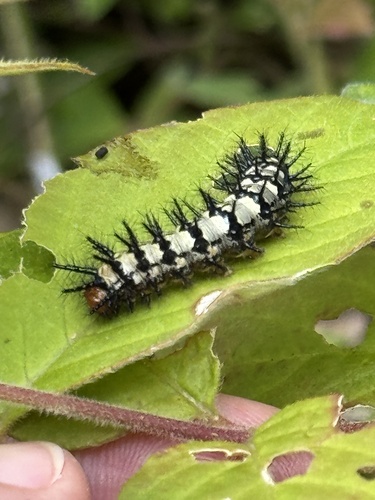
The wingspan is 60–75 mm. There is one generation per year. Adults are on wing from February to May (with peaks in April) in Zimbabwe. The larvae feed on Pergularia extensa, Pergularia daemia, Daemia, Hoya, and Marsdenia rubicunda.

Seitz, A. Die Gross-Schmetterlinge der Erde 13: Die Afrikanischen Tagfalter. Plate XIII 25 Wikipedia →

Global Distribution

Parks Where Found

# Park Country Daily sighting probability
1 Arrecifes de Cozumel National Park 🇲🇽 Mexico
~40%
2 Pico Bonito National Park 🇭🇳 Honduras
~20%
3 Biotopo Cerro Cahuí 🇬🇹 Guatemala
~20%
4 Cahuita National Park 🇨🇷 Costa Rica
~20%
5 Lago de Yojoa 🇭🇳 Honduras
~20%
6 Sian Ka'an Biosphere Reserve 🇲🇽 Mexico
~20%
7 Gandoca-Manzanillo Wildlife Refuge 🇨🇷 Costa Rica
~20%
8 Murchison Falls National Park 🇺🇬 Uganda
~20%
9 Soberanía National Park 🇵🇦 Panama
~20%
10 Chagres National Park 🇵🇦 Panama
~20%
11 Tortuguero National Park 🇨🇷 Costa Rica
~20%
12 Calakmul Biosphere Reserve 🇲🇽 Mexico
~20%
13 Tenorio Volcano National Park 🇨🇷 Costa Rica
~20%
14 Piedras Blancas National Park 🇨🇷 Costa Rica
~10%
15 Cerro Azul Meámbar National Park 🇭🇳 Honduras
~10%
16 Cabo Blanco Absolute Nature Reserve 🇨🇷 Costa Rica
~10%
17 Braulio Carrillo National Park 🇨🇷 Costa Rica
~10%
18 Bastimentos Island National Marine Park 🇵🇦 Panama
~10%
19 Manuel Antonio National Park 🇨🇷 Costa Rica
~10%
20 Parque Natural Metropolitano 🇵🇦 Panama
~10%
21 Corcovado National Park 🇨🇷 Costa Rica
~10%
22 Monteverde Cloud Forest Reserve 🇨🇷 Costa Rica
~10%
23 La Amistad International Park (Panama) 🇵🇦 Panama
~10%
24 Arenal Volcano National Park 🇨🇷 Costa Rica
~10%

Cities Where Found

# City Country Daily sighting probability
1 Kigali 🇷🇼 Rwanda
~20%
2 San José 🇨🇷 Costa Rica
~20%
3 San Pedro Sula 🇭🇳 Honduras
~10%
4 San Salvador 🇸🇻 El Salvador
~10%
5 Nairobi 🇰🇪 Kenya
~10%
6 Panama City 🇵🇦 Panama
~10%

Before you go

What are the chances of seeing a Blue Monarch in San José?

Possible

About 20% of wildlife watchers report a Blue Monarch sighting in San José on a given day, based on 75 verified sightings from GBIF citizen-science data. It is the 19th most-seen of the 239 insects we can rate there. Over three days the chance rises to about 40%, and over a week to about 70%, if each day is a fresh chance.

When is the best time to see a Blue Monarch in San José?

April–September and December–February

In those months about 20% of wildlife watchers report a Blue Monarch in San José on a given day, against about 10% in March and October–November, the lowest months.

What time of day is best to see a Blue Monarch?

Between 9 am and noon

Across all the parks we cover, that three-hour window holds the most Blue Monarch sightings with a recorded time, and about 9 in 10 of them come between 6 am and 6 pm: it is a daytime animal.

Is San José the best place to see a Blue Monarch?

Among the best

Of the 6 cities where we can rate Blue Monarch sightings, San José ranks 2nd at about 20%, level with the leaders once rounded. The best odds are in Kigali (Rwanda, about 20%).

Which relatives of the Blue Monarch live in San José?

Same family: Nymphalidae

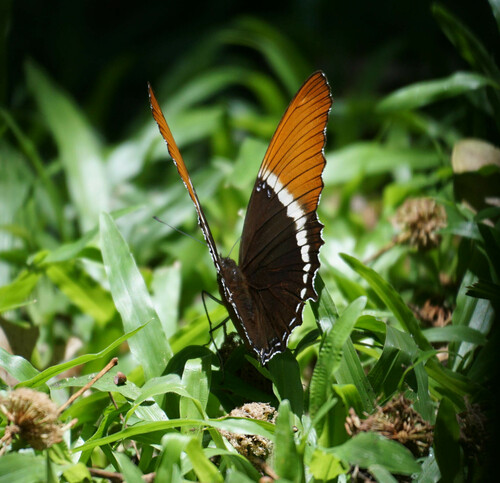
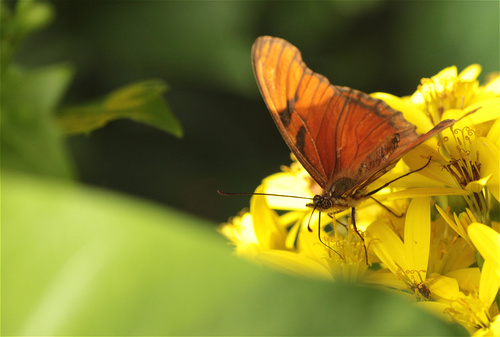
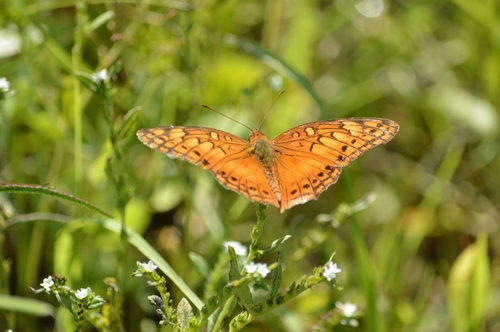
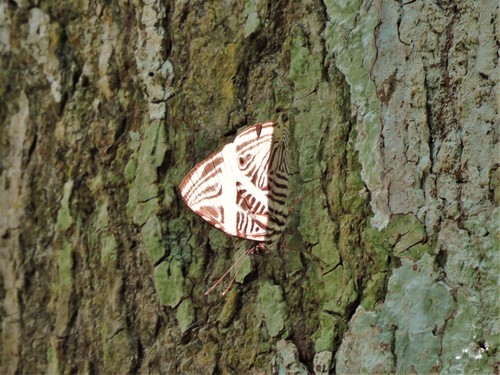
The closest relatives of the Blue Monarch that you can see in San José (family Nymphalidae, Brush-footed Butterflies) are Monarch (about 30%), Banded Peacock (about 30%) and Rusty-Tipped Page (about 30%), with each one's daily chance of a sighting.

Where does the Blue Monarch sighting chance come from?

GBIF citizen-science records

It is estimated from how often the Blue Monarch is recorded against all the insects logged in San José (75 verified sightings), calibrated against known sighting rates. Figures are rounded to the nearest 10% because citizen-science data supports honest approximations, not decimals, and months with records from fewer than five people show "—". How it works.

← Back to San José