



Completed

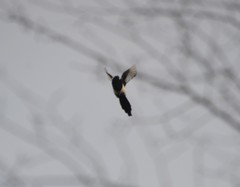


Eurasian Magpie
Pica pica
Silhouette: PhyloPic
- KingdomAnimalia (Animals)
- PhylumChordata (Chordates)
- ClassAves (Birds)
- OrderPasseriformes (Perching Birds)
- FamilyCorvidae (Crows, Jays, and Magpies)
- GenusPica (True Magpies)
- SpeciesPica pica (Eurasian Magpie)
178 Verified sightings at Tashkent
16,222 In all 28 parks From 2019 to 2026
May Best month
☀️ Diurnal When it's spotted
About the Eurasian Magpie
The Eurasian magpie or common magpie (Pica pica) is a resident breeding bird throughout the northern part of the Eurasian continent. It is one of several birds in the crow family (corvids) that are designated as magpies, and it belongs to the Holarctic radiation of "monochrome" magpies. In Europe, the term "magpie" is used by English speakers as a synonym for the Eurasian magpie; the only other species of magpie in Europe is the Iberian magpie (Cyanopica cooki), which is restricted to the Iberian Peninsula. Despite sharing a name and similar colouration, they are not closely related to the Australian magpie, which is an artamid, only sharing the same clade (Corvides).
The Eurasian magpie is one of the most intelligent birds. The expansion of its nidopallium is approximately the same in its relative size as the brains of chimpanzees, gorillas, orangutans and humans. It is one of the few bird species known to pass the mirror test.
The magpie was first described and illustrated by the Swiss naturalist Conrad Gessner in his Historiae animalium of 1555. In 1758, Linnaeus included the species in the 10th edition of his Systema Naturae under the binomial name... Wikipedia →
Recent sightings of Eurasian Magpie in Tashkent
LIVEiNaturalistGlobal Distribution
Parks Where Found
Zoos & Centres Where Found
| # | Zoo / Centre | Country | |
|---|---|---|---|
| 1 | Moscow Zoo | 🇷🇺 Russia | |
| 2 | Barcelona Zoo | 🇪🇸 Spain | |
| 3 | Flamingo Land Resort | 🇬🇧 United Kingdom | |
| 4 | Wildpark Schwarze Berge | 🇩🇪 Germany | |
| 5 | Edinburgh Zoo | 🇬🇧 United Kingdom | |
| 6 | Zoo Aquarium de Madrid | 🇪🇸 Spain | |
| 7 | Aquarama Barcelona | 🇪🇸 Spain | |
| 8 | Budakeszi Game Preserve | 🇭🇺 Hungary | |
| 9 | Bois de la Bâtie | 🇨🇭 Switzerland | |
| 10 | Blåvand Zoo | 🇩🇰 Denmark | |
| 11 | Belgrade Zoo | 🇷🇸 Serbia | |
| 12 | Leintalzoo Schwaigern | 🇩🇪 Germany | |
| 13 | Heimatnaturgarten | 🇩🇪 Germany |
Closest Relatives at Tashkent







Before you go
What are the chances of seeing a Eurasian Magpie in Tashkent?
Very likely
Over 90% of wildlife watchers report a Eurasian Magpie sighting in Tashkent on a given day, based on 178 verified sightings from GBIF citizen-science data. It is the most-seen of the 40 birds we can rate there.
When is the best time to see a Eurasian Magpie in Tashkent?
January–May and August–November
In those months over 90% of wildlife watchers report a Eurasian Magpie in Tashkent on a given day, against about 90% in June and July, the lowest months. December has too few records to rate.
What time of day is best to see a Eurasian Magpie?
Between 10 am and 1 pm
Across all the parks we cover, that three-hour window holds the most Eurasian Magpie sightings with a recorded time, and nearly all of them come between 6 am and 6 pm: it is a daytime animal.
Is Tashkent the best place to see a Eurasian Magpie?
Yes
Of the 65 cities where we can rate Eurasian Magpie sightings, Tashkent has the highest daily chance: over 90%. Next come Sincan (Turkey, over 90%) and Kharkiv (Ukraine, over 90%).
Which relatives of the Eurasian Magpie live in Tashkent?
Same family: Corvidae
The closest relatives of the Eurasian Magpie that you can see in Tashkent (family Corvidae, Crows, Jays, and Magpies) are Rook (about 30%), Carrion Crow (about 20%) and Hooded Crow (about 20%), with each one's daily chance of a sighting.
Where does the Eurasian Magpie sighting chance come from?
GBIF citizen-science records
It is estimated from how often the Eurasian Magpie is recorded against all the birds logged in Tashkent (178 verified sightings), calibrated against known sighting rates. Figures are rounded to the nearest 10% because citizen-science data supports honest approximations, not decimals, and months with records from fewer than five people show "—". How it works.
