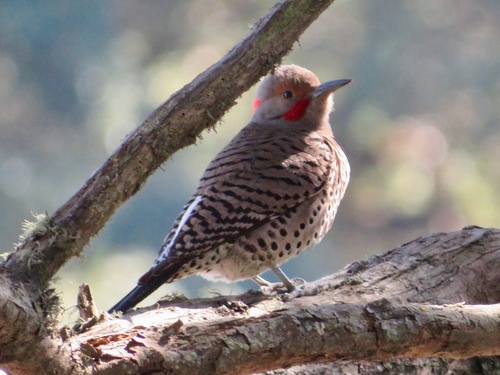
Northern Flicker

Northern Flicker

Colaptes auratus

Silhouette: Andy Wilson · PhyloPic

LCLeast ConcernNTVUENCR
Daily sighting probability ~40% · Likely
at Congaree National Park

In 3 days ~80% in a week >90%

629 Verified sightings at Congaree National Park From 2019 to 2026
44,079 In all 42 parks
October Best month
☀️ Diurnal When it's spotted

About the Northern Flicker

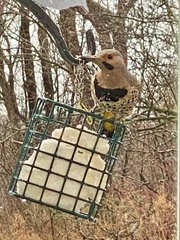
The northern flicker or common flicker (Colaptes auratus) is a medium-sized bird of the woodpecker family. It is native to most of North America, parts of Central America, Cuba, and the Cayman Islands, and is one of the few woodpecker species that migrate. Over 100 common names for the northern flicker are known, including yellowhammer (not to be confused with the Eurasian yellowhammer (Emberiza citrinella)), clape, gaffer woodpecker, harry-wicket, heigh-ho, wake-up, walk-up, wick-up, yarrup, and gawker bird. Many of these names derive from attempts to imitate some of its calls.

The English naturalist Mark Catesby described and illustrated the northern flicker in his book The Natural History of Carolina, Florida and the Bahama Islands which was published between 1729 and 1732. Catesby used the English name "Gold-winged Wood-pecker" and the Latin Picus major alis aureis. When in 1758 the Swedish naturalist Carl Linnaeus updated his Systema Naturae for its 10th edition, he included the northern flicker, coined the binomial name Cuculus auratus for it, and cited Catesby's book.

The specific epithet auratus is a Latin word meaning "gilded" or "ornamented with gold". The... Wikipedia →
Sounds

Call1:02

United States · 2024

© Manuel Sánchez-Nivicela · XC1148842 · CC BY-NC-ND 4.0

Song0:26

United States · 2025

© Ed Pandolfino · XC1007124 · CC BY-NC-SA 4.0

Begging call1:03

United States · 2012

© Paul Driver · XC786154 · CC BY-NC-SA 4.0

Global Distribution

Parks Where Found

# Park Country Daily sighting probability
1 Point Pelee National Park 🇨🇦 Canada
~60%
2 Yosemite National Park 🇺🇸 United States
~50%
3 Rocky Mountain National Park 🇺🇸 United States
~50%
4 Zion National Park 🇺🇸 United States
~50%
5 Guadalupe Mountains National Park 🇺🇸 United States
~50%
6 Congaree National Park 🇺🇸 United States
~40%
7 Voyageurs National Park 🇺🇸 United States
~40%
8 Sequoia and Kings Canyon National Parks 🇺🇸 United States
~40%
9 Grand Teton National Park 🇺🇸 United States
~40%
10 Redwood National Park 🇺🇸 United States
~40%
11 Glacier National Park 🇺🇸 United States
~40%
12 Isle Royale National Park 🇺🇸 United States
~40%
13 Grand Canyon National Park 🇺🇸 United States
~30%
14 Kluane National Park 🇨🇦 Canada
~30%
15 Yellowstone National Park 🇺🇸 United States
~30%
16 Olympic National Park 🇺🇸 United States
~30%
17 Pacific Rim National Park Reserve 🇨🇦 Canada
~30%
18 Cape Breton Highlands National Park 🇨🇦 Canada
~30%
19 Riding Mountain National Park 🇨🇦 Canada
~30%
20 Shenandoah National Park 🇺🇸 United States
~30%
21 Wrangell-St. Elias National Park 🇺🇸 United States
~30%
22 Great Bear Rainforest 🇨🇦 Canada
~20%
23 Death Valley National Park 🇺🇸 United States
~20%
24 Jasper National Park 🇨🇦 Canada
~20%
25 Acadia National Park 🇺🇸 United States
~20%
26 Gros Morne National Park 🇨🇦 Canada
~20%
27 Channel Islands National Park 🇺🇸 United States
~20%
28 Merritt Island National Wildlife Refuge 🇺🇸 United States
~20%
29 Great Smoky Mountains National Park 🇺🇸 United States
~20%
30 Wood Buffalo National Park 🇨🇦 Canada
~20%
31 Elk Island National Park 🇨🇦 Canada
~20%
32 Banff National Park 🇨🇦 Canada
~20%
33 Big Cypress National Preserve 🇺🇸 United States
~10%
34 Joshua Tree National Park 🇺🇸 United States
~10%
35 Saguaro National Park 🇺🇸 United States
~10%
36 Big Bend National Park 🇺🇸 United States
~10%
37 Badlands National Park 🇺🇸 United States
~10%
38 Cumbres de Monterrey National Park 🇲🇽 Mexico
~10%
39 Everglades National Park 🇺🇸 United States
~10%
40 Ciénaga de Zapata 🇨🇺 Cuba
~10%
41 Reserva de la Biosfera Mariposa Monarca 🇲🇽 Mexico
<5%
42 Denali National Park 🇺🇸 United States
<5%

Cities Where Found

# City Country Daily sighting probability
1 Calgary 🇨🇦 Canada
~80%
2 Denver 🇺🇸 United States
~80%
3 Portland 🇺🇸 United States
~70%
4 Vancouver 🇨🇦 Canada
~60%
5 Seattle 🇺🇸 United States
~60%
6 Salt Lake City 🇺🇸 United States
~50%
7 Sacramento 🇺🇸 United States
~50%
8 Philadelphia 🇺🇸 United States
~50%
9 Washington 🇺🇸 United States
~40%
10 Chicago 🇺🇸 United States
~40%

Zoos & Centres Where Found

# Zoo / Centre Country
1 Lincoln Park Zoo 🇺🇸 United States In captivity

Before you go

What are the chances of seeing a Northern Flicker in Congaree National Park?

Likely

About 40% of wildlife watchers report a Northern Flicker sighting in Congaree National Park on a given day, based on 629 verified sightings from GBIF citizen-science data from 2019 to 2026. It is the 18th most-seen of the 148 birds we can rate there. Over three days the chance rises to about 80%, and over a week to over 90%, if each day is a fresh chance.

When is the best time to see a Northern Flicker in Congaree National Park?

October

In that month about 90% of wildlife watchers report a Northern Flicker in Congaree National Park on a given day, against about 10% in April to August, the lowest months.

What time of day is best to see a Northern Flicker?

Between 9 am and noon

Across all the parks we cover, that three-hour window holds the most Northern Flicker sightings with a recorded time, and about 9 in 10 of them come between 6 am and 6 pm: it is a daytime animal.

Which relatives of the Northern Flicker live in Congaree National Park?

Same family: Picidae

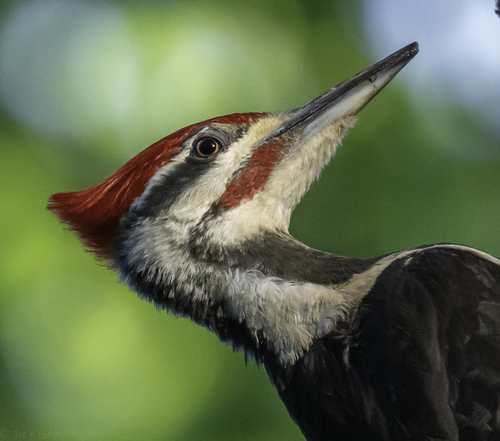
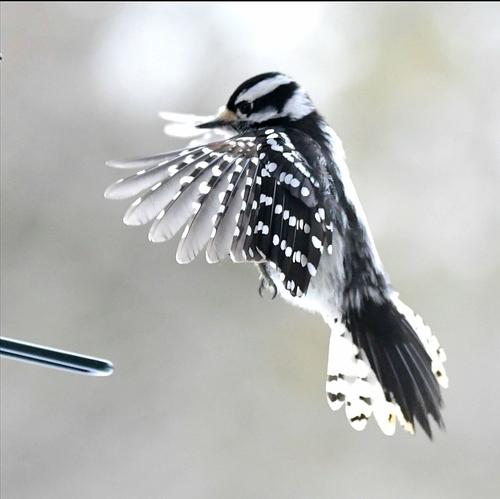
The closest relatives of the Northern Flicker that you can see in Congaree National Park (family Picidae, Woodpeckers) are Red-bellied Woodpecker (about 90%), Pileated Woodpecker (about 80%) and Downy Woodpecker (about 70%), with each one's daily chance of a sighting.

Where does the Northern Flicker sighting chance come from?

GBIF citizen-science records

It is estimated from how often the Northern Flicker is recorded against all the birds logged in Congaree National Park (629 verified sightings from 2019 to 2026), calibrated against known sighting rates. Figures are rounded to the nearest 10% because citizen-science data supports honest approximations, not decimals, and months with records from fewer than five people show "—". How it works.

← Back to Congaree National Park