Brown-headed Honeyeater

Brown-headed Honeyeater

Melithreptus brevirostris

Silhouette: Rachael Joakim · PhyloPic

LCLeast ConcernNTVUENCR Endemic
Daily sighting probability ~20% · Possible
at Grampians National Park

In 3 days ~40% in a week ~70%

114 Verified sightings at Grampians National Park From 2019 to 2026
1,251 In all 10 parks
October Best month
☀️ Diurnal When it's spotted

About the Brown-headed Honeyeater

The brown-headed honeyeater (Melithreptus brevirostris) is a species of passerine bird in the family Meliphagidae. It is endemic to Australia. Its natural habitats are temperate forests and Mediterranean-type shrubby vegetation.

The brown-headed honeyeater was first described by Vigors & Horsfield in 1827. Its species name is derived from the Latin terms brevis 'short', and rostrum 'beak'. Five subspecies have been described. The race magnirostris from Kangaroo Island has a noticeably larger bill.

It is a member of the genus Melithreptus, with several species of similar size and all black-headed, apart from this species, in the honeyeater family Meliphagidae. Molecular markers show the brown-headed honeyeater is most closely related to the black-chinned honeyeater, with the strong-billed honeyeater an earlier offshoot between 6.7 and 3.4 million years ago.

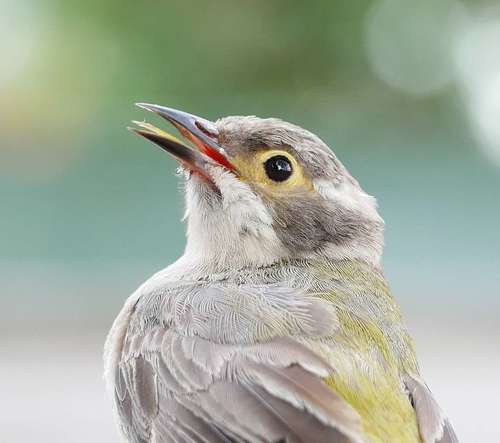
A small honeyeater ranging from 13 to 15 cm (5.2–6 in) in length, it is olive-brown above and buff below, with a brown head, nape and throat, a cream or orange patch of bare skin over the eye, and a dull white crescent-shaped patch on the nape. The legs and feet are orange. It makes a scratchy chwik... Wikipedia →
Sounds

Call0:24

Australia · 2023

© Peter Boesman · XC859959 · CC BY-NC-ND 4.0

Song0:53

Australia · 2016

© Andrew Spencer · XC328849 · CC BY-NC-ND 4.0

Call0:38

Australia · 2022

© Toby Esplin · XC729287 · CC BY-NC-ND 4.0

Global Distribution

Parks Where Found

# Park Country Daily sighting probability
1 Hattah-Kulkyne National Park 🇦🇺 Australia
~20%
2 Flinders Chase 🇦🇺 Australia
~20%
3 Great Otway National Park 🇦🇺 Australia
~20%
4 Grampians National Park 🇦🇺 Australia
~20%
5 Kosciuszko National Park 🇦🇺 Australia
~10%
6 Flinders Ranges National Park 🇦🇺 Australia
~10%
7 Blue Mountains National Park 🇦🇺 Australia
<5%
8 Royal National Park 🇦🇺 Australia
<5%
9 Booderee National Park 🇦🇺 Australia
<5%
10 Wilsons Promontory National Park 🇦🇺 Australia
<5%

Cities Where Found

# City Country Daily sighting probability
1 Melbourne 🇦🇺 Australia
<5%
2 Sydney 🇦🇺 Australia
<5%

Closest Relatives at Grampians National Park

Before you go

What are the chances of seeing a Brown-headed Honeyeater in Grampians National Park?

Possible

About 20% of wildlife watchers report a Brown-headed Honeyeater sighting in Grampians National Park on a given day, based on 114 verified sightings from GBIF citizen-science data from 2019 to 2026. It is the 48th most-seen of the 145 birds we can rate there. Over three days the chance rises to about 40%, and over a week to about 70%, if each day is a fresh chance.

When is the best time to see a Brown-headed Honeyeater in Grampians National Park?

October

In that month about 30% of wildlife watchers report a Brown-headed Honeyeater in Grampians National Park on a given day, against under 5% in April, the lowest month.

What time of day is best to see a Brown-headed Honeyeater?

Between 11 am and 2 pm

Across all the parks we cover, that three-hour window holds the most Brown-headed Honeyeater sightings with a recorded time, and nearly all of them come between 6 am and 6 pm: it is a daytime animal.

Is Grampians National Park the best place to see a Brown-headed Honeyeater?

Among the best

Of the 10 parks where we can rate Brown-headed Honeyeater sightings, Grampians National Park ranks 4th at about 20%, level with the leaders once rounded. The best odds are in Hattah-Kulkyne National Park (Australia, about 20%), Flinders Chase (Australia, about 20%) and Great Otway National Park (Australia, about 20%).

Where does the Brown-headed Honeyeater sighting chance come from?

GBIF citizen-science records

It is estimated from how often the Brown-headed Honeyeater is recorded against all the birds logged in Grampians National Park (114 verified sightings from 2019 to 2026), calibrated against known sighting rates. Figures are rounded to the nearest 10% because citizen-science data supports honest approximations, not decimals, and months with records from fewer than five people show "—". How it works.

← Back to Grampians National Park

