Australian Painted Lady

Australian Painted Lady

Vanessa kershawi

Daily sighting probability ~40% · Likely
at Hattah-Kulkyne National Park

In 3 days ~80% in a week >90%

37 Verified sightings at Hattah-Kulkyne National Park From 2019 to 2026
586 In all 12 parks
September Best month
☀️ Diurnal When it's spotted

About the Australian Painted Lady

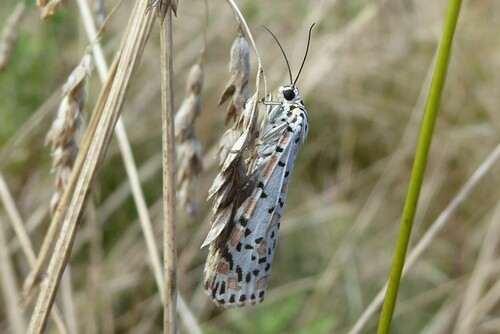
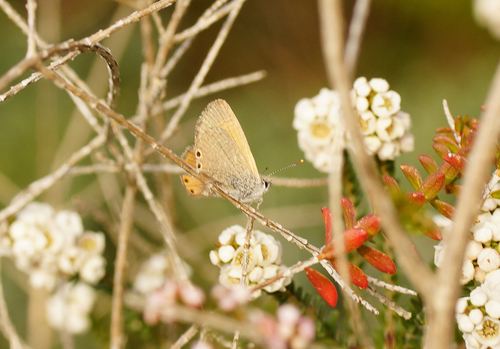
The Australian painted lady (Vanessa kershawi) is a species of butterfly mostly confined to Australia, although westerly winds have dispersed it to islands east of Australia, including New Zealand. Debate surrounds the taxonomy of this species. Some believe that the Australian painted lady should be a subspecies of the painted lady (Vanessa cardui) due to the similarity in lifestyle and behaviour. Furthermore, the painted lady is found around the globe, but Australia is the only location in which it varies enough to be considered a separate species.

However, due to the distinct genitalia of the males, and variation in colouration, many others consider the Australian painted lady to be a separate species. During spring, adult butterflies migrate south in large numbers from northern states of Queensland and New South Wales. To find mates, male Australian painted ladies exhibit territorial behaviour, which involves a male perching on vegetation in a sunny spot on a hilltop, waiting for females to fly by.

Despite urbanization and invasive plants altering its habitat, populations of Australian painted ladies have not been significantly impacted by these changes. The Australian... Wikipedia →

Global Distribution

Parks Where Found

# Park Country Daily sighting probability
1 Hattah-Kulkyne National Park 🇦🇺 Australia
~40%
2 Grampians National Park 🇦🇺 Australia
~40%
3 Kosciuszko National Park 🇦🇺 Australia
~30%
4 Great Otway National Park 🇦🇺 Australia
~30%
5 Blue Mountains National Park 🇦🇺 Australia
~30%
6 Wilsons Promontory National Park 🇦🇺 Australia
~20%
7 Flinders Ranges National Park 🇦🇺 Australia
~20%
8 Booderee National Park 🇦🇺 Australia
~20%
9 Uluru-Kata Tjuta National Park 🇦🇺 Australia
~20%
10 Rottnest Island 🇦🇺 Australia
~10%
11 Royal National Park 🇦🇺 Australia
~10%
12 Lamington National Park 🇦🇺 Australia
~10%

Cities Where Found

# City Country Daily sighting probability
1 Melbourne 🇦🇺 Australia
~30%
2 Perth 🇦🇺 Australia
~20%
3 Sydney 🇦🇺 Australia
~10%
4 Brisbane 🇦🇺 Australia
~10%
5 Auckland 🇳🇿 New Zealand
~10%

Before you go

What are the chances of seeing an Australian Painted Lady in Hattah-Kulkyne National Park?

Likely

About 40% of wildlife watchers report an Australian Painted Lady sighting in Hattah-Kulkyne National Park on a given day, based on 37 verified sightings from GBIF citizen-science data from 2019 to 2026. It is the most-seen of the 61 insects we can rate there. Over three days the chance rises to about 80%, and over a week to over 90%, if each day is a fresh chance.

When is the best time to see an Australian Painted Lady in Hattah-Kulkyne National Park?

September

In that month about 60% of wildlife watchers report an Australian Painted Lady in Hattah-Kulkyne National Park on a given day, against under 5% in February, May and December, the lowest months.

What time of day is best to see an Australian Painted Lady?

Between 1 and 4 pm

Across all the parks we cover, that three-hour window holds the most Australian Painted Lady sightings with a recorded time, and about 9 in 10 of them come between 6 am and 6 pm: it is a daytime animal.

Is Hattah-Kulkyne National Park the best place to see an Australian Painted Lady?

Yes

Of the 12 parks where we can rate Australian Painted Lady sightings, Hattah-Kulkyne National Park has the highest daily chance: about 40%. Next come Grampians National Park (Australia, about 40%) and Kosciuszko National Park (Australia, about 30%).

Where does the Australian Painted Lady sighting chance come from?

GBIF citizen-science records

It is estimated from how often the Australian Painted Lady is recorded against all the insects logged in Hattah-Kulkyne National Park (37 verified sightings from 2019 to 2026), calibrated against known sighting rates. Figures are rounded to the nearest 10% because citizen-science data supports honest approximations, not decimals, and months with records from fewer than five people show "—". How it works.

← Back to Hattah-Kulkyne National Park