Blacksmith Lapwing

Blacksmith Lapwing

Vanellus armatus

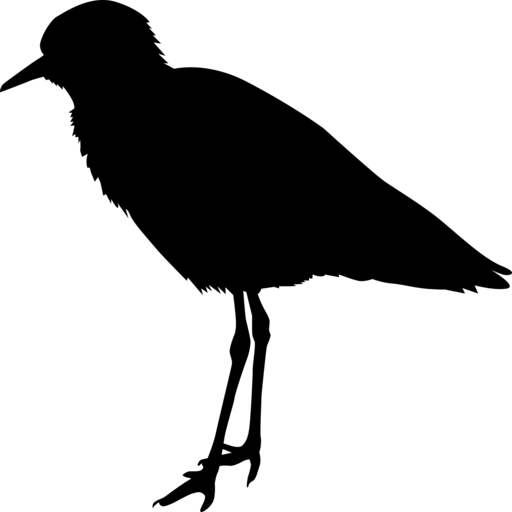
Silhouette: Rebecca Groom · PhyloPic

LCLeast ConcernNTVUENCR
Daily sighting probability ~10% · With luck
at iSimangaliso Wetland Park

In 3 days ~30% in a week ~50%

196 Verified sightings at iSimangaliso Wetland Park From 2019 to 2026
26,946 In all 39 parks
January Best month
☀️ Diurnal When it's spotted

About the Blacksmith Lapwing

The blacksmith lapwing or blacksmith plover (Vanellus armatus) is a lapwing species that occurs commonly from Kenya through central Tanzania to southern and southwestern Africa. The vernacular name derives from the repeated metallic 'tink, tink, tink' alarm call, which suggests a blacksmith's hammer striking an anvil.

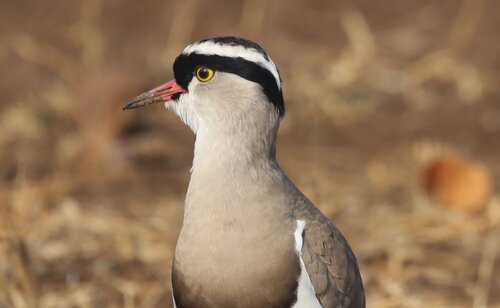
Blacksmith lapwings are very boldly patterned in black, grey and white, possibly warning colours to predators. It is one of five lapwing species (two African, one Asian and two Neotropical) that share the characteristics of red eyes and a bold pied plumage, with a carpal (wing) spur adorning the wrist joint; a sharp black protrusion which they use to aggressively defend their young from potential threats, through persistent aerial dives typically targeting the head. The portions of the bird's body bare to plumage average a black coloration for the bill, and either a black or white-grey dappling on the legs. Females average larger and heavier but the sexes are generally alike.

The blacksmith lapwing occurs in association with wetlands of all sizes. Even very small damp areas caused by a spilling water trough can attract them.... Wikipedia →

Sounds

Alarm call0:12

Kenya · 2026

© Ding Li Yong · XC1180170 · CC BY-NC-ND 4.0

Call0:25

Zambia · 2026

© Magnus Wadstein · XC1101187 · CC BY-NC-SA 4.0

Flight call0:26

South Africa · 2021

© Tony Archer · XC675139 · CC BY-NC-SA 4.0

Global Distribution

Parks Where Found

# Park Country Daily sighting probability
1 Etosha National Park 🇳🇦 Namibia
~80%
2 Moremi Game Reserve 🇧🇼 Botswana
~80%
3 Chobe National Park 🇧🇼 Botswana
~80%
4 Amboseli National Park 🇰🇪 Kenya
~70%
5 Kruger National Park 🇿🇦 South Africa
~70%
6 Lake Nakuru National Park 🇰🇪 Kenya
~70%
7 Hwange National Park 🇿🇼 Zimbabwe
~60%
8 Nairobi National Park 🇰🇪 Kenya
~60%
9 Gonarezhou National Park 🇿🇼 Zimbabwe
~60%
10 Pilanesberg National Park 🇿🇦 South Africa
~60%
11 Ngorongoro Conservation Area 🇹🇿 Tanzania
~60%
12 Arusha National Park 🇹🇿 Tanzania
~60%
13 West Coast National Park 🇿🇦 South Africa
~50%
14 Serengeti National Park 🇹🇿 Tanzania
~50%
15 Lower Zambezi National Park 🇿🇲 Zambia
~50%
16 Tarangire National Park 🇹🇿 Tanzania
~40%
17 Addo Elephant National Park 🇿🇦 South Africa
~40%
18 Mana Pools National Park 🇿🇼 Zimbabwe
~40%
19 South Luangwa National Park 🇿🇲 Zambia
~40%
20 Aberdare National Park 🇰🇪 Kenya
~40%
21 Mikumi National Park 🇹🇿 Tanzania
~40%
22 Kafue National Park 🇿🇲 Zambia
~30%
23 Garden Route National Park 🇿🇦 South Africa
~30%
24 Gorongosa National Park 🇲🇿 Mozambique
~30%
25 De Hoop Nature Reserve 🇿🇦 South Africa
~20%
26 Tsavo West National Park 🇰🇪 Kenya
~20%
27 Table Mountain National Park 🇿🇦 South Africa
~20%
28 Ruaha National Park 🇹🇿 Tanzania
~20%
29 Mkomazi National Park 🇹🇿 Tanzania
~10%
30 iSimangaliso Wetland Park 🇿🇦 South Africa
~10%
31 Waterberg Plateau Park 🇳🇦 Namibia
~10%
32 Lake Manyara National Park 🇹🇿 Tanzania
~10%
33 Hluhluwe-Imfolozi Park 🇿🇦 South Africa
~10%
34 Masai Mara National Reserve 🇰🇪 Kenya
~10%
35 Liwonde National Park 🇲🇼 Malawi
~10%
36 Tsavo East National Park 🇰🇪 Kenya
~10%
37 Samburu National Reserve 🇰🇪 Kenya
<5%
38 Kgalagadi Transfrontier Park 🇿🇦 South Africa
<5%
39 uMkhuze Game Reserve 🇿🇦 South Africa
<5%

Cities Where Found

# City Country Daily sighting probability
1 Cape Town 🇿🇦 South Africa
~40%
2 Johannesburg 🇿🇦 South Africa
~30%
3 Pretoria 🇿🇦 South Africa
~30%
4 Maputo 🇲🇿 Mozambique
~20%
5 Durban 🇿🇦 South Africa
~20%
6 Harare 🇿🇼 Zimbabwe
~10%
7 Nairobi 🇰🇪 Kenya
<5%

Zoos & Centres Where Found

# Zoo / Centre Country
1 Barcelona Zoo 🇪🇸 Spain In captivity
2 Réserve africaine de Sigean 🇫🇷 France In captivity
3 Parc des oiseaux 🇫🇷 France In captivity
4 Omaha’s Henry Doorly Zoo and Aquarium 🇺🇸 United States In captivity
5 Chester Zoo 🇬🇧 United Kingdom In captivity
6 Caldwell Zoo 🇺🇸 United States In captivity
7 Calgary Zoo 🇨🇦 Canada In captivity
8 Honolulu Zoo 🇺🇸 United States In captivity
9 Attica Zoological Park 🇬🇷 Greece In captivity
10 London Zoo 🇬🇧 United Kingdom In captivity
11 Ueno Zoo 🇯🇵 Japan In captivity
12 Aquarama Barcelona 🇪🇸 Spain In captivity
13 Le Cornelle 🇮🇹 Italy In captivity
14 Ueno Zoological Gardens (West Garden) 🇯🇵 Japan In captivity
15 Hong Kong Zoological and Botanical Gardens 🇨🇳 China In captivity
16 Santillana Zoo 🇪🇸 Spain In captivity
17 Kobe Animal Kingdom 🇯🇵 Japan In captivity
18 Skærup Zoo 🇩🇰 Denmark In captivity
19 El Jardí dels Ocells 🇪🇸 Spain In captivity
20 Edward Youde Aviary 🇭🇰 Hong Kong SAR China In captivity

Before you go

What are the chances of seeing a Blacksmith Lapwing in iSimangaliso Wetland Park?

With luck

About 10% of wildlife watchers report a Blacksmith Lapwing sighting in iSimangaliso Wetland Park on a given day, based on 196 verified sightings from GBIF citizen-science data from 2019 to 2026. It is the 145th most-seen of the 351 birds we can rate there. Over three days the chance rises to about 30%, and over a week to about 50%, if each day is a fresh chance.

When is the best time to see a Blacksmith Lapwing in iSimangaliso Wetland Park?

January, March and May–June

In those months about 20% of wildlife watchers report a Blacksmith Lapwing in iSimangaliso Wetland Park on a given day, against under 5% in October, the lowest month.

What time of day is best to see a Blacksmith Lapwing?

Between 9 am and noon

Across all the parks we cover, that three-hour window holds the most Blacksmith Lapwing sightings with a recorded time, and about 9 in 10 of them come between 6 am and 6 pm: it is a daytime animal.

Where does the Blacksmith Lapwing sighting chance come from?

GBIF citizen-science records

It is estimated from how often the Blacksmith Lapwing is recorded against all the birds logged in iSimangaliso Wetland Park (196 verified sightings from 2019 to 2026), calibrated against known sighting rates. Figures are rounded to the nearest 10% because citizen-science data supports honest approximations, not decimals, and months with records from fewer than five people show "—". How it works.

← Back to iSimangaliso Wetland Park