White-nest Swiftlet

White-nest Swiftlet

Aerodramus fuciphagus

Silhouette: Aviceda (vectorized by T. Michael Keesey) · PhyloPic

LCLeast ConcernNTVUENCR
Daily sighting probability <5% · Rare
at Kinabalu Park

In 3 days <5% in a week ~10%

25 Verified sightings at Kinabalu Park From 2019 to 2026
5,618 In all 19 parks
August Best month
🌅 Crepuscular When it's spotted

About the White-nest Swiftlet

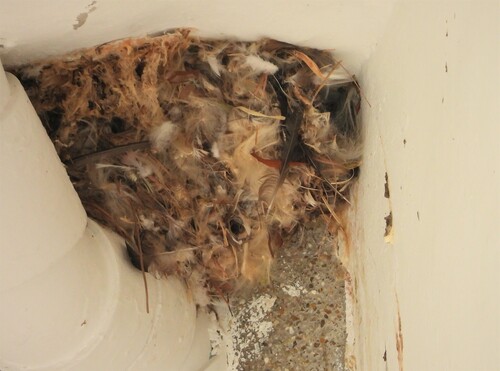
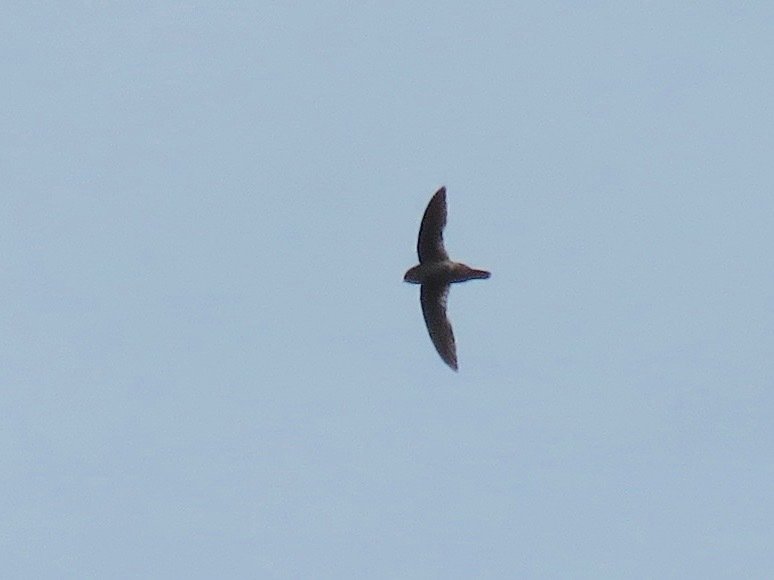
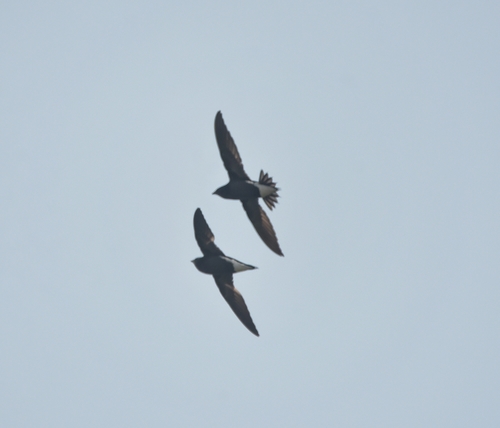
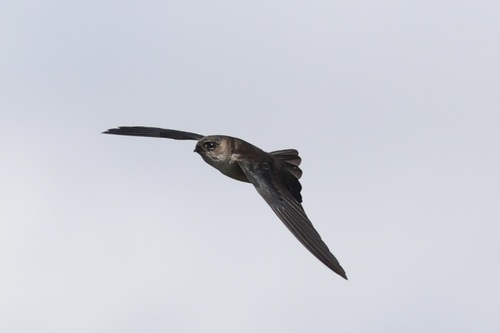
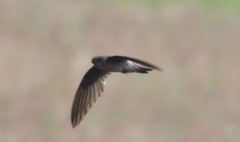
The edible-nest swiftlet (Aerodramus fuciphagus), also known as the white-nest swiftlet, is a small bird of the swift family which is found in Southeast Asia. Its opaque and whitish nest is made exclusively of solidified saliva and is the main ingredient of bird's nest soup, a delicacy of Chinese cuisine. Germain's swiftlet (Aerodramus germani) is now treated as conspecific with this species.

The edible-nest swiftlet was formally described in 1812 by the Swedish naturalist Carl Peter Thunberg under the binomial name Hirundo fuciphaga based on a specimen collected on the island of Java. The specific epithet fuciphaga combines the Ancient Greek φυκος/phukos meaning "seaweed" with -φαγος/-phagos meaning "-eating". The edible-nest swiftlet is now one of 25 swiftlets placed in the genus Aerodramus that was introduced in 1906 by the American ornithologist Harry C. Oberholser.

Eight subspecies are recognised: Wikipedia →

Sounds

Call0:52

Singapore · 2012

© Ding Li Yong · XC617631 · CC BY-NC-ND 4.0

Flight call0:23

Indonesia · 2015

© Paulo Alves · XC236322 · CC BY-NC-SA 4.0

Call1:04

Indonesia · 2014

© Tom Wallace · XC210279 · CC BY-NC-SA 4.0

Global Distribution

Parks Where Found

# Park Country Daily sighting probability
1 Cat Tien National Park 🇻🇳 Vietnam
~60%
2 Khao Luang National Park 🇹🇭 Thailand
~50%
3 Khao Sok National Park 🇹🇭 Thailand
~40%
4 Bali Barat National Park 🇮🇩 Indonesia
~40%
5 Tanjung Puting National Park 🇮🇩 Indonesia
~30%
6 Taman Negara National Park 🇲🇾 Malaysia
~30%
7 Kaeng Krachan National Park 🇹🇭 Thailand
~30%
8 Kinabatangan Wildlife Sanctuary 🇲🇾 Malaysia
~20%
9 Way Kambas National Park 🇮🇩 Indonesia
~20%
10 Sepilok 🇲🇾 Malaysia
~20%
11 Komodo National Park 🇮🇩 Indonesia
~20%
12 Khao Yai National Park 🇹🇭 Thailand
~10%
13 Gunung Leuser National Park 🇮🇩 Indonesia
~10%
14 Bako National Park 🇲🇾 Malaysia
~10%
15 Kerinci Seblat National Park 🇮🇩 Indonesia
<5%
16 Danum Valley Conservation Area 🇲🇾 Malaysia
<5%
17 Tangkoko Nature Reserve 🇮🇩 Indonesia
<5%
18 Kinabalu Park 🇲🇾 Malaysia
<5%
19 Doi Inthanon National Park 🇹🇭 Thailand
<5%

Cities Where Found

# City Country Daily sighting probability
1 Đà Nẵng 🇻🇳 Vietnam
~90%
2 Phnom Penh 🇰🇭 Cambodia
~80%
3 Ho Chi Minh City 🇻🇳 Vietnam
~70%
4 Cần Thơ 🇻🇳 Vietnam
~50%
5 Bangkok 🇹🇭 Thailand
~40%
6 Yangon 🇲🇲 Myanmar
~40%
7 Denpasar 🇮🇩 Indonesia
~30%
8 Kuala Lumpur 🇲🇾 Malaysia
~20%
9 Hanoi 🇻🇳 Vietnam
~20%
10 Yogyakarta 🇮🇩 Indonesia
~10%

Before you go

What are the chances of seeing a White-nest Swiftlet in Kinabalu Park?

Rare

Under 5% of wildlife watchers report a White-nest Swiftlet sighting in Kinabalu Park on a given day, based on 25 verified sightings from GBIF citizen-science data from 2019 to 2026. It is the 172nd most-seen of the 247 birds we can rate there. Over three days the chance rises to under 5%, and over a week to about 10%, if each day is a fresh chance.

When is the best time to see a White-nest Swiftlet in Kinabalu Park?

Any time of year

In every month with enough records, under 5% of wildlife watchers report a White-nest Swiftlet in Kinabalu Park on a given day, so our monthly data shows no clear season.

What time of day is best to see a White-nest Swiftlet?

Between 1 and 4 am

Across all the parks we cover, that three-hour window holds the most White-nest Swiftlet sightings with a recorded time, and about 6 in 10 of them come between 6 pm and 6 am: it is most active around dawn and dusk.

Where does the White-nest Swiftlet sighting chance come from?

GBIF citizen-science records

It is estimated from how often the White-nest Swiftlet is recorded against all the birds logged in Kinabalu Park (25 verified sightings from 2019 to 2026), calibrated against known sighting rates. Figures are rounded to the nearest 10% because citizen-science data supports honest approximations, not decimals, and months with records from fewer than five people show "—". How it works.
← Back to Kinabalu Park