Waterbuck

Waterbuck

Kobus ellipsiprymnus

Silhouette: Jan A. Venter, Herbert H. T. Prins, David A. Balfour & Rob Slotow (vectorized by T. Michael Keesey) ยท PhyloPic

LCLeast ConcernNTVUENCR
Daily sighting probability ~50% ยท Likely
at Mole National Park

In 3 days ~90% in a week >90%

18 Verified sightings at Mole National Park From 2019 to 2026
4,127 In all 41 parks
June Best month
โ˜€๏ธ Diurnal When it's spotted

About the Waterbuck

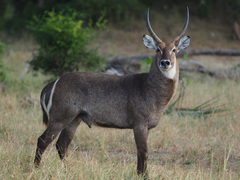
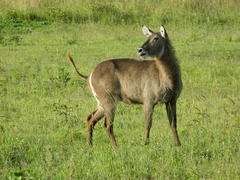
The waterbuck (Kobus ellipsiprymnus) is a large antelope found widely in sub-Saharan Africa. It is in the genus Kobus of the family Bovidae. It was first described by Irish naturalist William Ogilby in 1833. Its 13 subspecies are grouped under two varieties: the common or ellipsiprymnus waterbuck and the defassa waterbuck. Their coat colour varies from brown to grey. The long, spiral horns, present only on males, curve backward, then forward, and are 55โ€“99 cm (22โ€“39 in) long.

Waterbucks are rather sedentary in nature. As gregarious animals, they may form herds consisting of six to thirty individuals. These groups are either nursery herds with females and their offspring or bachelor herds. Males start showing territorial behaviour from the age of five years, but are most dominant from six to nine. The waterbuck cannot tolerate dehydration in hot weather, and thus inhabits areas close to sources of water. Predominantly a grazer, the waterbuck is mostly found on grassland. In equatorial regions, breeding takes place throughout the year, but births are at their peak in the rainy season. The gestational period lasts 7โ€“8 months, followed by the birth of a single calf.

Waterbucks inhabit scrub and savanna areas along rivers, lakes, and valleys. Due to their requirement for grasslands and water, waterbucks have a sparse ecotone distribution. The IUCN lists the waterbuck as being of least concern. More specifically, the common waterbuck is listed as of least concern, while the defassa waterbuck is near threatened. The population trend for both is downwards, especially that of the defassa, with large populations being eliminated from certain habitats because of poaching and human disturbance.

Wikipedia โ†’

Sounds

Call0:45

Ivory Coast ยท 2018

ยฉ Lars Lachmann ยท XC1045820 ยท CC BY-NC-SA 4.0

Global Distribution

Parks Where Found

# Park Country Daily sighting probability
1 Tarangire National Park ๐Ÿ‡น๐Ÿ‡ฟ Tanzania
~80%
2 Arusha National Park ๐Ÿ‡น๐Ÿ‡ฟ Tanzania
~80%
3 Kidepo Valley National Park ๐Ÿ‡บ๐Ÿ‡ฌ Uganda
~80%
4 Meru National Park ๐Ÿ‡ฐ๐Ÿ‡ช Kenya
~70%
5 Liwonde National Park ๐Ÿ‡ฒ๐Ÿ‡ผ Malawi
~70%
6 Tsavo East National Park ๐Ÿ‡ฐ๐Ÿ‡ช Kenya
~70%
7 Akagera National Park ๐Ÿ‡ท๐Ÿ‡ผ Rwanda
~70%
8 Lower Zambezi National Park ๐Ÿ‡ฟ๐Ÿ‡ฒ Zambia
~70%
9 South Luangwa National Park ๐Ÿ‡ฟ๐Ÿ‡ฒ Zambia
~70%
10 Queen Elizabeth National Park ๐Ÿ‡บ๐Ÿ‡ฌ Uganda
~70%
11 Niokolo-Koba National Park ๐Ÿ‡ธ๐Ÿ‡ณ Senegal
~70%
12 Mana Pools National Park ๐Ÿ‡ฟ๐Ÿ‡ผ Zimbabwe
~70%
13 Aberdare National Park ๐Ÿ‡ฐ๐Ÿ‡ช Kenya
~60%
14 Murchison Falls National Park ๐Ÿ‡บ๐Ÿ‡ฌ Uganda
~60%
15 Lake Mburo National Park ๐Ÿ‡บ๐Ÿ‡ฌ Uganda
~60%
16 Moremi Game Reserve ๐Ÿ‡ง๐Ÿ‡ผ Botswana
~60%
17 Lake Nakuru National Park ๐Ÿ‡ฐ๐Ÿ‡ช Kenya
~60%
18 Gonarezhou National Park ๐Ÿ‡ฟ๐Ÿ‡ผ Zimbabwe
~50%
19 Samburu National Reserve ๐Ÿ‡ฐ๐Ÿ‡ช Kenya
~50%
20 Gorongosa National Park ๐Ÿ‡ฒ๐Ÿ‡ฟ Mozambique
~50%
21 Mole National Park ๐Ÿ‡ฌ๐Ÿ‡ญ Ghana
~50%
22 Kruger National Park ๐Ÿ‡ฟ๐Ÿ‡ฆ South Africa
~50%
23 Chinko Conservation Area ๐Ÿ‡จ๐Ÿ‡ซ Central African Republic
~50%
24 Tsavo West National Park ๐Ÿ‡ฐ๐Ÿ‡ช Kenya
~50%
25 Amboseli National Park ๐Ÿ‡ฐ๐Ÿ‡ช Kenya
~50%
26 Lake Manyara National Park ๐Ÿ‡น๐Ÿ‡ฟ Tanzania
~50%
27 Pilanesberg National Park ๐Ÿ‡ฟ๐Ÿ‡ฆ South Africa
~40%
28 Chobe National Park ๐Ÿ‡ง๐Ÿ‡ผ Botswana
~40%
29 Kafue National Park ๐Ÿ‡ฟ๐Ÿ‡ฒ Zambia
~40%
30 Ruaha National Park ๐Ÿ‡น๐Ÿ‡ฟ Tanzania
~40%
31 Hwange National Park ๐Ÿ‡ฟ๐Ÿ‡ผ Zimbabwe
~40%
32 Masai Mara National Reserve ๐Ÿ‡ฐ๐Ÿ‡ช Kenya
~40%
33 iSimangaliso Wetland Park ๐Ÿ‡ฟ๐Ÿ‡ฆ South Africa
~40%
34 Ngorongoro Conservation Area ๐Ÿ‡น๐Ÿ‡ฟ Tanzania
~30%
35 Serengeti National Park ๐Ÿ‡น๐Ÿ‡ฟ Tanzania
~30%
36 Pendjari National Park ๐Ÿ‡ง๐Ÿ‡ฏ Benin
~30%
37 Hluhluwe-Imfolozi Park ๐Ÿ‡ฟ๐Ÿ‡ฆ South Africa
~30%
38 Nairobi National Park ๐Ÿ‡ฐ๐Ÿ‡ช Kenya
~30%
39 Addo Elephant National Park ๐Ÿ‡ฟ๐Ÿ‡ฆ South Africa
~10%
40 Virunga National Park ๐Ÿ‡จ๐Ÿ‡ฉ Democratic Republic of the Congo
~10%
41 Garden Route National Park ๐Ÿ‡ฟ๐Ÿ‡ฆ South Africa
<5%

Zoos & Centres Where Found

# Zoo / Centre Country
1 Disney's Animal Kingdom ๐Ÿ‡บ๐Ÿ‡ธ United States In captivity
2 Busch Gardens Tampa ๐Ÿ‡บ๐Ÿ‡ธ United States In captivity
3 Tierpark Berlin ๐Ÿ‡ฉ๐Ÿ‡ช Germany In captivity
4 North Carolina Zoo ๐Ÿ‡บ๐Ÿ‡ธ United States In captivity
5 Cabarceno Natural Park ๐Ÿ‡ช๐Ÿ‡ธ Spain In captivity
6 Melaka Zoo and Bird Park ๐Ÿ‡ฒ๐Ÿ‡พ Malaysia In captivity
7 Rรฉserve africaine de Sigean ๐Ÿ‡ซ๐Ÿ‡ท France In captivity
8 Vinpearl Safari ๐Ÿ‡ป๐Ÿ‡ณ Vietnam In captivity
9 Natural Bridge Wildlife Ranch ๐Ÿ‡บ๐Ÿ‡ธ United States In captivity
10 San Diego Zoo Safari Park ๐Ÿ‡บ๐Ÿ‡ธ United States In captivity
11 Lion Country Safari ๐Ÿ‡บ๐Ÿ‡ธ United States In captivity
12 Bioparque Estrella ๐Ÿ‡ฒ๐Ÿ‡ฝ Mexico In captivity
13 Werribee Open Range Zoo ๐Ÿ‡ฆ๐Ÿ‡บ Australia In captivity
14 Whipsnade Zoo ๐Ÿ‡ฌ๐Ÿ‡ง United Kingdom In captivity
15 Taman Safari Indonesia ๐Ÿ‡ฎ๐Ÿ‡ฉ Indonesia In captivity
16 Safaripark Beekse Bergen ๐Ÿ‡ณ๐Ÿ‡ฑ Netherlands In captivity
17 Safari West ๐Ÿ‡บ๐Ÿ‡ธ United States In captivity
18 Living Desert Zoo and Gardens ๐Ÿ‡บ๐Ÿ‡ธ United States In captivity
19 Port Lympne Wild Animal Park ๐Ÿ‡ฌ๐Ÿ‡ง United Kingdom In captivity
20 Tennessee Safari Park ๐Ÿ‡บ๐Ÿ‡ธ United States In captivity
21 Haller Park ๐Ÿ‡ฐ๐Ÿ‡ช Kenya In captivity
22 Poznaล„ Nowe Zoo ๐Ÿ‡ต๐Ÿ‡ฑ Poland In captivity
23 Yumka' ๐Ÿ‡ฒ๐Ÿ‡ฝ Mexico In captivity
24 Zoolรณgico de Brasรญlia ๐Ÿ‡ง๐Ÿ‡ท Brazil In captivity
25 Brookfield Zoo ๐Ÿ‡บ๐Ÿ‡ธ United States In captivity
26 Zoofari ๐Ÿ‡ฒ๐Ÿ‡ฝ Mexico In captivity
27 Safari Madrid ๐Ÿ‡ช๐Ÿ‡ธ Spain In captivity
28 Milwaukee County Zoo ๐Ÿ‡บ๐Ÿ‡ธ United States In captivity
29 WildFlorida Safaris ๐Ÿ‡บ๐Ÿ‡ธ United States In captivity
30 Ree Park โ€“ Ebeltoft Safari ๐Ÿ‡ฉ๐Ÿ‡ฐ Denmark In captivity
31 Orana Wildlife Park ๐Ÿ‡ณ๐Ÿ‡ฟ New Zealand In captivity
32 The Exotic Resort Zoo ๐Ÿ‡บ๐Ÿ‡ธ United States In captivity
33 Johannesburg Zoo ๐Ÿ‡ฟ๐Ÿ‡ฆ South Africa In captivity
34 Silesian Zoological Garden ๐Ÿ‡ต๐Ÿ‡ฑ Poland In captivity
35 Wildlife World Zoo ๐Ÿ‡บ๐Ÿ‡ธ United States In captivity
36 Sรฃo Paulo Zoo ๐Ÿ‡ง๐Ÿ‡ท Brazil In captivity
37 Selwo Aventura ๐Ÿ‡ช๐Ÿ‡ธ Spain In captivity
38 Parco Natura Viva ๐Ÿ‡ฎ๐Ÿ‡น Italy In captivity
39 Africam Safari ๐Ÿ‡ฒ๐Ÿ‡ฝ Mexico In captivity
40 Parc Animalier de Ziniarรฉ ๐Ÿ‡ง๐Ÿ‡ซ Burkina Faso In captivity
41 Guadalajara Zoo ๐Ÿ‡ฒ๐Ÿ‡ฝ Mexico In captivity
42 Safari Niagara ๐Ÿ‡จ๐Ÿ‡ฆ Canada In captivity
43 Burgers' Ocean ๐Ÿ‡ณ๐Ÿ‡ฑ Netherlands In captivity
44 Berlin Zoological Garden ๐Ÿ‡ฉ๐Ÿ‡ช Germany In captivity
45 Royal Burgers' Zoo ๐Ÿ‡ณ๐Ÿ‡ฑ Netherlands In captivity
46 Wrocล‚aw Zoological Garden ๐Ÿ‡ต๐Ÿ‡ฑ Poland In captivity
47 Zoolรณgico de Goiรขnia ๐Ÿ‡ง๐Ÿ‡ท Brazil In captivity
48 Zacango Zoo ๐Ÿ‡ฒ๐Ÿ‡ฝ Mexico In captivity
49 ZooTampa ๐Ÿ‡บ๐Ÿ‡ธ United States In captivity
50 Lisbon Zoo ๐Ÿ‡ต๐Ÿ‡น Portugal In captivity

Before you go

What are the chances of seeing a Waterbuck in Mole National Park?

Likely

About 50% of wildlife watchers report a Waterbuck sighting in Mole National Park on a given day, based on 18 verified sightings from GBIF citizen-science data from 2019 to 2026. It is the 9th most-seen of the 15 mammals we can rate there. Over three days the chance rises to about 90%, and over a week to over 90%, if each day is a fresh chance.

When is the best time to see a Waterbuck in Mole National Park?

June

In that month about 70% of wildlife watchers report a Waterbuck in Mole National Park on a given day, against about 10% in January and November, the lowest months. May and August have too few records to rate.

What time of day is best to see a Waterbuck?

Between 9 am and noon

Across all the parks we cover, that three-hour window holds the most Waterbuck sightings with a recorded time, and about 9 in 10 of them come between 6 am and 6 pm: it is a daytime animal.

Where does the Waterbuck sighting chance come from?

GBIF citizen-science records

It is estimated from how often the Waterbuck is recorded against all the mammals logged in Mole National Park (18 verified sightings from 2019 to 2026), calibrated against known sighting rates. Figures are rounded to the nearest 10% because citizen-science data supports honest approximations, not decimals, and months with records from fewer than five people show "โ€”". How it works.

โ† Back to Mole National Park