Band-winged Nightjar

Band-winged Nightjar

Systellura longirostris

Silhouette: Sheatherius · PhyloPic

LCLeast ConcernNTVUENCR
Daily sighting probability <5% · Rare
at Serra da Canastra National Park

In 3 days ~10% in a week ~30%

26 Verified sightings at Serra da Canastra National Park From 2019 to 2026
397 In all 12 parks
May Best month
☀️🌙 Day & Night When it's spotted

About the Band-winged Nightjar

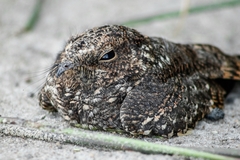
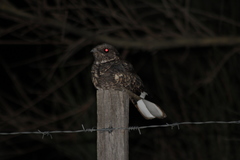
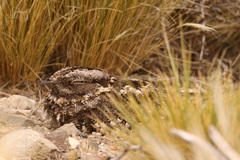
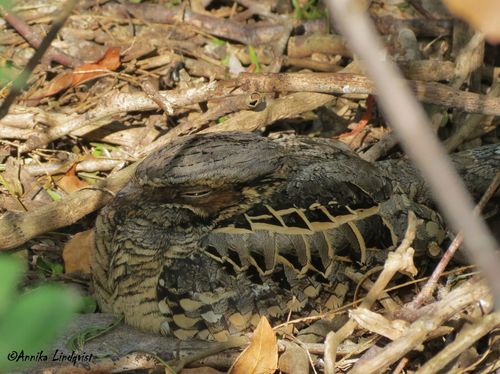
The band-winged nightjar or greater band-winged nightjar (Systellura longirostris) is a species of nightjar in the family Caprimulgidae. It is the only species now placed in the genus Systellura. It is widespread in South America, where it is found in the Andes, Venezuelan Coastal Range, Santa Marta Mountains, Tepuis, most of Chile, Argentina, Paraguay, Uruguay, and eastern Brazil. It occurs in a wide range of habitats, from the edge of humid montane forests to shrubby semi-deserts and urban rooftops.

The band-winged nightjar was formally described in 1825 as Caprimulgus longirostris by the French naturalist Charles Lucien Bonaparte. The specific epithet combines the Latin longus meaning "long" with -rostris meaning "-billed". The band-winged nightjar is now the only species placed in the genus Systellura that was introduced in 1912 by the American ornithologist Robert Ridgway with Stenopis ruficervix Sclater, PL, 1866, as the type species. This is now considered as a subspecies of the band-winged nightjar. The genus name Systellura combines the Ancient Greek συστελλω/sustellō meaning "to shorten" with ουρα'oura meaning "tail".

Eight subspecies have been... Wikipedia →

Sounds

Song1:01

Brazil · 2023

© Ricardo José Mitidieri · XC818760 · CC BY-NC-SA 4.0

Call0:33

Chile · 2020

© Ignacio Escobar · XC611669 · CC BY-NC-SA 4.0

Flight call1:01

Brazil · 2020

© Arthur Gomes · XC568514 · CC BY-NC-SA 4.0

Global Distribution

Parks Where Found

# Park Country Daily sighting probability
1 Chapada dos Guimarães National Park 🇧🇷 Brazil
~10%
2 Vicente Pérez Rosales National Park 🇨🇱 Chile
<5%
3 Serra da Canastra National Park 🇧🇷 Brazil
<5%
4 Henri Pittier National Park 🇻🇪 Venezuela
<5%
5 Lauca National Park 🇨🇱 Chile
<5%
6 Chingaza National Natural Park 🇨🇴 Colombia
<5%
7 Los Nevados National Natural Park 🇨🇴 Colombia
<5%
8 Amboró National Park 🇧🇴 Bolivia
<5%
9 Nahuel Huapi National Park 🇦🇷 Argentina
<5%
10 Torres del Paine National Park 🇨🇱 Chile
<5%
11 Farallones de Cali National Natural Park 🇨🇴 Colombia
<5%
12 Tijuca National Park 🇧🇷 Brazil
<5%

Cities Where Found

# City Country Daily sighting probability
1 Porto Alegre 🇧🇷 Brazil
~10%
2 Niterói 🇧🇷 Brazil
<5%
3 Cordoba 🇦🇷 Argentina
<5%
4 Quito 🇪🇨 Ecuador
<5%
5 Bogota 🇨🇴 Colombia
<5%
6 Belo Horizonte 🇧🇷 Brazil
<5%
7 Santiago 🇨🇱 Chile
<5%
8 Rio de Janeiro 🇧🇷 Brazil
<5%
9 Buenos Aires 🇦🇷 Argentina
<5%

Before you go

What are the chances of seeing a Band-winged Nightjar in Serra da Canastra National Park?

Rare

Under 5% of wildlife watchers report a Band-winged Nightjar sighting in Serra da Canastra National Park on a given day, based on 26 verified sightings from GBIF citizen-science data from 2019 to 2026. It is the 201st most-seen of the 294 birds we can rate there. Over three days the chance rises to about 10%, and over a week to about 30%, if each day is a fresh chance.

When is the best time to see a Band-winged Nightjar in Serra da Canastra National Park?

May

In that month about 20% of wildlife watchers report a Band-winged Nightjar in Serra da Canastra National Park on a given day, against under 5% in February–March, June–July and September–December, the lowest months. That is one of Serra da Canastra National Park's driest months, with about 40 mm of rain against 280 mm in January.

What time of day is best to see a Band-winged Nightjar?

Between 7 and 10 pm

Across all the parks we cover, that three-hour window holds the most Band-winged Nightjar sightings with a recorded time, and about half of them come between 6 am and 6 pm: it is seen both by day and at night.

Which relatives of the Band-winged Nightjar live in Serra da Canastra National Park?

Same family: Caprimulgidae

The closest relatives of the Band-winged Nightjar that you can see in Serra da Canastra National Park (family Caprimulgidae, Nightjars and Allies) are Least Nighthawk (about 10%), Common Pauraque (about 10%) and Scissor-tailed Nightjar (about 10%), with each one's daily chance of a sighting.

Where does the Band-winged Nightjar sighting chance come from?

GBIF citizen-science records

It is estimated from how often the Band-winged Nightjar is recorded against all the birds logged in Serra da Canastra National Park (26 verified sightings from 2019 to 2026), calibrated against known sighting rates. Figures are rounded to the nearest 10% because citizen-science data supports honest approximations, not decimals, and months with records from fewer than five people show "—". How it works.

← Back to Serra da Canastra National Park