Neotropical Green Anole

Neotropical Green Anole

Anolis biporcatus

Silhouette: Sarah Werning · PhyloPic

LCLeast ConcernNTVUENCR
Daily sighting probability ~40% · Likely
at Tayrona National Natural Park

In 3 days ~80% in a week >90%

35 Verified sightings at Tayrona National Natural Park From 2019 to 2026
513 In all 20 parks
May Best month
☀️🌙 Day & Night When it's spotted

About the Neotropical Green Anole

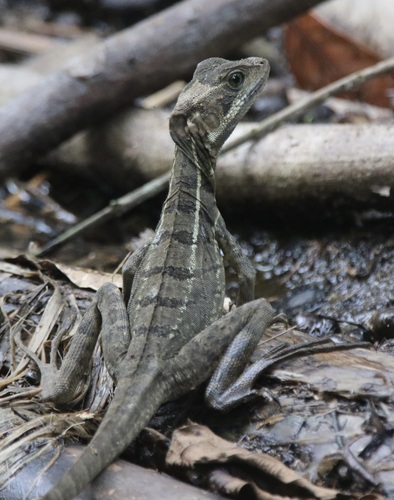
Anolis biporcatus, also known as the neotropical green anole or giant green anole, is a species of anole. It is found in forests, both disturbed and undisturbed, in Mexico, Central America, Colombia and Venezuela. More southern populations, in southwestern Colombia and western Ecuador, were recognized as a separate species, A. parvauritus, in 2017.As suggested by its common names, the neotropical green or giant green anole is mostly green in color and relatively large, among the largest anoles in the mainland of the Americas. Males have a snout–vent length of about 7.0–10.3 cm (2.8–4.1 in) and the females, which grow slightly larger, about 7.0–10.8 cm (2.8–4.3 in). In general, there is little sexual dimorphism in this species. The tail is roughly double the length of the snout-to-vent.

List of Anolis lizards Wikipedia →

Global Distribution

Parks Where Found

# Park Country Daily sighting probability
1 Tayrona National Natural Park 🇨🇴 Colombia
~40%
2 Gandoca-Manzanillo Wildlife Refuge 🇨🇷 Costa Rica
~30%
3 Pico Bonito National Park 🇭🇳 Honduras
~30%
4 Tenorio Volcano National Park 🇨🇷 Costa Rica
~30%
5 Braulio Carrillo National Park 🇨🇷 Costa Rica
~30%
6 Rincón de la Vieja National Park 🇨🇷 Costa Rica
~30%
7 Manuel Antonio National Park 🇨🇷 Costa Rica
~30%
8 Arenal Volcano National Park 🇨🇷 Costa Rica
~20%
9 Bastimentos Island National Marine Park 🇵🇦 Panama
~20%
10 Tortuguero National Park 🇨🇷 Costa Rica
~20%
11 Piedras Blancas National Park 🇨🇷 Costa Rica
~20%
12 Tikal National Park 🇬🇹 Guatemala
~20%
13 Carara National Park 🇨🇷 Costa Rica
~20%
14 La Amistad International Park (Panama) 🇵🇦 Panama
~10%
15 Cahuita National Park 🇨🇷 Costa Rica
~10%
16 Corcovado National Park 🇨🇷 Costa Rica
~10%
17 Tapantí-Macizo de la Muerte National Park 🇨🇷 Costa Rica
~10%
18 Soberanía National Park 🇵🇦 Panama
~10%
19 Monteverde Cloud Forest Reserve 🇨🇷 Costa Rica
~10%
20 Parque Natural Metropolitano 🇵🇦 Panama
~10%

Cities Where Found

# City Country Daily sighting probability
1 Panama City 🇵🇦 Panama
<5%

Before you go

What are the chances of seeing a Neotropical Green Anole in Tayrona National Natural Park?

Likely

About 40% of wildlife watchers report a Neotropical Green Anole sighting in Tayrona National Natural Park on a given day, based on 35 verified sightings from GBIF citizen-science data from 2019 to 2026. It is the 10th most-seen of the 26 reptiles we can rate there. Over three days the chance rises to about 80%, and over a week to over 90%, if each day is a fresh chance.

When is the best time to see a Neotropical Green Anole in Tayrona National Natural Park?

May

In that month about 80% of wildlife watchers report a Neotropical Green Anole in Tayrona National Natural Park on a given day, against under 5% in April, July–August and October, the lowest months.

What time of day is best to see a Neotropical Green Anole?

Between 9 am and noon

Across all the parks we cover, that three-hour window holds the most Neotropical Green Anole sightings with a recorded time, and about 7 in 10 of them come between 6 am and 6 pm: it is seen both by day and at night.

Which relatives of the Neotropical Green Anole live in Tayrona National Natural Park?

Same genus: Anolis

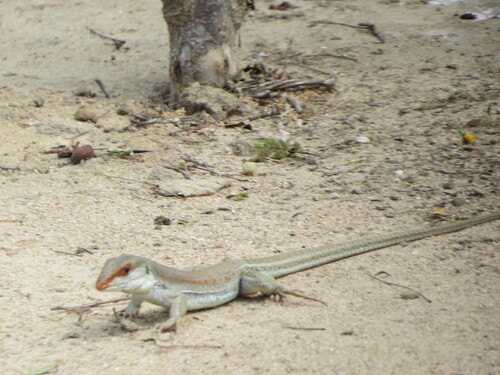
The closest relatives of the Neotropical Green Anole that you can see in Tayrona National Natural Park (genus Anolis, Anoles) are Gaige's Anole (about 50%) and Grass Anole (about 30%), with each one's daily chance of a sighting.

Where does the Neotropical Green Anole sighting chance come from?

GBIF citizen-science records

It is estimated from how often the Neotropical Green Anole is recorded against all the reptiles logged in Tayrona National Natural Park (35 verified sightings from 2019 to 2026), calibrated against known sighting rates. Figures are rounded to the nearest 10% because citizen-science data supports honest approximations, not decimals, and months with records from fewer than five people show "—". How it works.

← Back to Tayrona National Natural Park