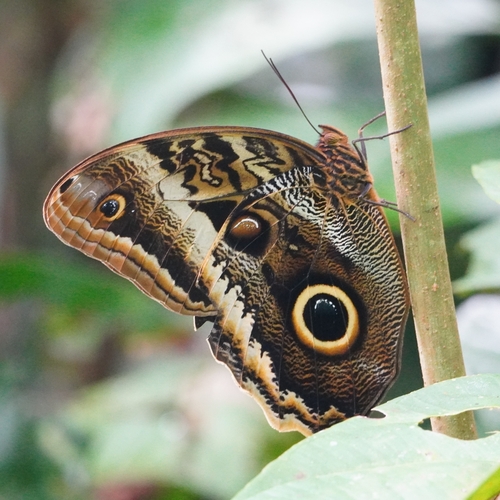
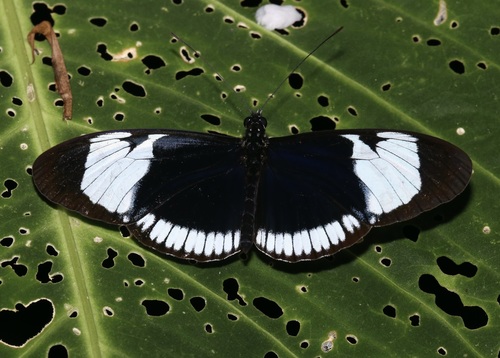
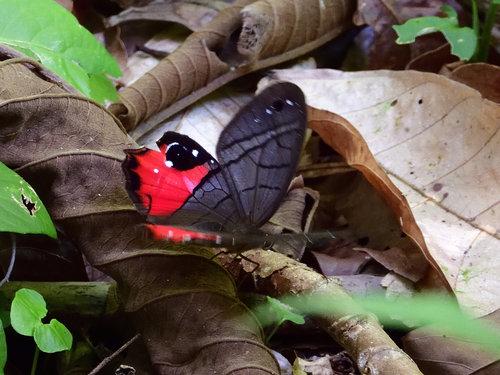
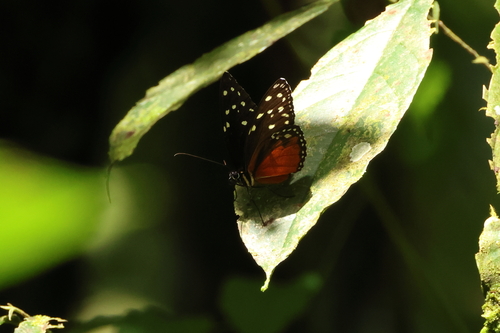
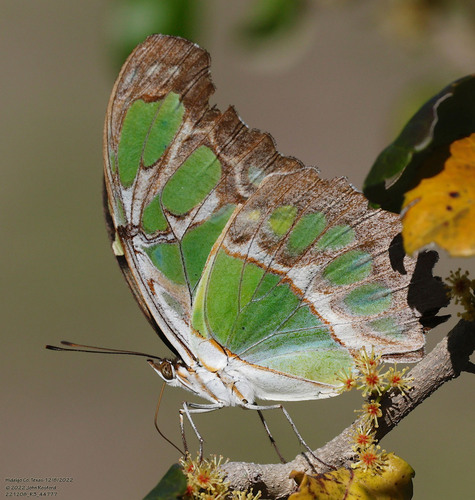
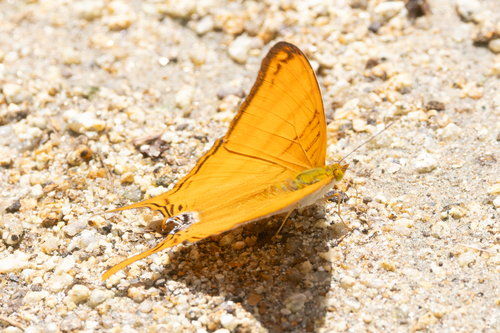
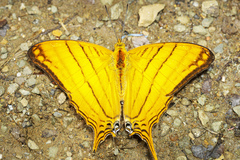
Orange Daggerwing

Orange Daggerwing

Marpesia berania

Daily sighting probability ~10% · With luck
at Tenorio Volcano National Park

In 3 days ~30% in a week ~50%

5 Verified sightings at Tenorio Volcano National Park From 2019 to 2026
163 In all 15 parks
December Best month
☀️ Diurnal When it's spotted

About the Orange Daggerwing

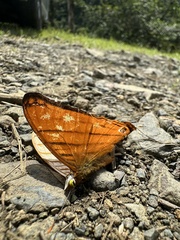
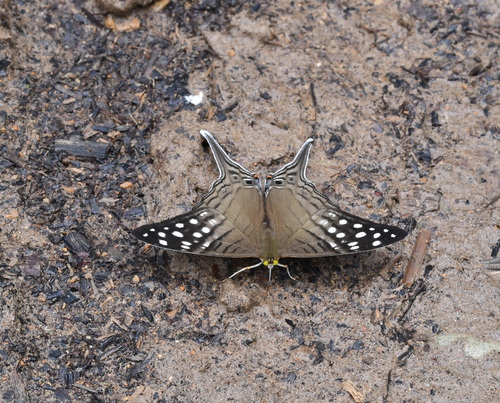
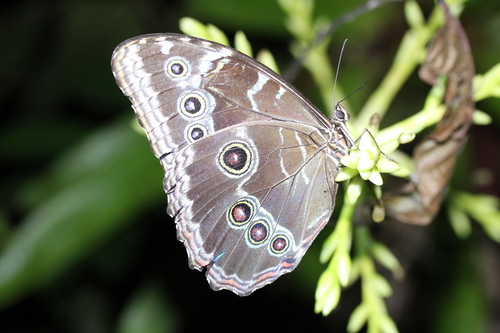
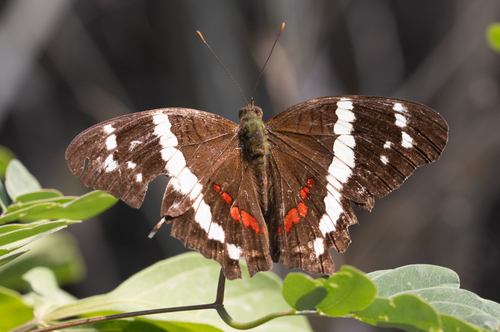
Marpesia berania, the amber daggerwing, is a butterfly in the family Nymphalidae. The species was first described by William Chapman Hewitson in 1852. They are a brightly colored, Neotropical butterfly with a unique wing shape, found in Central and northern South America. The amber daggerwing exhibits several interesting characteristics varying from their unusual behavior to their physical traits that make them so distinct.

The genus name Marpesia is derived from Marpess, the wife of Idas, a mortal who decided to go against Apollo when he carried off Marpessa /ˌmɑːrˈpɛsə/ (Ancient Greek: Μάρπησσα). The derivation of berania is not known. The distribution range for Marpesia berania is largely in the Neotropical realm, branching out to Central America and northern South America. Countries inhabited by this species include Mexico, Honduras, Costa Rica, Brazil, Peru, Colombia and Bolivia. These butterflies are considered to be a commonly found species in Honduras and in Peru. M. berania is found in the tropical rainforests and lowlands of these regions. They are considered to be closely allied or related to the Cyrestis (mapwing butterflies) and Chersonesia... Wikipedia →
Global Distribution

Parks Where Found

# Park Country Daily sighting probability
1 Tayrona National Natural Park 🇨🇴 Colombia
~30%
2 Corcovado National Park 🇨🇷 Costa Rica
~20%
3 Darién National Park 🇵🇦 Panama
~20%
4 Cuyabeno Wildlife Reserve 🇪🇨 Ecuador
~20%
5 Cabo Blanco Absolute Nature Reserve 🇨🇷 Costa Rica
~20%
6 Piedras Blancas National Park 🇨🇷 Costa Rica
~10%
7 Tambopata National Reserve 🇵🇪 Peru
~10%
8 Lago de Yojoa 🇭🇳 Honduras
~10%
9 Yasuní National Park 🇪🇨 Ecuador
~10%
10 Manuel Antonio National Park 🇨🇷 Costa Rica
~10%
11 Tenorio Volcano National Park 🇨🇷 Costa Rica
~10%
12 Carara National Park 🇨🇷 Costa Rica
~10%
13 Manu National Park 🇵🇪 Peru
~10%
14 Braulio Carrillo National Park 🇨🇷 Costa Rica
~10%
15 Arenal Volcano National Park 🇨🇷 Costa Rica
~10%

Before you go

What are the chances of seeing an Orange Daggerwing in Tenorio Volcano National Park?

With luck

About 10% of wildlife watchers report an Orange Daggerwing sighting in Tenorio Volcano National Park on a given day, based on 5 verified sightings from GBIF citizen-science data from 2019 to 2026. It is the 77th most-seen of the 98 insects we can rate there. Over three days the chance rises to about 30%, and over a week to about 50%, if each day is a fresh chance.

When is the best time to see an Orange Daggerwing in Tenorio Volcano National Park?

December

In that month about 30% of wildlife watchers report an Orange Daggerwing in Tenorio Volcano National Park on a given day, against under 5% in January–June, August and October–November, the lowest months. That is one of Tenorio Volcano National Park's wettest months, with about 420 mm of rain against 120 mm in April.

What time of day is best to see an Orange Daggerwing?

Between 9 am and noon

Across all the parks we cover, that three-hour window holds the most Orange Daggerwing sightings with a recorded time, and about 9 in 10 of them come between 6 am and 6 pm: it is a daytime animal.

Is Tenorio Volcano National Park the best place to see an Orange Daggerwing?

11th of 15

Of the 15 parks where we can rate Orange Daggerwing sightings, Tenorio Volcano National Park ranks 11th at about 10%. The best odds are in Tayrona National Natural Park (Colombia, about 30%), Corcovado National Park (Costa Rica, about 20%) and Darién National Park (Panama, about 20%).

Where does the Orange Daggerwing sighting chance come from?

GBIF citizen-science records

It is estimated from how often the Orange Daggerwing is recorded against all the insects logged in Tenorio Volcano National Park (5 verified sightings from 2019 to 2026), calibrated against known sighting rates. Figures are rounded to the nearest 10% because citizen-science data supports honest approximations, not decimals, and months with records from fewer than five people show "—". How it works.

← Back to Tenorio Volcano National Park