


Completed

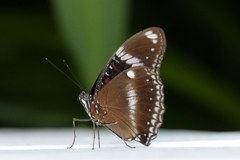
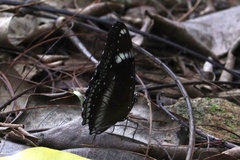
Great Eggfly
Hypolimnas bolina
- KingdomAnimalia (Animals)
- PhylumArthropoda (Arthropods)
- ClassInsecta (Insects)
- OrderLepidoptera (Butterflies and Moths)
- FamilyNymphalidae (Brush-footed Butterflies)
- GenusHypolimnas (Diadems & Eggflies)
- SpeciesHypolimnas bolina (Great Eggfly)
In 3 days ~70% in a week ~90%
21 Verified sightings at Chitwan National Park From 2019 to 2026
696 In all 27 parks
November Best month
☀️ Diurnal When it's spotted
About the Great Eggfly
Hypolimnas bolina, the great eggfly, common eggfly, varied eggfly, or in New Zealand the blue moon butterfly, is a species of nymphalid butterfly found from Madagascar to Asia and Australia. H. bolina is a black-bodied butterfly with a wingspan of about 70–85 millimetres (2.8–3.3 in). The species has a high degree of sexual dimorphism. The female is mimetic with multiple morphs.
Males are monomorphic. The dorsal wing surface is jet black but features three prominent spots, two on the forewing and one on the hindwing. To a human observer these appear as white spots fringed with blue-violet. They actually consist of a white center overlain by bright ultraviolet iridescence, a colour generated by nanostructures on the wing scale surface. Numerous smaller white spots fringe the fore- and hindwings. The ventral surface lacks any ultraviolet iridescence and consists essentially of banded white markings set against a brownish background. These males exhibit lower body mass per unit wing area, implying lower wing loading, more elongate wings, resulting in a higher aspect ratio, which are also the characteristics used to differ them by their conspecific... Wikipedia →
Recent sightings of Great Eggfly in Chitwan National Park
LIVEiNaturalistGlobal Distribution
Parks Where Found
Cities Where Found
| # | City | Country | Daily sighting probability |
|---|---|---|---|
| 1 | Yogyakarta | 🇮🇩 Indonesia | |
| 2 | Ranchi | 🇮🇳 India | |
| 3 | Jakarta | 🇮🇩 Indonesia | |
| 4 | Prayagraj | 🇮🇳 India | |
| 5 | Jabalpur | 🇮🇳 India | |
| 6 | Manila | 🇵🇭 Philippines | |
| 7 | Tasikmalaya | 🇮🇩 Indonesia | |
| 8 | Ho Chi Minh City | 🇻🇳 Vietnam | |
| 9 | Hanoi | 🇻🇳 Vietnam | |
| 10 | Kalyan-Dombivli | 🇮🇳 India |
Closest Relatives at Chitwan National Park




Before you go
What are the chances of seeing a Great Eggfly in Chitwan National Park?
Possible
About 30% of wildlife watchers report a Great Eggfly sighting in Chitwan National Park on a given day, based on 21 verified sightings from GBIF citizen-science data from 2019 to 2026. It is the 4th most-seen of the 24 insects we can rate there. Over three days the chance rises to about 70%, and over a week to about 90%, if each day is a fresh chance.
When is the best time to see a Great Eggfly in Chitwan National Park?
November
In that month about 50% of wildlife watchers report a Great Eggfly in Chitwan National Park on a given day, against under 5% in February, May and December, the lowest months. That is one of Chitwan National Park's driest months, with almost no rain against 660 mm in July.
What time of day is best to see a Great Eggfly?
Between 9 am and noon
Across all the parks we cover, that three-hour window holds the most Great Eggfly sightings with a recorded time, and about 9 in 10 of them come between 6 am and 6 pm: it is a daytime animal.
Is Chitwan National Park the best place to see a Great Eggfly?
6th of 27
Of the 27 parks where we can rate Great Eggfly sightings, Chitwan National Park ranks 6th at about 30%. The best odds are in Cuc Phuong National Park (Vietnam, about 40%), Bandhavgarh National Park (India, about 40%) and Khao Sok National Park (Thailand, about 40%). All parks ranked.
Which relatives of the Great Eggfly live in Chitwan National Park?
Same family: Nymphalidae
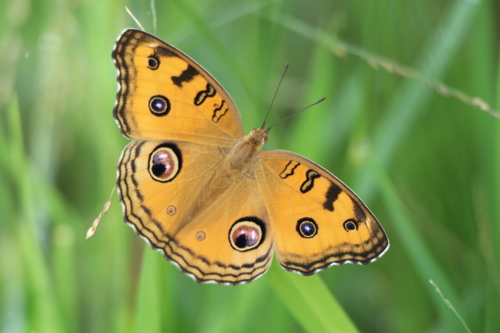
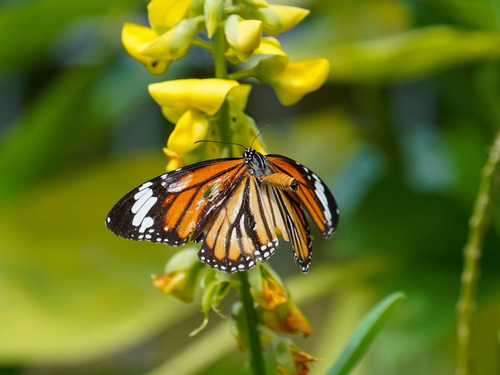
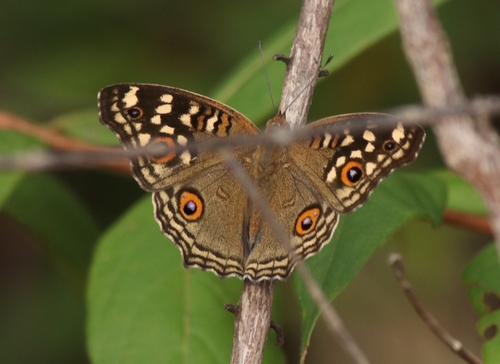
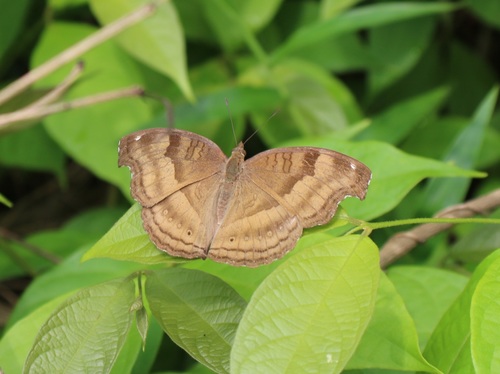
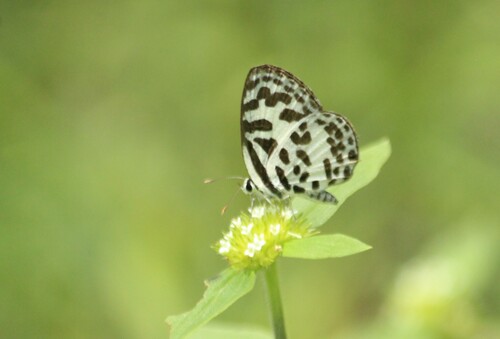
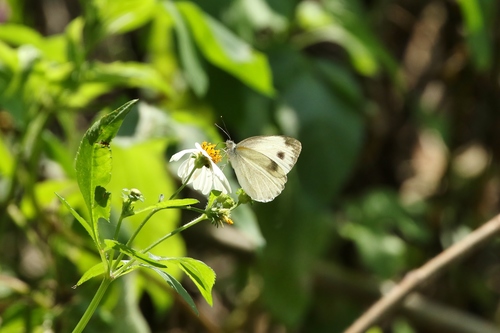
The closest relatives of the Great Eggfly that you can see in Chitwan National Park (family Nymphalidae, Brush-footed Butterflies) are Grey Pansy (about 30%), Peacock Pansy (about 30%) and Common Tiger Butterfly (about 30%), with each one's daily chance of a sighting.
Where does the Great Eggfly sighting chance come from?
GBIF citizen-science records
It is estimated from how often the Great Eggfly is recorded against all the insects logged in Chitwan National Park (21 verified sightings from 2019 to 2026), calibrated against known sighting rates. Figures are rounded to the nearest 10% because citizen-science data supports honest approximations, not decimals, and months with records from fewer than five people show "—". How it works.
