




Completed


European Robin
Erithacus rubecula
Silhouette: Rebecca Groom · PhyloPic
- KingdomAnimalia (Animals)
- PhylumChordata (Chordates)
- ClassAves (Birds)
- OrderPasseriformes (Perching Birds)
- FamilyMuscicapidae (Old World Flycatchers, Robins, and Chats)
- GenusErithacus (European Robins)
- SpeciesErithacus rubecula (European Robin)
In 3 days ~80% in a week >90%
1,263 Verified sightings at Amsterdam
21,231 In all 28 parks From 2019 to 2026
October Best month
☀️ Diurnal When it's spotted
About the European Robin
The European robin (Erithacus rubecula), known simply as the robin or robin redbreast in the British Isles, is a small insectivorous passerine bird belonging to the Old World flycatcher family Muscicapidae. It is found across Europe, as far east as Western Siberia, and as far south as North Africa. It is sedentary in the west and south of its range, and migratory in the north and east of its range where winters are harsher.
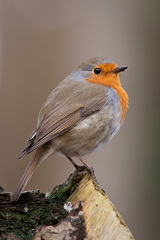
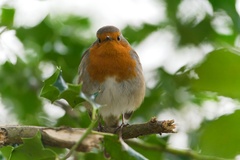
It is 12.5–14.0 cm (4.9–5.5 in) in length. The male and female are identical in plumage, with an orange-toned red breast and face lined with grey, brown upper-parts and a whitish belly. Juveniles are distinct, being freckled brown all over and lacking the red breast. First-winter immatures resemble the adults, except they have more obvious yellow-brown tips to the wing covert feathers, which are inconspicuous or absent in adults.
The distinctive orange breast of both sexes contributed to the European robin's original name of "redbreast". The word orange did not become a recognised colour name in English until the 16th century, by which time the fruit of the same name had been introduced. Other names for the bird in different languages also refer to... Wikipedia →
Recent sightings of European Robin in Amsterdam
LIVEiNaturalistGlobal Distribution
Parks Where Found
Cities Where Found
| # | City | Country | Daily sighting probability |
|---|---|---|---|
| 1 | Manchester | 🇬🇧 United Kingdom | |
| 2 | Birmingham | 🇬🇧 United Kingdom | |
| 3 | Essen | 🇩🇪 Germany | |
| 4 | London | 🇬🇧 United Kingdom | |
| 5 | Liverpool | 🇬🇧 United Kingdom | |
| 6 | Hamburg | 🇩🇪 Germany | |
| 7 | Cologne | 🇩🇪 Germany | |
| 8 | Dublin | 🇮🇪 Ireland | |
| 9 | Leeds | 🇬🇧 United Kingdom | |
| 10 | Paris | 🇫🇷 France |
Zoos & Centres Where Found
| # | Zoo / Centre | Country | |
|---|---|---|---|
| 1 | Moscow Zoo | 🇷🇺 Russia | |
| 2 | Aquarium-Muséum | 🇧🇪 Belgium | |
| 3 | London Zoo | 🇬🇧 United Kingdom | |
| 4 | Combe Martin Wildlife and Dinosaur Park | 🇬🇧 United Kingdom |
Closest Relatives at Amsterdam





Before you go
What are the chances of seeing a European Robin in Amsterdam?
Likely
About 40% of wildlife watchers report a European Robin sighting in Amsterdam on a given day, based on 1,263 verified sightings from GBIF citizen-science data. It is the 19th most-seen of the 132 birds we can rate there. Over three days the chance rises to about 80%, and over a week to over 90%, if each day is a fresh chance.
When is the best time to see a European Robin in Amsterdam?
January–February and October–November
In those months about 60% of wildlife watchers report a European Robin in Amsterdam on a given day, against about 10% in August, the lowest month.
What time of day is best to see a European Robin?
Between 10 am and 1 pm
Across all the parks we cover, that three-hour window holds the most European Robin sightings with a recorded time, and about 9 in 10 of them come between 6 am and 6 pm: it is a daytime animal.
Is Amsterdam the best place to see a European Robin?
31st of 74
Of the 74 cities where we can rate European Robin sightings, Amsterdam ranks 31st at about 40%. The best odds are in Manchester (United Kingdom, about 90%), Birmingham (United Kingdom, about 80%) and Essen (Germany, about 80%).
Where does the European Robin sighting chance come from?
GBIF citizen-science records
It is estimated from how often the European Robin is recorded against all the birds logged in Amsterdam (1,263 verified sightings), calibrated against known sighting rates. Figures are rounded to the nearest 10% because citizen-science data supports honest approximations, not decimals, and months with records from fewer than five people show "—". How it works.
