
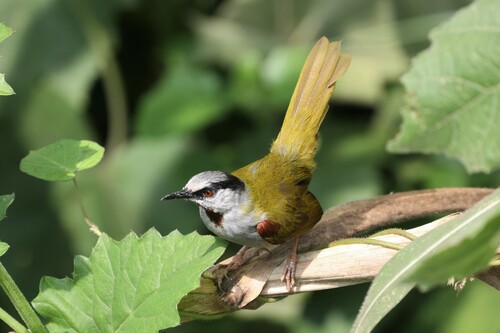
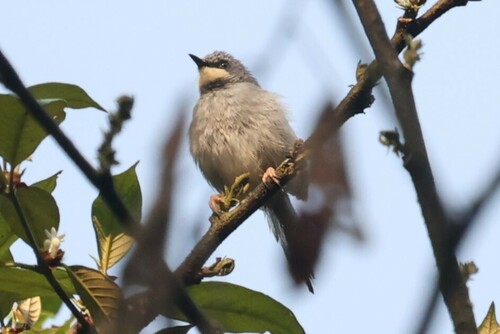
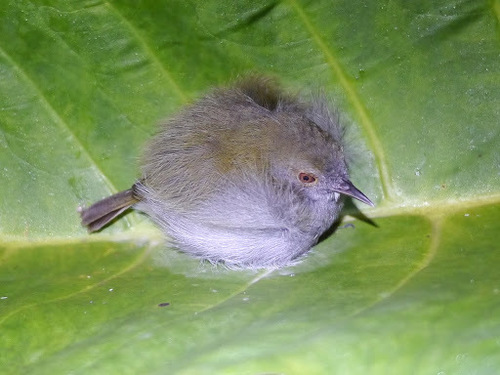
Tawny-flanked Prinia

Tawny-flanked Prinia

Prinia subflava

Silhouette: Sheatherius · PhyloPic

LCLeast ConcernNTVUENCR
Daily sighting probability ~20% · Possible
at Kampala

In 3 days ~50% in a week ~80%

415 Verified sightings at Kampala
10,559 In all 45 parks From 2019 to 2026
September Best month
☀️ Diurnal When it's spotted

About the Tawny-flanked Prinia

The tawny-flanked prinia (Prinia subflava) is a small passerine bird belonging to the genus Prinia in the family Cisticolidae, a family of Old World warblers. It is widespread and common in most parts of Africa south of the Sahara. The plain prinia (P. inornata) of southern Asia was formerly included in this species but is now usually considered to be a separate species.

The tawny-flanked prinia was formally described in 1789 by the German naturalist Johann Friedrich Gmelin in his revised and expanded edition of Carl Linnaeus's Systema Naturae. He placed it with the wagtails in the genus Motacilla and coined the binomial name Motacilla subflava. The specific epithet combines the Latin sub meaning "beneath" or "somewhat" with flavus meaning "yellow". Gmelin based his account on a hand coloured engraving by François-Nicolas Martinet that was published to accompany the Comte de Buffon's multi-volume work, the Histoire Naturelle des Oiseaux. The tawny-flanked prinia is now one of 30 species placed in the genus Prinia that was introduced by the American naturalist Thomas Horsfield in 1821.

Ten subspecies are recognised: Wikipedia →

Sounds

Song0:27

Uganda · 2025

© Bernard BOUSQUET · XC1062495 · CC BY-NC-SA 4.0

Duet0:20

South Africa · 2025

© Ehren Eksteen · XC1005408 · CC BY-NC-SA 4.0

Call0:58

South Africa · 2023

© Marc Anderson · XC876956 · CC BY-NC-ND 4.0

Global Distribution

Parks Where Found

# Park Country Daily sighting probability
1 Nairobi National Park 🇰🇪 Kenya
~40%
2 Kruger National Park 🇿🇦 South Africa
~40%
3 uMkhuze Game Reserve 🇿🇦 South Africa
~30%
4 Kidepo Valley National Park 🇺🇬 Uganda
~30%
5 Hluhluwe-Imfolozi Park 🇿🇦 South Africa
~30%
6 Gonarezhou National Park 🇿🇼 Zimbabwe
~30%
7 Kafue National Park 🇿🇲 Zambia
~30%
8 Pilanesberg National Park 🇿🇦 South Africa
~30%
9 Arusha National Park 🇹🇿 Tanzania
~30%
10 Niokolo-Koba National Park 🇸🇳 Senegal
~20%
11 Tarangire National Park 🇹🇿 Tanzania
~20%
12 Murchison Falls National Park 🇺🇬 Uganda
~20%
13 Queen Elizabeth National Park 🇺🇬 Uganda
~20%
14 Kibale National Park 🇺🇬 Uganda
~20%
15 Lake Mburo National Park 🇺🇬 Uganda
~20%
16 Bale Mountains National Park 🇪🇹 Ethiopia
~20%
17 Ruaha National Park 🇹🇿 Tanzania
~20%
18 Hwange National Park 🇿🇼 Zimbabwe
~20%
19 Meru National Park 🇰🇪 Kenya
~20%
20 Mikumi National Park 🇹🇿 Tanzania
~20%
21 Akagera National Park 🇷🇼 Rwanda
~20%
22 iSimangaliso Wetland Park 🇿🇦 South Africa
~20%
23 South Luangwa National Park 🇿🇲 Zambia
~20%
24 Mana Pools National Park 🇿🇼 Zimbabwe
~20%
25 Mkomazi National Park 🇹🇿 Tanzania
~20%
26 Masai Mara National Reserve 🇰🇪 Kenya
~20%
27 Lake Manyara National Park 🇹🇿 Tanzania
~10%
28 Lower Zambezi National Park 🇿🇲 Zambia
~10%
29 Lake Nakuru National Park 🇰🇪 Kenya
~10%
30 Tsavo West National Park 🇰🇪 Kenya
~10%
31 Liwonde National Park 🇲🇼 Malawi
~10%
32 Chobe National Park 🇧🇼 Botswana
~10%
33 Gorongosa National Park 🇲🇿 Mozambique
~10%
34 Serengeti National Park 🇹🇿 Tanzania
~10%
35 Ngorongoro Conservation Area 🇹🇿 Tanzania
~10%
36 Moremi Game Reserve 🇧🇼 Botswana
~10%
37 Nyungwe National Park 🇷🇼 Rwanda
~10%
38 Semuliki National Park 🇺🇬 Uganda
~10%
39 Virunga National Park 🇨🇩 Democratic Republic of the Congo
~10%
40 Tsavo East National Park 🇰🇪 Kenya
~10%
41 Amboseli National Park 🇰🇪 Kenya
<5%
42 Samburu National Reserve 🇰🇪 Kenya
<5%
43 Aberdare National Park 🇰🇪 Kenya
<5%
44 Addo Elephant National Park 🇿🇦 South Africa
<5%
45 Bwindi Impenetrable National Park 🇺🇬 Uganda
<5%

Cities Where Found

# City Country Daily sighting probability
1 Brazzaville 🇨🇬 Republic of the Congo
~60%
2 Mombasa 🇰🇪 Kenya
~40%
3 Yaoundé 🇨🇲 Cameroon
~40%
4 Maputo 🇲🇿 Mozambique
~40%
5 Dar es-Salaam 🇹🇿 Tanzania
~40%
6 Pretoria 🇿🇦 South Africa
~30%
7 Addis Ababa 🇪🇹 Ethiopia
~30%
8 Johannesburg 🇿🇦 South Africa
~30%
9 Durban 🇿🇦 South Africa
~20%
10 Harare 🇿🇼 Zimbabwe
~20%

Before you go

What are the chances of seeing a Tawny-flanked Prinia in Kampala?

Possible

About 20% of wildlife watchers report a Tawny-flanked Prinia sighting in Kampala on a given day, based on 415 verified sightings from GBIF citizen-science data. It is the 63rd most-seen of the 332 birds we can rate there. Over three days the chance rises to about 50%, and over a week to about 80%, if each day is a fresh chance.

When is the best time to see a Tawny-flanked Prinia in Kampala?

January, April and September

In those months about 30% of wildlife watchers report a Tawny-flanked Prinia in Kampala on a given day, against about 10% in February–March and June–August, the lowest months.

What time of day is best to see a Tawny-flanked Prinia?

Between 10 am and 1 pm

Across all the parks we cover, that three-hour window holds the most Tawny-flanked Prinia sightings with a recorded time, and about 9 in 10 of them come between 6 am and 6 pm: it is a daytime animal.

Is Kampala the best place to see a Tawny-flanked Prinia?

14th of 24

Of the 24 cities where we can rate Tawny-flanked Prinia sightings, Kampala ranks 14th at about 20%. The best odds are in Brazzaville (Republic of the Congo, about 60%), Mombasa (Kenya, about 40%) and Yaoundé (Cameroon, about 40%).

Which relatives of the Tawny-flanked Prinia live in Kampala?

Same family: Cisticolidae

The closest relatives of the Tawny-flanked Prinia that you can see in Kampala (family Cisticolidae, Cisticolas and Allies) are Green-backed Camaroptera (about 50%), Gray-capped Warbler (about 30%) and Winding Cisticola (about 30%), with each one's daily chance of a sighting.

Where does the Tawny-flanked Prinia sighting chance come from?

GBIF citizen-science records

It is estimated from how often the Tawny-flanked Prinia is recorded against all the birds logged in Kampala (415 verified sightings), calibrated against known sighting rates. Figures are rounded to the nearest 10% because citizen-science data supports honest approximations, not decimals, and months with records from fewer than five people show "—". How it works.

← Back to Kampala