Black-headed Ibis

Black-headed Ibis

Threskiornis melanocephalus

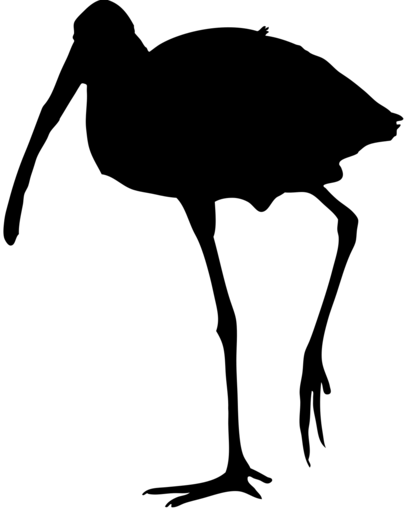
Silhouette: Steven Traver · PhyloPic

LCLeast ConcernNTVUENCR
Daily sighting probability <5% · Rare
at Lucknow

In 3 days ~10% in a week ~30%

43 Verified sightings at Lucknow
6,278 In all 19 parks From 2019 to 2026
December Best month
🌅 Crepuscular When it's spotted

About the Black-headed Ibis

The black-headed ibis (Threskiornis melanocephalus), also known as the Oriental white ibis, Indian white ibis, and black-necked ibis, is a species of wading bird of the ibis family Threskiornithidae which breeds in the South and Southeast Asia from India to the west and as far east as Japan. It is the only native ibis species in its range that has an overall white plumage with a black neck and head. The down-curved beak and legs are also black. Though often referred to as a wetland species, the black-headed ibis forages in a range of natural and man-made habitats. This species of ibis nests only during the rainy season.

The black-headed ibis is one of several large waterbird species in south and south-east Asia, with adults measuring 65–76 cm in length. The white plumage is starkly contrasted against a conspicuous naked black neck and head, and black down-curved beak. Tails of adults bear light grey ornamental feathers that turn jet black during the breeding season. During the breeding season, bare patches under the wing turn blood-red. The head of some breeding adults gain a blueish tinge, or very rarely have a pink or bright red patch behind the neck. Some breeding... Wikipedia →

Sounds

Call0:06

India · 2019

© Peter Boesman · XC460207 · CC BY-NC-ND 4.0

Global Distribution

Parks Where Found

# Park Country Daily sighting probability
1 Keoladeo National Park 🇮🇳 India
~70%
2 Yala National Park 🇱🇰 Sri Lanka
~70%
3 Kaziranga National Park 🇮🇳 India
~60%
4 Wilpattu National Park 🇱🇰 Sri Lanka
~50%
5 Minneriya National Park 🇱🇰 Sri Lanka
~40%
6 Ranthambore National Park 🇮🇳 India
~30%
7 Udawalawe National Park 🇱🇰 Sri Lanka
~30%
8 Nagarhole National Park 🇮🇳 India
~30%
9 Gir National Park 🇮🇳 India
~20%
10 Bandipur National Park 🇮🇳 India
~10%
11 Satpura National Park 🇮🇳 India
~10%
12 Mudumalai National Park 🇮🇳 India
~10%
13 Sundarbans National Park 🇮🇳 India
<5%
14 Periyar National Park 🇮🇳 India
<5%
15 Bandhavgarh National Park 🇮🇳 India
<5%
16 Chitwan National Park 🇳🇵 Nepal
<5%
17 Sinharaja Forest Reserve 🇱🇰 Sri Lanka
<5%
18 Kanha National Park 🇮🇳 India
<5%
19 Manas National Park 🇮🇳 India
<5%

Cities Where Found

# City Country Daily sighting probability
1 Mysuru 🇮🇳 India
~40%
2 Rajkot 🇮🇳 India
~40%
3 Ponnani 🇮🇳 India
~40%
4 Kota 🇮🇳 India
~40%
5 Colombo [Sri Jayawardenepura Kotte] 🇱🇰 Sri Lanka
~40%
6 Kochi 🇮🇳 India
~40%
7 Thiruvananthapuram 🇮🇳 India
~30%
8 Coimbatore 🇮🇳 India
~30%
9 Vadodara 🇮🇳 India
~30%
10 Kozhikode 🇮🇳 India
~30%

Zoos & Centres Where Found

# Zoo / Centre Country
1 Prague Zoo 🇨🇿 Czechia In captivity
2 Dvůr Králové Zoo 🇨🇿 Czechia In captivity
3 Sri Venkateswara Zoological Park 🇮🇳 India In captivity
4 Al Ain Zoo 🇦🇪 United Arab Emirates In captivity
5 Nehru Zoological Park 🇮🇳 India In captivity
6 Kanpur Zoological Park 🇮🇳 India In captivity
7 Safari World 🇹🇭 Thailand In captivity
8 Tama Zoological Park 🇯🇵 Japan In captivity
9 National Zoo of Malaysia 🇲🇾 Malaysia In captivity
10 Chișinău Zoo 🇲🇩 Moldova In captivity
11 Houston Zoo 🇺🇸 United States In captivity
12 Alipore Zoological Gardens 🇮🇳 India In captivity
13 Emirates Park Zoo 🇦🇪 United Arab Emirates In captivity
14 Saigon Zoo and Botanical Gardens 🇻🇳 Vietnam In captivity
15 Thiruvananthapuram Zoo 🇮🇳 India In captivity
16 Chai Nat Bird Park 🇹🇭 Thailand In captivity
17 Aviario Nacional de Colombia 🇨🇴 Colombia In captivity
18 Jardin zoologique de la ville de Lyon 🇫🇷 France In captivity
19 Kathmandu Zoo 🇳🇵 Nepal In captivity
20 Rakutenchi 🇯🇵 Japan In captivity
21 Rákosův pavilon 🇨🇿 Czechia In captivity
22 Velemlokárium 🇨🇿 Czechia In captivity
23 Jaipur Zoo 🇮🇳 India In captivity
24 Rohtak Zoo 🇮🇳 India In captivity

Before you go

What are the chances of seeing a Black-headed Ibis in Lucknow?

Rare

Under 5% of wildlife watchers report a Black-headed Ibis sighting in Lucknow on a given day, based on 43 verified sightings from GBIF citizen-science data. It is the 117th most-seen of the 200 birds we can rate there. Over three days the chance rises to about 10%, and over a week to about 30%, if each day is a fresh chance.

When is the best time to see a Black-headed Ibis in Lucknow?

September and November–January

In those months about 10% of wildlife watchers report a Black-headed Ibis in Lucknow on a given day, against under 5% in February–August and October, the lowest months. Those are among Lucknow's driest months, with about 50 mm of rain a month against 320 mm in July.

What time of day is best to see a Black-headed Ibis?

Between 3 and 6 am

Across all the parks we cover, that three-hour window holds the most Black-headed Ibis sightings with a recorded time, and about 6 in 10 of them come between 6 am and 6 pm: it is most active around dawn and dusk.

Is Lucknow the best place to see a Black-headed Ibis?

38th of 49

Of the 49 cities where we can rate Black-headed Ibis sightings, Lucknow ranks 38th at under 5%. The best odds are in Mysuru (India, about 40%), Rajkot (India, about 40%) and Ponnani (India, about 40%).

Where does the Black-headed Ibis sighting chance come from?

GBIF citizen-science records

It is estimated from how often the Black-headed Ibis is recorded against all the birds logged in Lucknow (43 verified sightings), calibrated against known sighting rates. Figures are rounded to the nearest 10% because citizen-science data supports honest approximations, not decimals, and months with records from fewer than five people show "—". How it works.

← Back to Lucknow