


Completed

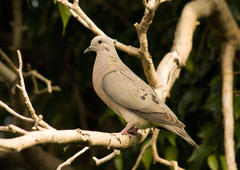


Eared Dove
Zenaida auriculata
Silhouette: Danielle Alba · PhyloPic
- KingdomAnimalia (Animals)
- PhylumChordata (Chordates)
- ClassAves (Birds)
- OrderColumbiformes (Pigeons and Doves)
- FamilyColumbidae (Pigeons and Doves)
- GenusZenaida (Zenaida Doves)
- SpeciesZenaida auriculata (Eared Dove)
In 3 days ~80% in a week >90%
2,263 Verified sightings at Iguaçu National Park From 2019 to 2026
11,361 In all 24 parks
March Best month
☀️ Diurnal When it's spotted
About the Eared Dove
The eared dove (Zenaida auriculata) is a New World dove. It is a resident breeder throughout South America from Colombia to southern Argentina and Chile, and on the offshore islands from the Grenadines southwards. It may be a relatively recent colonist of Tobago and Trinidad. It appears to be partially migratory, its movements driven by food supplies.
It is a close relative of the North American mourning dove. With that species, the Socorro dove, and possibly the Galápagos dove, it forms a superspecies. The latter two are insular offshoots, the Socorro birds from ancestral mourning doves, and the Galápagos ones from more ancient stock.
The eared dove is 24 cm (9.4 in) long with a long, wedge-shaped tail, and weighs normally about 112 g (4.0 oz). Adult males have mainly olive-brown upperpart plumage, with black spots on the wings. The head has a grey crown, black line behind the eye, and the blue-black on the lower ear coverts. These black markings give the species its English and specific names. The underparts are vinous, and the tail is tipped with cinnamon. The bill is black and the legs dark red.
The female is duller than the male, and immature birds are greyish... Wikipedia →
Recent sightings of Eared Dove in Iguaçu National Park
LIVEiNaturalistGlobal Distribution
Parks Where Found
Cities Where Found
| # | City | Country | Daily sighting probability |
|---|---|---|---|
| 1 | Santiago | 🇨🇱 Chile | |
| 2 | Quito | 🇪🇨 Ecuador | |
| 3 | Bogota | 🇨🇴 Colombia | |
| 4 | Cordoba | 🇦🇷 Argentina | |
| 5 | Porto Alegre | 🇧🇷 Brazil | |
| 6 | Mendoza | 🇦🇷 Argentina | |
| 7 | Cochabamba | 🇧🇴 Bolivia | |
| 8 | Montevideo | 🇺🇾 Uruguay | |
| 9 | Arequipa | 🇵🇪 Peru | |
| 10 | Rosario | 🇦🇷 Argentina |
Zoos & Centres Where Found
| # | Zoo / Centre | Country | |
|---|---|---|---|
| 1 | Parque das Aves | 🇧🇷 Brazil | |
| 2 | Berlin Zoological Garden | 🇩🇪 Germany | |
| 3 | Night Safari | 🇸🇬 Singapore | |
| 4 | Singapore Zoo | 🇸🇬 Singapore | |
| 5 | Bioparque Municipal Vesty Pakos | 🇧🇴 Bolivia | |
| 6 | Bird Paradise | 🇸🇬 Singapore | |
| 7 | Rainforest Wild Asia | 🇸🇬 Singapore | |
| 8 | Buin Zoo | 🇨🇱 Chile | |
| 9 | River Wonders | 🇸🇬 Singapore | |
| 10 | Chilean National Zoo | 🇨🇱 Chile | |
| 11 | Agroflori Parque de las Aves | 🇧🇴 Bolivia | |
| 12 | Aquarium Berlin | 🇩🇪 Germany | |
| 13 | Aquamundo | 🇨🇱 Chile |
Closest Relatives at Iguaçu National Park




Before you go
What are the chances of seeing an Eared Dove in Iguaçu National Park?
Likely
About 50% of wildlife watchers report an Eared Dove sighting in Iguaçu National Park on a given day, based on 2,263 verified sightings from GBIF citizen-science data from 2019 to 2026. It is the 12th most-seen of the 346 birds we can rate there. Over three days the chance rises to about 80%, and over a week to over 90%, if each day is a fresh chance.
When is the best time to see an Eared Dove in Iguaçu National Park?
March
In that month about 60% of wildlife watchers report an Eared Dove in Iguaçu National Park on a given day, against about 40% in May–June, August–September and November, the lowest months.
What time of day is best to see an Eared Dove?
Between 7 and 10 am
Across all the parks we cover, that three-hour window holds the most Eared Dove sightings with a recorded time, and about 9 in 10 of them come between 6 am and 6 pm: it is a daytime animal.
Is Iguaçu National Park the best place to see an Eared Dove?
6th of 24
Of the 24 parks where we can rate Eared Dove sightings, Iguaçu National Park ranks 6th at about 50%. The best odds are in El Palmar National Park (Argentina, about 80%), Machalilla National Park (Ecuador, about 50%) and Iguazú National Park (Argentina, about 50%). All parks ranked.
Which relatives of the Eared Dove live in Iguaçu National Park?
Same family: Columbidae
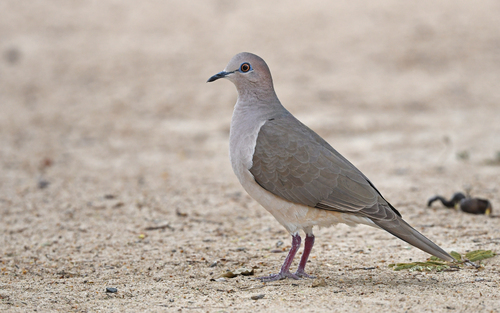
The closest relatives of the Eared Dove that you can see in Iguaçu National Park (family Columbidae, Pigeons and Doves) are Picazuro Pigeon (about 40%), White-tipped Dove (about 30%) and Grey-fronted Dove (about 10%), with each one's daily chance of a sighting.
Where does the Eared Dove sighting chance come from?
GBIF citizen-science records
It is estimated from how often the Eared Dove is recorded against all the birds logged in Iguaçu National Park (2,263 verified sightings from 2019 to 2026), calibrated against known sighting rates. Figures are rounded to the nearest 10% because citizen-science data supports honest approximations, not decimals, and months with records from fewer than five people show "—". How it works.
