Pale-billed Flowerpecker

Pale-billed Flowerpecker

Dicaeum erythrorhynchos

Silhouette: Rachael Joakim · PhyloPic

LCLeast ConcernNTVUENCR
Daily sighting probability ~10% · With luck
at Eravikulam National Park

In 3 days ~20% in a week ~30%

23 Verified sightings at Eravikulam National Park From 2019 to 2026
3,780 In all 18 parks
May Best month
🌅 Crepuscular When it's spotted

About the Pale-billed Flowerpecker

The pale-billed flowerpecker or Tickell's flowerpecker (Dicaeum erythrorhynchos) is a tiny bird that feeds on nectar and berries, found in India, Sri Lanka, Bangladesh and western Myanmar. The bird is common especially in urban gardens with berry bearing trees. They have a rapid chipping call and the pinkish curved beak separates it from other species in the region.

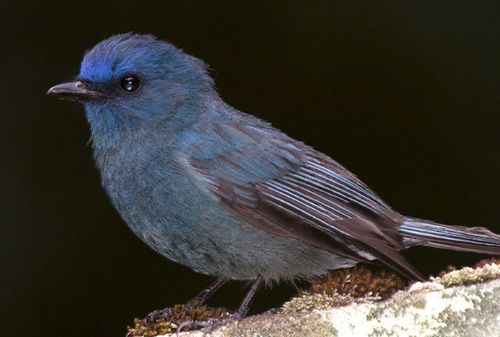
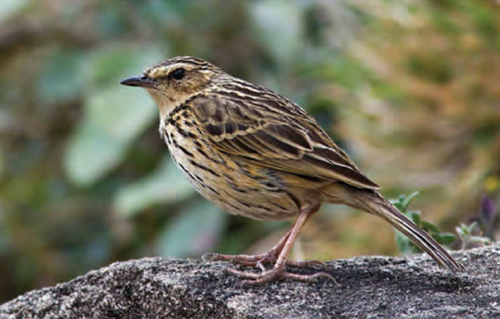
This is a tiny bird, 8 cm long, and is one of the smallest birds occurring in most parts of southern India and Sri Lanka. The bird is plain brownish to olive green. The underside is buff olive and does not contrast greatly with the upperparts and not whitish as in the Nilgiri flowerpecker of the Western Ghats and Nilgiri hills nor is it streaked as in the thick-billed flowerpecker. The Nilgiri flowerpecker has a pale supercilium unlike this species which has no marking on the head. The Sri Lankan race ceylonense Babault, 1920 - is greyer and smaller than the nominate race of peninsular India. It has been considered one of the early flowerpeckers, originating in the Malay Peninsula, to colonize the Indian Subcontinent.

In forested areas, they often visit the flowers of Loranthus... Wikipedia →

Sounds

Uncertain0:14

India · 2025

© Jairam Vijayan · XC1036129 · CC BY-SA 4.0

Call0:43

Sri Lanka · 2022

© Okamoto Keita Sin · XC756571 · CC BY-NC-SA 4.0

Song0:21

Sri Lanka · 2007

© Jelle Scharringa · XC652777 · CC BY-NC-SA 4.0

Global Distribution

Parks Where Found

# Park Country Daily sighting probability
1 Sinharaja Forest Reserve 🇱🇰 Sri Lanka
~60%
2 Horton Plains National Park 🇱🇰 Sri Lanka
~60%
3 Udawalawe National Park 🇱🇰 Sri Lanka
~30%
4 Minneriya National Park 🇱🇰 Sri Lanka
~30%
5 Yala National Park 🇱🇰 Sri Lanka
~30%
6 Wilpattu National Park 🇱🇰 Sri Lanka
~20%
7 Mudumalai National Park 🇮🇳 India
~20%
8 Bandipur National Park 🇮🇳 India
~10%
9 Bandhavgarh National Park 🇮🇳 India
~10%
10 Sundarbans National Park 🇮🇳 India
~10%
11 Satpura National Park 🇮🇳 India
~10%
12 Nagarhole National Park 🇮🇳 India
~10%
13 Periyar National Park 🇮🇳 India
~10%
14 Kanha National Park 🇮🇳 India
~10%
15 Eravikulam National Park 🇮🇳 India
~10%
16 Royal Bardia National Park 🇳🇵 Nepal
<5%
17 Gir National Park 🇮🇳 India
<5%
18 Jim Corbett National Park 🇮🇳 India
<5%

Cities Where Found

# City Country Daily sighting probability
1 Bengaluru 🇮🇳 India
~70%
2 Thiruvananthapuram 🇮🇳 India
~60%
3 Kollam 🇮🇳 India
~60%
4 Thrissur 🇮🇳 India
~50%
5 Hyderabad 🇮🇳 India
~50%
6 Colombo [Sri Jayawardenepura Kotte] 🇱🇰 Sri Lanka
~50%
7 Mysuru 🇮🇳 India
~50%
8 Coimbatore 🇮🇳 India
~40%
9 Kochi 🇮🇳 India
~30%
10 Colachel 🇮🇳 India
~30%

Before you go

What are the chances of seeing a Pale-billed Flowerpecker in Eravikulam National Park?

With luck

About 10% of wildlife watchers report a Pale-billed Flowerpecker sighting in Eravikulam National Park on a given day, based on 23 verified sightings from GBIF citizen-science data from 2019 to 2026. It is the 67th most-seen of the 116 birds we can rate there. Over three days the chance rises to about 20%, and over a week to about 30%, if each day is a fresh chance.

When is the best time to see a Pale-billed Flowerpecker in Eravikulam National Park?

May

In that month about 20% of wildlife watchers report a Pale-billed Flowerpecker in Eravikulam National Park on a given day, against under 5% in January–April, June–September and November, the lowest months.

What time of day is best to see a Pale-billed Flowerpecker?

Between 3 and 6 am

Across all the parks we cover, that three-hour window holds the most Pale-billed Flowerpecker sightings with a recorded time, and about half of them come between 6 pm and 6 am: it is most active around dawn and dusk.

Where does the Pale-billed Flowerpecker sighting chance come from?

GBIF citizen-science records

It is estimated from how often the Pale-billed Flowerpecker is recorded against all the birds logged in Eravikulam National Park (23 verified sightings from 2019 to 2026), calibrated against known sighting rates. Figures are rounded to the nearest 10% because citizen-science data supports honest approximations, not decimals, and months with records from fewer than five people show "—". How it works.

← Back to Eravikulam National Park