American Pipit

American Pipit

Anthus rubescens

Silhouette: Susan Murphy (original photograph), T. Michael Keesey (vectorization) · PhyloPic

LCLeast ConcernNTVUENCR
Daily sighting probability <5% · Rare
at Everglades National Park

In 3 days <5% in a week ~10%

124 Verified sightings at Everglades National Park From 2019 to 2026
6,980 In all 39 parks
January Best month
☀️ Diurnal When it's spotted

About the American Pipit

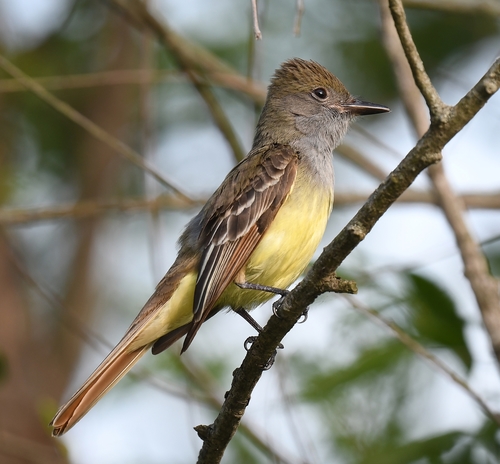
The American pipit (Anthus rubescens), formerly known as the buff-bellied pipit, is a small songbird native to North America. It was first described by Marmaduke Tunstall in his 1771 Ornithologia Britannica. It was formerly classified as a form of the water pipit. The former subspecies, Siberian pipit, is now considered a distinct species.

Like most other pipits, the American pipit is an undistinguished-looking species which usually can be seen to run around on the ground. It has lightly streaked grey-brown upperparts and is diffusely streaked below on the buff breast and flanks. The belly is whitish, the bill and legs are dark. The related Siberian pipit is darker above and has bolder black streaking on its whiter underparts; its legs have a reddish hue. The call is a squeaky sip.

Measurements: Length: 16 cm Weight: 22 g Wingspan: 24 cm The scientific name is from Latin. Anthus is the name for a small bird of grasslands, and the specific rubescens means "reddish", from ruber, "ruddy". Three subspecies are currently recognized: Wikipedia →

Sounds

Call0:11

Mexico · 2026

© Manuel Grosselet · XC1084541 · CC BY-NC-SA 4.0

Alarm call0:18

United States · 2025

© Valerie Heemstra · XC1051318 · CC BY-NC-SA 4.0

Flight call0:05

United States · 2020

© Paul Marvin · XC620543 · CC BY-NC-SA 4.0

Global Distribution

Parks Where Found

# Park Country Daily sighting probability
1 Death Valley National Park 🇺🇸 United States
~30%
2 Rocky Mountain National Park 🇺🇸 United States
~10%
3 Glacier National Park 🇺🇸 United States
~10%
4 Channel Islands National Park 🇺🇸 United States
~10%
5 Jasper National Park 🇨🇦 Canada
~10%
6 Denali National Park 🇺🇸 United States
~10%
7 Kluane National Park 🇨🇦 Canada
~10%
8 Big Bend National Park 🇺🇸 United States
~10%
9 Wood Buffalo National Park 🇨🇦 Canada
~10%
10 Gros Morne National Park 🇨🇦 Canada
~10%
11 Joshua Tree National Park 🇺🇸 United States
~10%
12 El Vizcaíno Biosphere Reserve 🇲🇽 Mexico
~10%
13 Wrangell-St. Elias National Park 🇺🇸 United States
~10%
14 Redwood National Park 🇺🇸 United States
~10%
15 Pacific Rim National Park Reserve 🇨🇦 Canada
~10%
16 Olympic National Park 🇺🇸 United States
<5%
17 Point Pelee National Park 🇨🇦 Canada
<5%
18 Banff National Park 🇨🇦 Canada
<5%
19 Great Bear Rainforest 🇨🇦 Canada
<5%
20 Grand Teton National Park 🇺🇸 United States
<5%
21 Kenai Fjords National Park 🇺🇸 United States
<5%
22 Yellowstone National Park 🇺🇸 United States
<5%
23 Isle Royale National Park 🇺🇸 United States
<5%
24 Sequoia and Kings Canyon National Parks 🇺🇸 United States
<5%
25 Yosemite National Park 🇺🇸 United States
<5%
26 Bahía de Loreto National Park 🇲🇽 Mexico
<5%
27 Acadia National Park 🇺🇸 United States
<5%
28 Padre Island National Seashore 🇺🇸 United States
<5%
29 Everglades National Park 🇺🇸 United States
<5%
30 Big Cypress National Preserve 🇺🇸 United States
<5%
31 Badlands National Park 🇺🇸 United States
<5%
32 Cumbres de Monterrey National Park 🇲🇽 Mexico
<5%
33 Shenandoah National Park 🇺🇸 United States
<5%
34 Grand Canyon National Park 🇺🇸 United States
<5%
35 Celestún Biosphere Reserve 🇲🇽 Mexico
<5%
36 Great Smoky Mountains National Park 🇺🇸 United States
<5%
37 Zion National Park 🇺🇸 United States
<5%
38 Saguaro National Park 🇺🇸 United States
<5%
39 Merritt Island National Wildlife Refuge 🇺🇸 United States
<5%

Cities Where Found

# City Country Daily sighting probability
1 León 🇲🇽 México
~10%
2 San Luis Potosí 🇲🇽 México
~10%
3 Sacramento 🇺🇸 United States
~10%
4 San Diego 🇺🇸 United States
~10%
5 Los Angeles 🇺🇸 United States
~10%
6 Mesa 🇺🇸 United States
~10%
7 Mexico City 🇲🇽 México
~10%
8 Las Vegas 🇺🇸 United States
~10%
9 San Francisco 🇺🇸 United States
<5%
10 Austin 🇺🇸 United States
<5%

Before you go

What are the chances of seeing an American Pipit in Everglades National Park?

Rare

Under 5% of wildlife watchers report an American Pipit sighting in Everglades National Park on a given day, based on 124 verified sightings from GBIF citizen-science data from 2019 to 2026. It is the 182nd most-seen of the 273 birds we can rate there. Over three days the chance rises to under 5%, and over a week to about 10%, if each day is a fresh chance.

When is the best time to see an American Pipit in Everglades National Park?

January

In that month about 10% of wildlife watchers report an American Pipit in Everglades National Park on a given day, against under 5% in February to December, the lowest months. That is one of Everglades National Park's driest months, with about 55 mm of rain against 240 mm in June.

What time of day is best to see an American Pipit?

Between 11 am and 2 pm

Across all the parks we cover, that three-hour window holds the most American Pipit sightings with a recorded time, and about 9 in 10 of them come between 6 am and 6 pm: it is a daytime animal.

Which relatives of the American Pipit live in Everglades National Park?

Same order: Passeriformes

The closest relatives of the American Pipit that you can see in Everglades National Park (order Passeriformes, Perching Birds) are Northern Cardinal (about 70%), Northern Mockingbird (about 70%) and American Crow (about 60%), with each one's daily chance of a sighting.

Where does the American Pipit sighting chance come from?

GBIF citizen-science records

It is estimated from how often the American Pipit is recorded against all the birds logged in Everglades National Park (124 verified sightings from 2019 to 2026), calibrated against known sighting rates. Figures are rounded to the nearest 10% because citizen-science data supports honest approximations, not decimals, and months with records from fewer than five people show "—". How it works.

← Back to Everglades National Park