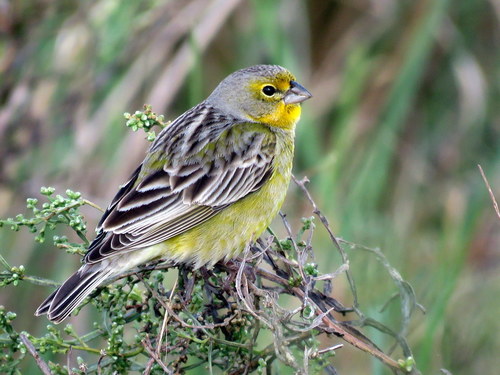
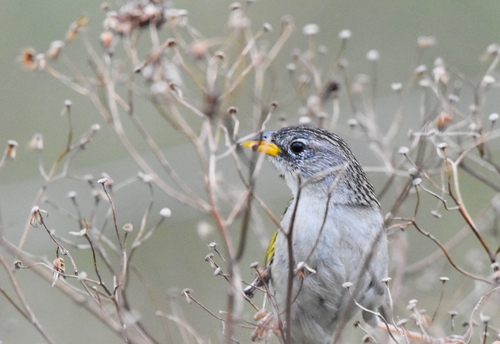
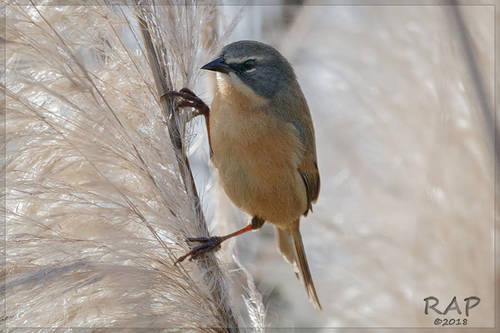
Blue-gray Saltator

Blue-gray Saltator

Saltator coerulescens

Silhouette: Sheatherius · PhyloPic

LCLeast ConcernNTVUENCR
Daily sighting probability ~60% · Likely
at Iberá National Park

In 3 days ~90% in a week >90%

1,188 Verified sightings at Iberá National Park From 2019 to 2026
3,509 In all 15 parks
September Best month
☀️ Diurnal When it's spotted

About the Blue-gray Saltator

The bluish-grey saltator or Amazonian grey saltator (Saltator coerulescens) is a passerine bird in the tanager family Thraupidae that is widespread in semi-open habitats in tropical and subtropical South America. Two of its former subspecies groups, grandis (of Mexico and Central America) and olivascens (of northern South America and Trinidad), are now recognized as separate species, the cinnamon-bellied saltator and the olive-grey (or Caribbean grey) saltator.

The bluish-grey saltator was formally described in 1817 by the French ornithologist Louis Pierre Vieillot under the binomial name Saltator coerulescens. Vieillot based his description on the "Habia de la Ceja Blanca" that Félix de Azara had described in 1802 in his book on birds in Paraguay and the Río de la Plata. The specific epithet coerulescens is derived from Latin and means "bluish".

Saltator coerulescens was formerly known as the greyish saltator and included two subspecies groups: grandis (including brevicaudus, hesperis, plumbiceps, vigorsii and yucatanensis) and olivascens (including brewsteri and plumbeus). In 2021, they were recognized as separate species, the cinnamon-bellied saltator (S. grandis... Wikipedia →

Sounds

Song0:07

Brazil · 2026

© JAYRSON ARAUJO DE OLIVEIRA · XC1186244 · CC BY-NC-SA 4.0

Uncertain0:40

Argentina · 2024

© NINO ANCHERAMA · XC933482 · CC BY-NC-SA 4.0

Call1:03

Argentina · 2022

© Niels Krabbe · XC770060 · CC BY-NC-SA 4.0

Global Distribution

Parks Where Found

# Park Country Daily sighting probability
1 El Impenetrable National Park 🇦🇷 Argentina
~80%
2 Iberá National Park 🇦🇷 Argentina
~60%
3 Parque Estadual Encontro das Águas 🇧🇷 Brazil
~40%
4 Amacayacu National Natural Park 🇨🇴 Colombia
~20%
5 Chapada dos Guimarães National Park 🇧🇷 Brazil
~10%
6 Manu National Park 🇵🇪 Peru
~10%
7 El Palmar National Park 🇦🇷 Argentina
~10%
8 Yasuní National Park 🇪🇨 Ecuador
<5%
9 Tambopata National Reserve 🇵🇪 Peru
<5%
10 Sierra de la Macarena National Park 🇨🇴 Colombia
<5%
11 Podocarpus National Park 🇪🇨 Ecuador
<5%
12 Anavilhanas National Park 🇧🇷 Brazil
<5%
13 Cuyabeno Wildlife Reserve 🇪🇨 Ecuador
<5%
14 Iguazú National Park 🇦🇷 Argentina
<5%
15 Iguaçu National Park 🇧🇷 Brazil
<5%

Cities Where Found

# City Country Daily sighting probability
1 Asuncion 🇵🇾 Paraguay
~80%
2 Manaus 🇧🇷 Brazil
~70%
3 Rosario 🇦🇷 Argentina
~30%
4 Santa Cruz de la Sierra 🇧🇴 Bolivia
~20%
5 Cordoba 🇦🇷 Argentina
~10%
6 Campo Grande 🇧🇷 Brazil
~10%
7 Buenos Aires 🇦🇷 Argentina
<5%

Before you go

What are the chances of seeing a Blue-gray Saltator in Iberá National Park?

Likely

About 60% of wildlife watchers report a Blue-gray Saltator sighting in Iberá National Park on a given day, based on 1,188 verified sightings from GBIF citizen-science data from 2019 to 2026. It is the 20th most-seen of the 284 birds we can rate there. Over three days the chance rises to about 90%, and over a week to over 90%, if each day is a fresh chance.

When is the best time to see a Blue-gray Saltator in Iberá National Park?

September

In that month about 70% of wildlife watchers report a Blue-gray Saltator in Iberá National Park on a given day, against about 40% in January and March, the lowest months.

What time of day is best to see a Blue-gray Saltator?

Between 8 and 11 am

Across all the parks we cover, that three-hour window holds the most Blue-gray Saltator sightings with a recorded time, and about 9 in 10 of them come between 6 am and 6 pm: it is a daytime animal.

Is Iberá National Park the best place to see a Blue-gray Saltator?

2nd of 15

Of the 15 parks where we can rate Blue-gray Saltator sightings, Iberá National Park ranks 2nd at about 60%. The best odds are in El Impenetrable National Park (Argentina, about 80%). All parks ranked.

Which relatives of the Blue-gray Saltator live in Iberá National Park?

Same genus: Saltator

The closest relatives of the Blue-gray Saltator that you can see in Iberá National Park (genus Saltator, Typical Saltators) are Green-winged Saltator (about 30%) and Golden-billed Saltator (about 30%), with each one's daily chance of a sighting.

Where does the Blue-gray Saltator sighting chance come from?

GBIF citizen-science records

It is estimated from how often the Blue-gray Saltator is recorded against all the birds logged in Iberá National Park (1,188 verified sightings from 2019 to 2026), calibrated against known sighting rates. Figures are rounded to the nearest 10% because citizen-science data supports honest approximations, not decimals, and months with records from fewer than five people show "—". How it works.

← Back to Iberá National Park