Black Crake

Black Crake

Amaurornis flavirostra

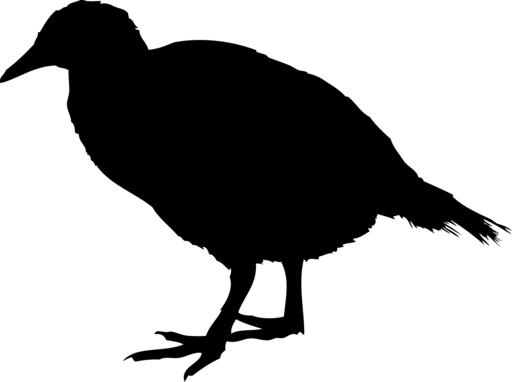
Silhouette: T. Michael Keesey (vectorization) and HuttyMcphoo (photography) ยท PhyloPic

LCLeast ConcernNTVUENCR
Daily sighting probability <5% ยท Rare
at Kakum National Park

In 3 days <5% in a week ~10%

12 Verified sightings at Kakum National Park From 2019 to 2026
9,194 In all 45 parks
August Best month
โ˜€๏ธ Diurnal When it's spotted

About the Black Crake

The black crake (Zapornia flavirostra) is a waterbird in the rail and crake family, Rallidae. It breeds in most of sub-Saharan Africa except in very arid areas. It undertakes some seasonal movements in those parts of its range which are subject to drought. No subspecies have been described. It appears that the oldest available name for this species is actually Rallus niger J. F. Gmelin, 1788, but Swainson believed that the earlier name was unidentifiable, and his own has since become well embedded in the literature.

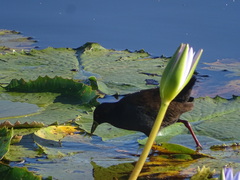
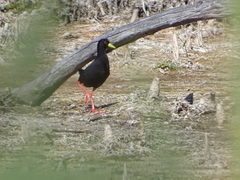
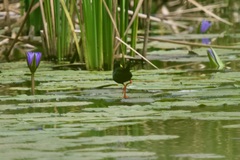
The adult black crake is 19โ€“23 cm (7.5โ€“9.1 in) long with a short tail and long toes. As its name implies, the adult has mainly black plumage, with a brown olive tone on the wings and upperparts which is rarely detectable in the field. The eye is red, the bill is yellow (hence the flavirostra of the binomial name), and the legs and feet are red, duller when not breeding.

The sexes are similar, but the male is slightly larger. Most males, but only 10% of females, have a hooked upper mandible. The immature bird has brown upperparts and a dark grey head and underparts. Its bill is greenish yellow, and its feet and legs are dull red. The downy chicks are black...

Wikipedia โ†’

Sounds

Recording0:15

South Africa ยท 2025

ยฉ Malcolm Douglas ยท iNaturalist ยท CC BY-NC 4.0

Recording0:21

South Africa ยท 2023

ยฉ corky777 ยท iNaturalist ยท CC BY-NC 4.0

Recording0:15

Gabon ยท 2021

ยฉ bureaubenjamin ยท iNaturalist ยท CC BY-NC 4.0

Global Distribution

Parks Where Found

# Park Country Daily sighting probability
1 Djoudj National Bird Sanctuary ๐Ÿ‡ธ๐Ÿ‡ณ Senegal
~60%
2 Queen Elizabeth National Park ๐Ÿ‡บ๐Ÿ‡ฌ Uganda
~40%
3 Akagera National Park ๐Ÿ‡ท๐Ÿ‡ผ Rwanda
~40%
4 Kruger National Park ๐Ÿ‡ฟ๐Ÿ‡ฆ South Africa
~30%
5 Lake Mburo National Park ๐Ÿ‡บ๐Ÿ‡ฌ Uganda
~30%
6 uMkhuze Game Reserve ๐Ÿ‡ฟ๐Ÿ‡ฆ South Africa
~30%
7 Lake Manyara National Park ๐Ÿ‡น๐Ÿ‡ฟ Tanzania
~30%
8 Nairobi National Park ๐Ÿ‡ฐ๐Ÿ‡ช Kenya
~30%
9 Amboseli National Park ๐Ÿ‡ฐ๐Ÿ‡ช Kenya
~20%
10 iSimangaliso Wetland Park ๐Ÿ‡ฟ๐Ÿ‡ฆ South Africa
~20%
11 Murchison Falls National Park ๐Ÿ‡บ๐Ÿ‡ฌ Uganda
~20%
12 Liwonde National Park ๐Ÿ‡ฒ๐Ÿ‡ผ Malawi
~20%
13 Virunga National Park ๐Ÿ‡จ๐Ÿ‡ฉ Democratic Republic of the Congo
~20%
14 Moremi Game Reserve ๐Ÿ‡ง๐Ÿ‡ผ Botswana
~20%
15 Serengeti National Park ๐Ÿ‡น๐Ÿ‡ฟ Tanzania
~20%
16 Gonarezhou National Park ๐Ÿ‡ฟ๐Ÿ‡ผ Zimbabwe
~20%
17 Mole National Park ๐Ÿ‡ฌ๐Ÿ‡ญ Ghana
~20%
18 Niokolo-Koba National Park ๐Ÿ‡ธ๐Ÿ‡ณ Senegal
~20%
19 Etosha National Park ๐Ÿ‡ณ๐Ÿ‡ฆ Namibia
~20%
20 Lower Zambezi National Park ๐Ÿ‡ฟ๐Ÿ‡ฒ Zambia
~20%
21 Masai Mara National Reserve ๐Ÿ‡ฐ๐Ÿ‡ช Kenya
~10%
22 Ngorongoro Conservation Area ๐Ÿ‡น๐Ÿ‡ฟ Tanzania
~10%
23 Tsavo West National Park ๐Ÿ‡ฐ๐Ÿ‡ช Kenya
~10%
24 Mana Pools National Park ๐Ÿ‡ฟ๐Ÿ‡ผ Zimbabwe
~10%
25 Kidepo Valley National Park ๐Ÿ‡บ๐Ÿ‡ฌ Uganda
~10%
26 Lake Nakuru National Park ๐Ÿ‡ฐ๐Ÿ‡ช Kenya
~10%
27 Kafue National Park ๐Ÿ‡ฟ๐Ÿ‡ฒ Zambia
~10%
28 Addo Elephant National Park ๐Ÿ‡ฟ๐Ÿ‡ฆ South Africa
~10%
29 West Coast National Park ๐Ÿ‡ฟ๐Ÿ‡ฆ South Africa
~10%
30 Garden Route National Park ๐Ÿ‡ฟ๐Ÿ‡ฆ South Africa
~10%
31 Arusha National Park ๐Ÿ‡น๐Ÿ‡ฟ Tanzania
~10%
32 Chobe National Park ๐Ÿ‡ง๐Ÿ‡ผ Botswana
~10%
33 South Luangwa National Park ๐Ÿ‡ฟ๐Ÿ‡ฒ Zambia
~10%
34 Aberdare National Park ๐Ÿ‡ฐ๐Ÿ‡ช Kenya
~10%
35 Hwange National Park ๐Ÿ‡ฟ๐Ÿ‡ผ Zimbabwe
~10%
36 Tarangire National Park ๐Ÿ‡น๐Ÿ‡ฟ Tanzania
~10%
37 Pilanesberg National Park ๐Ÿ‡ฟ๐Ÿ‡ฆ South Africa
~10%
38 Gorongosa National Park ๐Ÿ‡ฒ๐Ÿ‡ฟ Mozambique
<5%
39 Hluhluwe-Imfolozi Park ๐Ÿ‡ฟ๐Ÿ‡ฆ South Africa
<5%
40 Samburu National Reserve ๐Ÿ‡ฐ๐Ÿ‡ช Kenya
<5%
41 Kakum National Park ๐Ÿ‡ฌ๐Ÿ‡ญ Ghana
<5%
42 Kibale National Park ๐Ÿ‡บ๐Ÿ‡ฌ Uganda
<5%
43 Bwindi Impenetrable National Park ๐Ÿ‡บ๐Ÿ‡ฌ Uganda
<5%
44 Nyungwe National Park ๐Ÿ‡ท๐Ÿ‡ผ Rwanda
<5%
45 Table Mountain National Park ๐Ÿ‡ฟ๐Ÿ‡ฆ South Africa
<5%

Cities Where Found

# City Country Daily sighting probability
1 Mombasa ๐Ÿ‡ฐ๐Ÿ‡ช Kenya
~50%
2 Ouagadougou ๐Ÿ‡ง๐Ÿ‡ซ Burkina Faso
~30%
3 Kigali ๐Ÿ‡ท๐Ÿ‡ผ Rwanda
~30%
4 Zanzibar City ๐Ÿ‡น๐Ÿ‡ฟ Tanzania
~30%
5 N'Djamena ๐Ÿ‡น๐Ÿ‡ฉ Chad
~20%
6 Abuja ๐Ÿ‡ณ๐Ÿ‡ฌ Nigeria
~20%
7 Harare ๐Ÿ‡ฟ๐Ÿ‡ผ Zimbabwe
~20%
8 Brazzaville ๐Ÿ‡จ๐Ÿ‡ฌ Republic of the Congo
~10%
9 Serrekunda ๐Ÿ‡ฌ๐Ÿ‡ฒ Gambia
~10%
10 Dar es-Salaam ๐Ÿ‡น๐Ÿ‡ฟ Tanzania
~10%

Zoos & Centres Where Found

# Zoo / Centre Country
1 Disney's Animal Kingdom ๐Ÿ‡บ๐Ÿ‡ธ United States In captivity
2 San Diego Zoo ๐Ÿ‡บ๐Ÿ‡ธ United States In captivity
3 Leipzig Zoological Garden ๐Ÿ‡ฉ๐Ÿ‡ช Germany In captivity
4 Ostrava Zoo ๐Ÿ‡จ๐Ÿ‡ฟ Czechia In captivity
5 Sedgwick County Zoo ๐Ÿ‡บ๐Ÿ‡ธ United States In captivity
6 Toledo Zoo ๐Ÿ‡บ๐Ÿ‡ธ United States In captivity
7 Dierenpark Hoenderdaell ๐Ÿ‡ณ๐Ÿ‡ฑ Netherlands In captivity
8 Franklin Park Zoo ๐Ÿ‡บ๐Ÿ‡ธ United States In captivity
9 Zoologischer Garten Leipzig ๐Ÿ‡ฉ๐Ÿ‡ช Germany In captivity
10 Parc Zoologique et Botanique de Mulhouse ๐Ÿ‡ซ๐Ÿ‡ท France In captivity
11 Avifauna ๐Ÿ‡ช๐Ÿ‡ธ Spain In captivity
12 Landgoed Hoenderdaell ๐Ÿ‡ณ๐Ÿ‡ฑ Netherlands In captivity
13 Wolfgang-Kรถhler-Primaten-Forschungszentrum ๐Ÿ‡ฉ๐Ÿ‡ช Germany In captivity

Before you go

What are the chances of seeing a Black Crake in Kakum National Park?

Rare

Under 5% of wildlife watchers report a Black Crake sighting in Kakum National Park on a given day, based on 12 verified sightings from GBIF citizen-science data from 2019 to 2026. It is the 233rd most-seen of the 250 birds we can rate there. Over three days the chance rises to under 5%, and over a week to about 10%, if each day is a fresh chance.

When is the best time to see a Black Crake in Kakum National Park?

June and August

In those months about 10% of wildlife watchers report a Black Crake in Kakum National Park on a given day, against under 5% in July and Septemberโ€“May, the lowest months.

What time of day is best to see a Black Crake?

Between 8 and 11 am

Across all the parks we cover, that three-hour window holds the most Black Crake sightings with a recorded time, and about 9 in 10 of them come between 6 am and 6 pm: it is a daytime animal.

Where does the Black Crake sighting chance come from?

GBIF citizen-science records

It is estimated from how often the Black Crake is recorded against all the birds logged in Kakum National Park (12 verified sightings from 2019 to 2026), calibrated against known sighting rates. Figures are rounded to the nearest 10% because citizen-science data supports honest approximations, not decimals, and months with records from fewer than five people show "โ€”". How it works.

โ† Back to Kakum National Park