




Completed


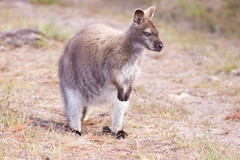

Red-necked Wallaby
Notamacropus rufogriseus
Silhouette: Kawinwit Kittipalawattanapol · PhyloPic
- KingdomAnimalia (Animals)
- PhylumChordata (Chordates)
- ClassMammalia (Mammals)
- OrderDiprotodontia (Kangaroos, Possums, Wombats, and Allies)
- FamilyMacropodidae (Kangaroos, Wallabies and Allies)
- GenusNotamacropus (Typical Wallabies)
- SpeciesNotamacropus rufogriseus (Red-necked Wallaby)
In 3 days ~90% in a week >90%
146 Verified sightings at Kosciuszko National Park From 2019 to 2026
1,244 In all 10 parks
November Best month
☀️ Diurnal When it's spotted
About the Red-necked Wallaby
The red-necked wallaby or Bennett's wallaby (Notamacropus rufogriseus) is a medium-sized macropod marsupial (wallaby), common in the more temperate and fertile parts of eastern Australia, including Tasmania. Red-necked wallabies have been introduced to several other countries, including New Zealand, the United Kingdom (in England and Scotland), Ireland, the Isle of Man, France and Germany.
Red-necked wallabies are distinguished by their black nose and paws, white stripe on the upper lip, and grizzled medium grey coat with a reddish wash across the shoulders. They can weigh 13.8 to 18.6 kilograms (30 to 41 lb) and attain a head-body length of 90 centimetres (35 in), although males are generally bigger than females. Red-necked wallabies are very similar in appearance to the black-striped wallaby (Notamacropus dorsalis), the only difference being that red-necked wallabies are larger, lack a black stripe down the back, and have softer fur. Red-necked wallabies may live up to nine years.
Red-necked wallabies are found in coastal scrub and sclerophyll forest throughout coastal and highland eastern Australia, from Bundaberg, Queensland, to the... Wikipedia →
Recent sightings of Red-necked Wallaby in Kosciuszko National Park
LIVEiNaturalistGlobal Distribution
Parks Where Found
| # | Park | Country | Daily sighting probability |
|---|---|---|---|
| 1 | Cradle Mountain-Lake St Clair National Park | 🇦🇺 Australia | |
| 2 | Freycinet National Park | 🇦🇺 Australia | |
| 3 | Maria Island National Park | 🇦🇺 Australia | |
| 4 | Kosciuszko National Park | 🇦🇺 Australia | |
| 5 | Grampians National Park | 🇦🇺 Australia | |
| 6 | Lamington National Park | 🇦🇺 Australia | |
| 7 | Booderee National Park | 🇦🇺 Australia | |
| 8 | Springbrook National Park | 🇦🇺 Australia | |
| 9 | Great Otway National Park | 🇦🇺 Australia | |
| 10 | Blue Mountains National Park | 🇦🇺 Australia |
Zoos & Centres Where Found
| # | Zoo / Centre | Country | |
|---|---|---|---|
| 1 | Disney's Animal Kingdom | 🇺🇸 United States | |
| 2 | Busch Gardens Tampa | 🇺🇸 United States | |
| 3 | Moscow Zoo | 🇷🇺 Russia | |
| 4 | Pairi Daiza | 🇧🇪 Belgium | |
| 5 | Prague Zoo | 🇨🇿 Czechia | |
| 6 | National Zoological Park | 🇺🇸 United States | |
| 7 | ZooParc de Beauval | 🇫🇷 France | |
| 8 | Denver Zoo | 🇺🇸 United States | |
| 9 | Copenhagen Zoo | 🇩🇰 Denmark | |
| 10 | Natura Artis Magistra | 🇳🇱 Netherlands | |
| 11 | Cleveland Metroparks Zoo | 🇺🇸 United States | |
| 12 | Cincinnati Zoo and Botanical Garden | 🇺🇸 United States | |
| 13 | Zürich Zoo | 🇨🇭 Switzerland | |
| 14 | Barcelona Zoo | 🇪🇸 Spain | |
| 15 | Le Pal | 🇫🇷 France | |
| 16 | Australia Zoo | 🇦🇺 Australia | |
| 17 | Zlín-Lešná Zoo | 🇨🇿 Czechia | |
| 18 | Korkeasaari Zoo | 🇫🇮 Finland | |
| 19 | Parc Phœnix | 🇫🇷 France | |
| 20 | Fota Wildlife Park | 🇮🇪 Ireland | |
| 21 | Réserve africaine de Sigean | 🇫🇷 France | |
| 22 | Parc des oiseaux | 🇫🇷 France | |
| 23 | Zoo Hluboka | 🇨🇿 Czechia | |
| 24 | Zoo de Maubeuge | 🇫🇷 France | |
| 25 | Kaliningrad Zoo | 🇷🇺 Russia | |
| 26 | Zoopark Vyškov | 🇨🇿 Czechia | |
| 27 | Zoobotánico Jerez | 🇪🇸 Spain | |
| 28 | La Tanière | 🇫🇷 France | |
| 29 | Zoo d'Amiens | 🇫🇷 France | |
| 30 | Karagandy Zoo | 🇰🇿 Kazakhstan | |
| 31 | San Diego Zoo Safari Park | 🇺🇸 United States | |
| 32 | Whipsnade Zoo | 🇬🇧 United Kingdom | |
| 33 | Binder Park Zoo | 🇺🇸 United States | |
| 34 | Toronto Zoo | 🇨🇦 Canada | |
| 35 | Minnesota Zoo | 🇺🇸 United States | |
| 36 | Living Desert Zoo and Gardens | 🇺🇸 United States | |
| 37 | Serengeti Park | 🇩🇪 Germany | |
| 38 | Tierpark Sababurg | 🇩🇪 Germany | |
| 39 | Woburn Safari Park | 🇬🇧 United Kingdom | |
| 40 | Port Lympne Wild Animal Park | 🇬🇧 United Kingdom | |
| 41 | Grant's Farm | 🇺🇸 United States | |
| 42 | Bronx Zoo | 🇺🇸 United States | |
| 43 | Longleat Safari and Adventure Park | 🇬🇧 United Kingdom | |
| 44 | Kansas City Zoo | 🇺🇸 United States | |
| 45 | Badoca Safari Park | 🇵🇹 Portugal | |
| 46 | Ramat Gan Safari | 🇮🇱 Israel | |
| 47 | Tallinn Zoo | 🇪🇪 Estonia | |
| 48 | Planète Sauvage | 🇫🇷 France | |
| 49 | Brookfield Zoo | 🇺🇸 United States | |
| 50 | Auto Safari Chapin | 🇬🇹 Guatemala |
Closest Relatives at Kosciuszko National Park




Before you go
What are the chances of seeing a Red-necked Wallaby in Kosciuszko National Park?
Likely
About 60% of wildlife watchers report a Red-necked Wallaby sighting in Kosciuszko National Park on a given day, based on 146 verified sightings from GBIF citizen-science data from 2019 to 2026. It is the 2nd most-seen of the 11 mammals we can rate there. Over three days the chance rises to about 90%, and over a week to over 90%, if each day is a fresh chance.
When is the best time to see a Red-necked Wallaby in Kosciuszko National Park?
November
In that month about 80% of wildlife watchers report a Red-necked Wallaby in Kosciuszko National Park on a given day, against about 50% in April–May and August, the lowest months.
What time of day is best to see a Red-necked Wallaby?
Between 2 and 5 pm
Across all the parks we cover, that three-hour window holds the most Red-necked Wallaby sightings with a recorded time, and about 9 in 10 of them come between 6 am and 6 pm: it is a daytime animal.
Is Kosciuszko National Park the best place to see a Red-necked Wallaby?
4th of 10
Of the 10 parks where we can rate Red-necked Wallaby sightings, Kosciuszko National Park ranks 4th at about 60%. The best odds are in Cradle Mountain-Lake St Clair National Park (Australia, about 80%), Freycinet National Park (Australia, about 80%) and Maria Island National Park (Australia, about 80%). All parks ranked.
Which relatives of the Red-necked Wallaby live in Kosciuszko National Park?
Same family: Macropodidae
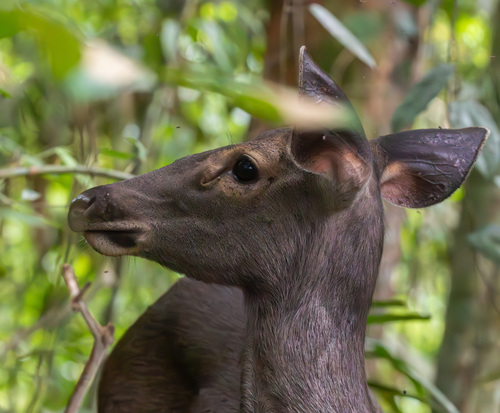
The closest relatives of the Red-necked Wallaby that you can see in Kosciuszko National Park (family Macropodidae, Kangaroos, Wallabies and Allies) are Eastern Grey Kangaroo (about 70%) and Swamp Wallaby (about 40%), with each one's daily chance of a sighting.
Where does the Red-necked Wallaby sighting chance come from?
GBIF citizen-science records
It is estimated from how often the Red-necked Wallaby is recorded against all the mammals logged in Kosciuszko National Park (146 verified sightings from 2019 to 2026), calibrated against known sighting rates. Figures are rounded to the nearest 10% because citizen-science data supports honest approximations, not decimals, and months with records from fewer than five people show "—". How it works.
