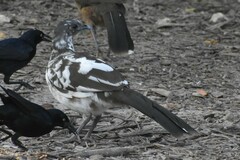
Plain Chachalaca

Plain Chachalaca

Ortalis vetula

Silhouette: PhyloPic

LCLeast ConcernNTVUENCR
Daily sighting probability ~20% · Possible
at Montes Azules Biosphere Reserve

In 3 days ~50% in a week ~80%

58 Verified sightings at Montes Azules Biosphere Reserve From 2019 to 2026
5,329 In all 24 parks
October Best month
☀️ Diurnal When it's spotted

About the Plain Chachalaca

The plain chachalaca (Ortalis vetula) is a large bird in the chachalaca, guan and curassow family Cracidae. It breeds in tropical and subtropical environments from mezquital thickets in the Rio Grande Valley in southernmost Texas, United States to northernmost Costa Rica. In Central America, this species occurs in the Pacific lowlands from Chiapas, Mexico to northern Nicaragua and as a separate population in Costa Rica, where its range is separated by a short distance, as a disjunct population.

This species frequents dry and moist forests, especially where interspersed with scrub and savanna. Usually found in groups of up to 15 birds, the plain chachalaca is furtive and wary and prefers to escape from danger by running swiftly on the ground or leaping and gliding through brushy tangles. The plain chachalaca feeds in trees or on the ground on fruit (figs, palms, Sapotaceae), seeds, leaves, and flowers. It is sometimes a pest of crops such as tomatoes and cucumbers.

The call is a loud, raucous RAW-pa-haw or cha-cha-LAW-ka, often by several birds in a rhythmical chorus, especially in early morning and evening, usually from well up in trees. It also produces peeping whistles and cackles. Others describe chachalaca calls as irritating noises mimicking a bunch of men arguing. The plain chachalaca typically breeds in the early wet season. The nest is a shallow saucer of twigs and plant fibers, lined with leaves, in thick vegetation. The clutch is 2–4 rough-shelled white to cream eggs. Wikipedia →

Sounds

Call0:15

United States · 2026

© Sue Riffe · XC1091754 · CC BY-NC-SA 4.0

Song0:57

Mexico · 2023

© Manuel Grosselet · XC782894 · CC BY-NC-SA 4.0

Alarm call1:04

Honduras · 2011

© John van Dort · XC78506 · CC BY-NC-ND 2.5

Global Distribution

Parks Where Found

# Park Country Daily sighting probability
1 Cañón del Sumidero National Park 🇲🇽 Mexico
~50%
2 Calakmul Biosphere Reserve 🇲🇽 Mexico
~40%
3 Cerro Azul Meámbar National Park 🇭🇳 Honduras
~40%
4 Tikal National Park 🇬🇹 Guatemala
~40%
5 Sian Ka'an Biosphere Reserve 🇲🇽 Mexico
~30%
6 Cumbres de Monterrey National Park 🇲🇽 Mexico
~30%
7 Ostional Wildlife Refuge 🇨🇷 Costa Rica
~20%
8 Cockscomb Basin Wildlife Sanctuary 🇧🇿 Belize
~20%
9 Montes Azules Biosphere Reserve 🇲🇽 Mexico
~20%
10 Cabo Blanco Absolute Nature Reserve 🇨🇷 Costa Rica
~20%
11 Celestún Biosphere Reserve 🇲🇽 Mexico
~20%
12 La Tigra National Park 🇭🇳 Honduras
~20%
13 Lago de Yojoa 🇭🇳 Honduras
~20%
14 Cusuco National Park 🇭🇳 Honduras
~10%
15 Biotopo Cerro Cahuí 🇬🇹 Guatemala
~10%
16 Pico Bonito National Park 🇭🇳 Honduras
~10%
17 Ría Lagartos Biosphere Reserve 🇲🇽 Mexico
~10%
18 Masaya Volcano National Park 🇳🇮 Nicaragua
<5%
19 Las Baulas Marine National Park 🇨🇷 Costa Rica
<5%
20 Santa Rosa National Park 🇨🇷 Costa Rica
<5%
21 Palo Verde National Park 🇨🇷 Costa Rica
<5%
22 Rincón de la Vieja National Park 🇨🇷 Costa Rica
<5%
23 Arrecifes de Cozumel National Park 🇲🇽 Mexico
<5%
24 Tenorio Volcano National Park 🇨🇷 Costa Rica
<5%

Cities Where Found

# City Country Daily sighting probability
1 Monterrey 🇲🇽 México
~20%
2 Guatemala City 🇬🇹 Guatemala
~10%
3 San Pedro Sula 🇭🇳 Honduras
<5%
4 Managua 🇳🇮 Nicaragua
<5%
5 Tegucigalpa 🇭🇳 Honduras
<5%

Zoos & Centres Where Found

# Zoo / Centre Country
1 National Zoological Park 🇺🇸 United States In captivity
2 Bronx Zoo 🇺🇸 United States In captivity
3 Xcaret 🇲🇽 Mexico In captivity
4 Joya Grande 🇭🇳 Honduras In captivity
5 Gladys Porter Zoo 🇺🇸 United States In captivity
6 Parque Zoológico Miguel Ángel de Quevedo 🇲🇽 Mexico In captivity
7 Macaw mountain bird park 🇭🇳 Honduras In captivity
8 Tracy Aviary 🇺🇸 United States In captivity
9 Zoo Koki (Parque zoológico y botánico) 🇪🇸 Spain In captivity
10 ARCAS Petén Education Centre 🇬🇹 Guatemala In captivity
11 Parque museo La Venta 🇲🇽 Mexico In captivity
12 Zoológico Miguél Álvarez del Toro 🇲🇽 Mexico In captivity

Before you go

What are the chances of seeing a Plain Chachalaca in Montes Azules Biosphere Reserve?

Possible

About 20% of wildlife watchers report a Plain Chachalaca sighting in Montes Azules Biosphere Reserve on a given day, based on 58 verified sightings from GBIF citizen-science data from 2019 to 2026. It is the 65th most-seen of the 240 birds we can rate there. Over three days the chance rises to about 50%, and over a week to about 80%, if each day is a fresh chance.

When is the best time to see a Plain Chachalaca in Montes Azules Biosphere Reserve?

October

In that month about 40% of wildlife watchers report a Plain Chachalaca in Montes Azules Biosphere Reserve on a given day, against about 10% in March–April and December, the lowest months. That is one of Montes Azules Biosphere Reserve's wettest months, with about 260 mm of rain against 55 mm in March.

What time of day is best to see a Plain Chachalaca?

Between 8 and 11 am

Across all the parks we cover, that three-hour window holds the most Plain Chachalaca sightings with a recorded time, and about 9 in 10 of them come between 6 am and 6 pm: it is a daytime animal.

Which relatives of the Plain Chachalaca live in Montes Azules Biosphere Reserve?

Same family: Cracidae

The closest relatives of the Plain Chachalaca that you can see in Montes Azules Biosphere Reserve (family Cracidae, Guans, Chachalacas, and Curassows) are Crested Guan (about 30%) and Great Curassow (about 10%), with each one's daily chance of a sighting.

Where does the Plain Chachalaca sighting chance come from?

GBIF citizen-science records

It is estimated from how often the Plain Chachalaca is recorded against all the birds logged in Montes Azules Biosphere Reserve (58 verified sightings from 2019 to 2026), calibrated against known sighting rates. Figures are rounded to the nearest 10% because citizen-science data supports honest approximations, not decimals, and months with records from fewer than five people show "—". How it works.

← Back to Montes Azules Biosphere Reserve