





Completed


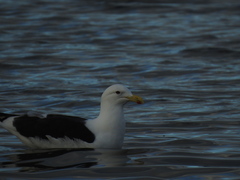
Dominican Gull
Larus dominicanus
Silhouette: Alexandre Vong · PhyloPic
- KingdomAnimalia (Animals)
- PhylumChordata (Chordates)
- ClassAves (Birds)
- OrderCharadriiformes (Shorebirds and Allies)
- FamilyLaridae (Gulls, Terns, and Skimmers)
- GenusLarus (Large White-headed Gulls)
- SpeciesLarus dominicanus (Dominican Gull)
In 3 days ~80% in a week >90%
5,271 Verified sightings at Table Mountain National Park From 2019 to 2026
16,535 In all 25 parks
June Best month
☀️ Diurnal When it's spotted
About the Dominican Gull
The kelp gull (Larus dominicanus), also known as the Dominican gull, is a gull that breeds on coasts and islands through much of the Southern Hemisphere. The specific name comes from the Dominican Order of friars, who wear black and white habits.
The kelp gull superficially resembles two gulls from further north in the Atlantic Ocean, the lesser black-backed gull and the great black-backed gull, and is intermediate in size between these two species. This species ranges from 54 to 65 cm (21 to 26 in) in total length, from 128 to 142 cm (50 to 56 in) in wingspan and from 540 to 1,390 g (1.19 to 3.06 lb) in weight. Adult males and females weigh on average 1,000 g (2.2 lb) and 900 g (2.0 lb) respectively. Among standard measurements, the wing chord is 37.3 to 44.8 cm (14.7 to 17.6 in)... Wikipedia →
Recent sightings of Dominican Gull in Table Mountain National Park
LIVEiNaturalistGlobal Distribution
Parks Where Found
Cities Where Found
| # | City | Country | Daily sighting probability |
|---|---|---|---|
| 1 | Hobart | 🇦🇺 Australia | |
| 2 | Auckland | 🇳🇿 New Zealand | |
| 3 | Montevideo | 🇺🇾 Uruguay | |
| 4 | Cape Town | 🇿🇦 South Africa | |
| 5 | Lima | 🇵🇪 Peru | |
| 6 | Rio de Janeiro | 🇧🇷 Brazil | |
| 7 | Santos | 🇧🇷 Brazil | |
| 8 | Santiago | 🇨🇱 Chile | |
| 9 | Maputo | 🇲🇿 Mozambique | |
| 10 | Durban | 🇿🇦 South Africa |
Zoos & Centres Where Found
| # | Zoo / Centre | Country | |
|---|---|---|---|
| 1 | SeaWorld Orlando | 🇺🇸 United States | |
| 2 | Rio de Janeiro Zoological Garden | 🇧🇷 Brazil | |
| 3 | Loro Parque | 🇪🇸 Spain | |
| 4 | Discovery Cove | 🇺🇸 United States | |
| 5 | Buin Zoo | 🇨🇱 Chile | |
| 6 | World of Birds Wildlife Sanctuary and Monkey Park | 🇿🇦 South Africa | |
| 7 | Featherdale Sydney Wildlife Park | 🇦🇺 Australia |
Closest Relatives at Table Mountain National Park


Before you go
What are the chances of seeing a Dominican Gull in Table Mountain National Park?
Likely
About 50% of wildlife watchers report a Dominican Gull sighting in Table Mountain National Park on a given day, based on 5,271 verified sightings from GBIF citizen-science data from 2019 to 2026. It is the 9th most-seen of the 223 birds we can rate there. Over three days the chance rises to about 80%, and over a week to over 90%, if each day is a fresh chance.
When is the best time to see a Dominican Gull in Table Mountain National Park?
June–July and November–February
In those months about 50% of wildlife watchers report a Dominican Gull in Table Mountain National Park on a given day, against about 40% in March–May and August–October, the lowest months.
What time of day is best to see a Dominican Gull?
Between 10 am and 1 pm
Across all the parks we cover, that three-hour window holds the most Dominican Gull sightings with a recorded time, and about 9 in 10 of them come between 6 am and 6 pm: it is a daytime animal.
Is Table Mountain National Park the best place to see a Dominican Gull?
9th of 25
Of the 25 parks where we can rate Dominican Gull sightings, Table Mountain National Park ranks 9th at about 50%. The best odds are in Península Valdés (Argentina, over 90%), West Coast National Park (South Africa, about 80%) and Rakiura National Park (New Zealand, about 70%). All parks ranked.
Which relatives of the Dominican Gull live in Table Mountain National Park?
Same family: Laridae
The closest relatives of the Dominican Gull that you can see in Table Mountain National Park (family Laridae, Gulls, Terns, and Skimmers) are Hartlaub's Gull (about 40%), Crested Tern (about 20%) and Common Tern (about 10%), with each one's daily chance of a sighting.
Where does the Dominican Gull sighting chance come from?
GBIF citizen-science records
It is estimated from how often the Dominican Gull is recorded against all the birds logged in Table Mountain National Park (5,271 verified sightings from 2019 to 2026), calibrated against known sighting rates. Figures are rounded to the nearest 10% because citizen-science data supports honest approximations, not decimals, and months with records from fewer than five people show "—". How it works.
