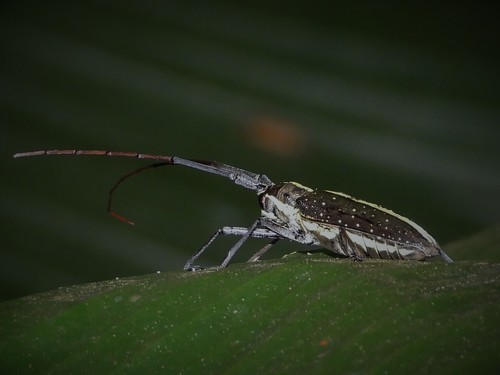
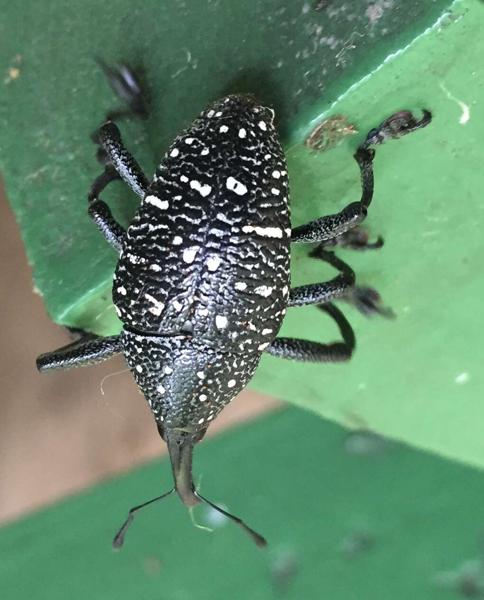
Bearded Weevil

Bearded Weevil

Rhinostomus barbirostris

Daily sighting probability ~10% · With luck
at Braulio Carrillo National Park

In 3 days ~30% in a week ~50%

16 Verified sightings at Braulio Carrillo National Park From 2019 to 2026
159 In all 16 parks
April Best month
☀️🌙 Day & Night When it's spotted

About the Bearded Weevil

Rhinostomus barbirostris, common name bottlebrush weevil or bearded weevil, is a species of true weevil. Rhinostomus barbirostris can reach a length of 11–40 millimetres (0.43–1.57 in), excluding beak. It is probably the third-largest weevil in the world. The basic color is black. The pronotum is as long as wide and densely punctate. The elytra bear distinct striae and are deeply punctate. Males have characteristic long reddish gold hairs on the apical portion of the long, straight, and dorsally dentate rostrum. The antennae are long and slender, and strongly elbowed. The front tibiae have two or more large, sharp teeth on the inner face. This species shows an unusual sexual polymorphism, as some males in each population are smaller than other males and resemble females.

This common and widespread species occurs mainly in Central America and South America, while similar species in the genus occur in the United States, Africa, Madagascar, Borneo, and India. Gwannon Patricia Vaurie Weevils of the Tribe Sipalini (Coleoptera, Curculionidae, Rhynchophorinae) Part 1. The Genera Rhinostomus and Yuccaborus

Key to species of Rhinostomus... Wikipedia →
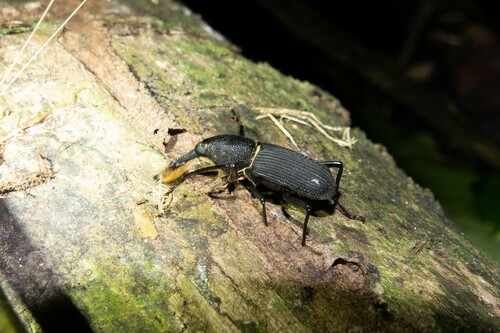
Global Distribution

Parks Where Found

# Park Country Daily sighting probability
1 Brownsberg Nature Park 🇸🇷 Suriname
~40%
2 Marino Ballena National Park 🇨🇷 Costa Rica
~20%
3 Piedras Blancas National Park 🇨🇷 Costa Rica
~10%
4 Gandoca-Manzanillo Wildlife Refuge 🇨🇷 Costa Rica
~10%
5 Manu National Park 🇵🇪 Peru
~10%
6 Soberanía National Park 🇵🇦 Panama
~10%
7 Braulio Carrillo National Park 🇨🇷 Costa Rica
~10%
8 Yasuní National Park 🇪🇨 Ecuador
~10%
9 Bastimentos Island National Marine Park 🇵🇦 Panama
~10%
10 Manuel Antonio National Park 🇨🇷 Costa Rica
~10%
11 Tortuguero National Park 🇨🇷 Costa Rica
~10%
12 Corcovado National Park 🇨🇷 Costa Rica
~10%
13 Tambopata National Reserve 🇵🇪 Peru
~10%
14 Iguaçu National Park 🇧🇷 Brazil
~10%
15 La Amistad International Park (Panama) 🇵🇦 Panama
~10%
16 Arenal Volcano National Park 🇨🇷 Costa Rica
~10%

Cities Where Found

# City Country Daily sighting probability
1 Manaus 🇧🇷 Brazil
~20%

Before you go

What are the chances of seeing a Bearded Weevil in Braulio Carrillo National Park?

With luck

About 10% of wildlife watchers report a Bearded Weevil sighting in Braulio Carrillo National Park on a given day, based on 16 verified sightings from GBIF citizen-science data from 2019 to 2026. It is the 127th most-seen of the 378 insects we can rate there. Over three days the chance rises to about 30%, and over a week to about 50%, if each day is a fresh chance.

When is the best time to see a Bearded Weevil in Braulio Carrillo National Park?

January–February and April

In those months about 20% of wildlife watchers report a Bearded Weevil in Braulio Carrillo National Park on a given day, against under 5% in June and September–December, the lowest months.

What time of day is best to see a Bearded Weevil?

Between 7 and 10 pm

Across all the parks we cover, that three-hour window holds the most Bearded Weevil sightings with a recorded time, and about 6 in 10 of them come between 6 pm and 6 am: it is seen both by day and at night.

Which relatives of the Bearded Weevil live in Braulio Carrillo National Park?

Same order: Coleoptera

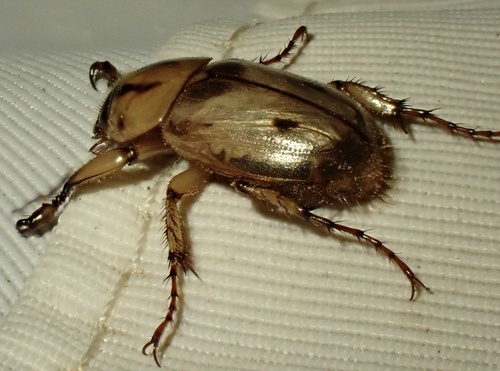
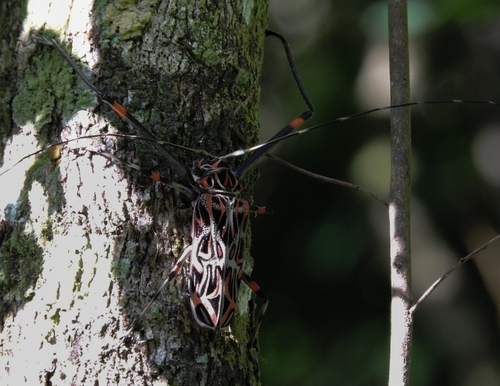
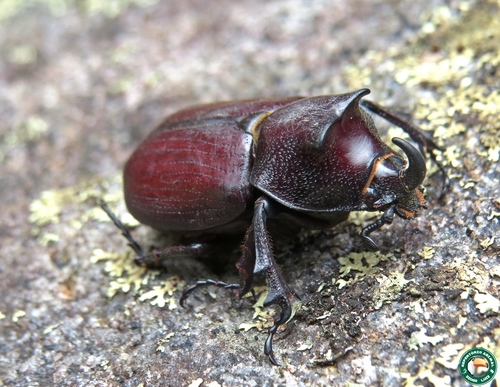
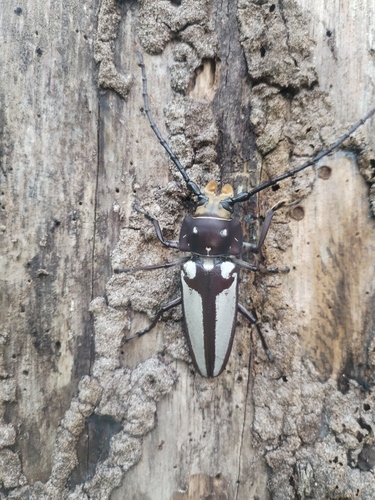
The closest relatives of the Bearded Weevil that you can see in Braulio Carrillo National Park (order Coleoptera, Beetles) are Taeniotes scalatus (about 20%), Cyclocephala amazona (about 20%) and Semiotus ligneus (about 20%), with each one's daily chance of a sighting.

Where does the Bearded Weevil sighting chance come from?

GBIF citizen-science records

It is estimated from how often the Bearded Weevil is recorded against all the insects logged in Braulio Carrillo National Park (16 verified sightings from 2019 to 2026), calibrated against known sighting rates. Figures are rounded to the nearest 10% because citizen-science data supports honest approximations, not decimals, and months with records from fewer than five people show "—". How it works.

← Back to Braulio Carrillo National Park