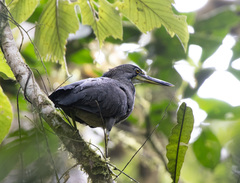
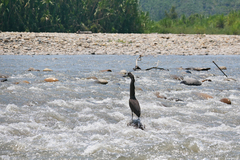

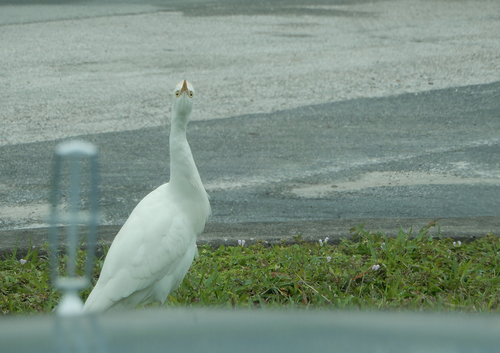
Fasciated Tiger Heron

Fasciated Tiger Heron

Tigrisoma fasciatum

Silhouette: Mannheim Reinhard Jahn (photograph) · PhyloPic

LCLeast ConcernNTVUENCR
Daily sighting probability <5% · Rare
at Chagres National Park

In 3 days ~10% in a week ~20%

38 Verified sightings at Chagres National Park From 2019 to 2026
2,117 In all 24 parks
September Best month
☀️ Diurnal When it's spotted

About the Fasciated Tiger Heron

The fasciated tiger heron (Tigrisoma fasciatum) is a species of heron in the family Ardeidae. It is present in southern Central America and parts of northern and central South America, where its natural habitat is rivers.

In 1988 the fasciated tiger heron was categorized by the IUCN as Near Threatened but as of 2004 they have been recategorized as Least Concern. First described as Ardea fasciata by George Such in 1825 from a specimen collected in Serro do Imbé, Brazil, the fasciated tiger heron is now one of three species assigned to the genus Tigrisoma. In the past, it has sometimes been considered as a subspecies of the rufescent tiger heron. It has three subspecies:

The genus name... Wikipedia →

Sounds

Song0:25

Argentina · 2014

© Bernabe Lopez-Lanus · XC300934 · CC BY-NC-SA 4.0

Global Distribution

Parks Where Found

# Park Country Daily sighting probability
1 Manu National Park 🇵🇪 Peru
~10%
2 Sierra de la Macarena National Park 🇨🇴 Colombia
~10%
3 Darién National Park 🇵🇦 Panama
~10%
4 Arenal Volcano National Park 🇨🇷 Costa Rica
~10%
5 Farallones de Cali National Natural Park 🇨🇴 Colombia
<5%
6 Chagres National Park 🇵🇦 Panama
<5%
7 Amboró National Park 🇧🇴 Bolivia
<5%
8 Podocarpus National Park 🇪🇨 Ecuador
<5%
9 Braulio Carrillo National Park 🇨🇷 Costa Rica
<5%
10 Corcovado National Park 🇨🇷 Costa Rica
<5%
11 Henri Pittier National Park 🇻🇪 Venezuela
<5%
12 Los Quetzales National Park 🇨🇷 Costa Rica
<5%
13 Tapantí-Macizo de la Muerte National Park 🇨🇷 Costa Rica
<5%
14 Manuel Antonio National Park 🇨🇷 Costa Rica
<5%
15 Marino Ballena National Park 🇨🇷 Costa Rica
<5%
16 Tambopata National Reserve 🇵🇪 Peru
<5%
17 Chirripó National Park 🇨🇷 Costa Rica
<5%
18 Carara National Park 🇨🇷 Costa Rica
<5%
19 Tenorio Volcano National Park 🇨🇷 Costa Rica
<5%
20 Yasuní National Park 🇪🇨 Ecuador
<5%
21 Parque Estadual Encontro das Águas 🇧🇷 Brazil
<5%
22 Piedras Blancas National Park 🇨🇷 Costa Rica
<5%
23 Monteverde Cloud Forest Reserve 🇨🇷 Costa Rica
<5%
24 La Amistad International Park (Panama) 🇵🇦 Panama
<5%

Before you go

What are the chances of seeing a Fasciated Tiger Heron in Chagres National Park?

Rare

Under 5% of wildlife watchers report a Fasciated Tiger Heron sighting in Chagres National Park on a given day, based on 38 verified sightings from GBIF citizen-science data from 2019 to 2026. It is the 229th most-seen of the 372 birds we can rate there. Over three days the chance rises to about 10%, and over a week to about 20%, if each day is a fresh chance.

When is the best time to see a Fasciated Tiger Heron in Chagres National Park?

May, July and September

In those months about 10% of wildlife watchers report a Fasciated Tiger Heron in Chagres National Park on a given day, against under 5% in June, August and October–April, the lowest months. Those are among Chagres National Park's wettest months, with about 280 mm of rain a month against 30 mm in February.

What time of day is best to see a Fasciated Tiger Heron?

Between 2 and 5 pm

Across all the parks we cover, that three-hour window holds the most Fasciated Tiger Heron sightings with a recorded time, and about 9 in 10 of them come between 6 am and 6 pm: it is a daytime animal.

Which relatives of the Fasciated Tiger Heron live in Chagres National Park?

Same family: Ardeidae

The closest relatives of the Fasciated Tiger Heron that you can see in Chagres National Park (family Ardeidae, Herons, Egrets, and Bitterns) are Little Blue Heron (about 10%) and Great Egret (about 10%), with each one's daily chance of a sighting.

Where does the Fasciated Tiger Heron sighting chance come from?

GBIF citizen-science records

It is estimated from how often the Fasciated Tiger Heron is recorded against all the birds logged in Chagres National Park (38 verified sightings from 2019 to 2026), calibrated against known sighting rates. Figures are rounded to the nearest 10% because citizen-science data supports honest approximations, not decimals, and months with records from fewer than five people show "—". How it works.

← Back to Chagres National Park