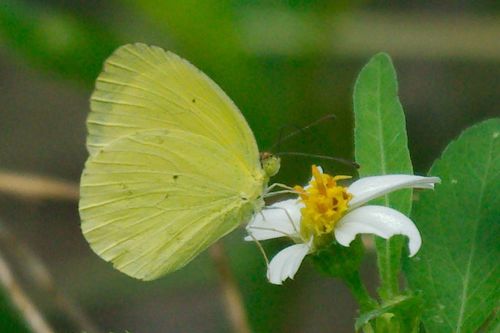
Cloudless Sulphur

Cloudless Sulphur

Phoebis sennae

Daily sighting probability <5% · Rare
at Buenos Aires

In 3 days ~10% in a week ~20%

23 Verified sightings at Buenos Aires
474 In all 20 parks From 2019 to 2026
December Best month
☀️ Diurnal When it's spotted

About the Cloudless Sulphur

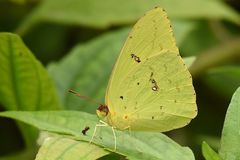
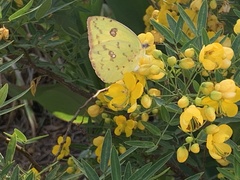
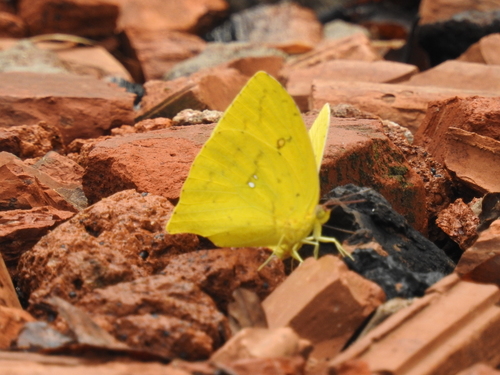
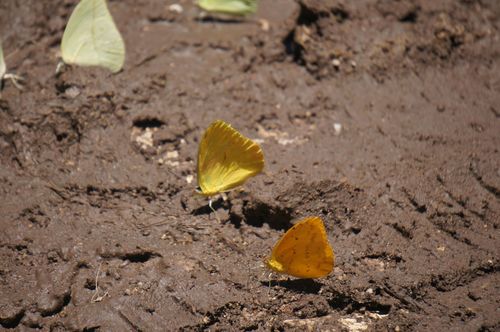
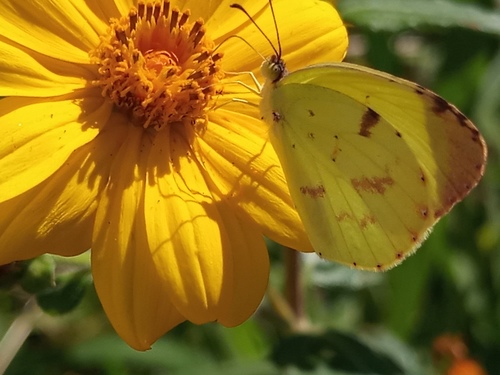
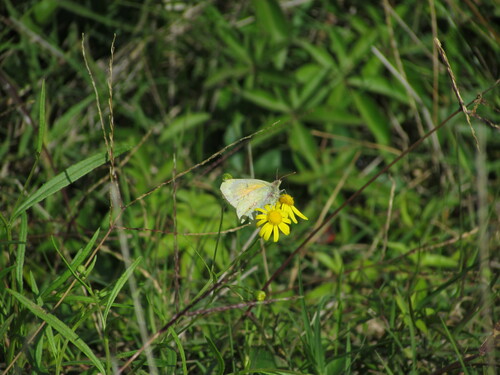
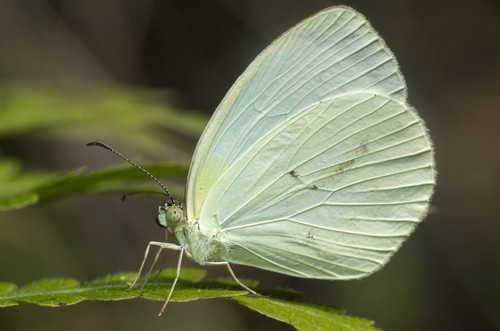
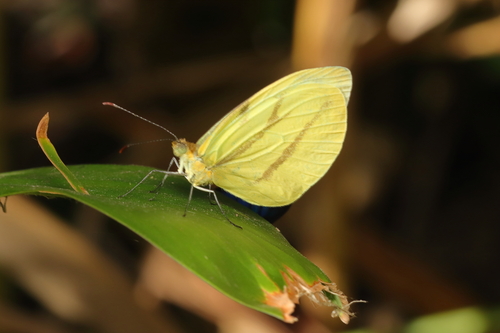
Phoebis sennae, the cloudless sulphur, is a mid-sized butterfly in the family Pieridae found in the Americas. There are several similar species such as the clouded sulphur (Colias philodice), the yellow angled-sulphur (Anteos maerula), which has angled wings, the statira sulphur (Aphrissa statira), and other sulphurs, which are much smaller. The species name comes from the genus Senna to which many of the larval host plants belong.

Their range is wide, from South America to southern Canada, in particular southwestern Ontario. They are most common from Argentina to southern Texas, Georgia, and Florida, but are often visitors outside this range becoming more rare further north.

The common habitats of this butterfly are open spaces, gardens, glades, seashores, and watercourses. The adult butterfly feeds on nectar from many different flowers with long tubes including cordia, bougainvillea, cardinal flower, hibiscus, lantana, and wild morning glory. The larvae also feed on sennas and partridge peas.

Senna hebecarpa (American senna) is a larval host and nectar source for the cloudless sulphur butterfly in the Eastern United States. Wikipedia →

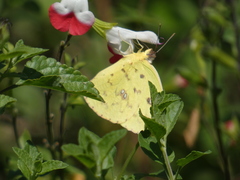
Global Distribution

Parks Where Found

# Park Country Daily sighting probability
1 Jaragua National Park 🇩🇴 Dominican Republic
~30%
2 Rincón de la Vieja National Park 🇨🇷 Costa Rica
~30%
3 Congaree National Park 🇺🇸 United States
~20%
4 Merritt Island National Wildlife Refuge 🇺🇸 United States
~20%
5 Carara National Park 🇨🇷 Costa Rica
~10%
6 Great Smoky Mountains National Park 🇺🇸 United States
~10%
7 Padre Island National Seashore 🇺🇸 United States
~10%
8 Galápagos Islands 🇪🇨 Ecuador
~10%
9 Lago de Yojoa 🇭🇳 Honduras
~10%
10 Big Cypress National Preserve 🇺🇸 United States
~10%
11 Piedras Blancas National Park 🇨🇷 Costa Rica
~10%
12 Bahía de Loreto National Park 🇲🇽 Mexico
~10%
13 Point Pelee National Park 🇨🇦 Canada
~10%
14 Saguaro National Park 🇺🇸 United States
~10%
15 Big Bend National Park 🇺🇸 United States
~10%
16 Joshua Tree National Park 🇺🇸 United States
~10%
17 Cumbres de Monterrey National Park 🇲🇽 Mexico
~10%
18 Everglades National Park 🇺🇸 United States
~10%
19 Arenal Volcano National Park 🇨🇷 Costa Rica
~10%
20 Shenandoah National Park 🇺🇸 United States
~10%

Cities Where Found

# City Country Daily sighting probability
1 Toluca 🇲🇽 México
~20%
2 Fortaleza 🇧🇷 Brazil
~10%
3 San Luis Potosí 🇲🇽 México
~10%
4 Houston 🇺🇸 United States
~10%
5 Mexico City 🇲🇽 México
~10%
6 Puebla 🇲🇽 México
~10%
7 Maceió 🇧🇷 Brazil
~10%
8 San Diego 🇺🇸 United States
~10%
9 Los Angeles 🇺🇸 United States
~10%
10 San Antonio 🇺🇸 United States
~10%

Before you go

What are the chances of seeing a Cloudless Sulphur in Buenos Aires?

Rare

Under 5% of wildlife watchers report a Cloudless Sulphur sighting in Buenos Aires on a given day, based on 23 verified sightings from GBIF citizen-science data. It is the 280th most-seen of the 558 insects we can rate there. Over three days the chance rises to about 10%, and over a week to about 20%, if each day is a fresh chance.

When is the best time to see a Cloudless Sulphur in Buenos Aires?

December

In that month about 10% of wildlife watchers report a Cloudless Sulphur in Buenos Aires on a given day, against under 5% in January to November, the lowest months.

What time of day is best to see a Cloudless Sulphur?

Between 11 am and 2 pm

Across all the parks we cover, that three-hour window holds the most Cloudless Sulphur sightings with a recorded time, and about 9 in 10 of them come between 6 am and 6 pm: it is a daytime animal.

Is Buenos Aires the best place to see a Cloudless Sulphur?

28th of 29

Of the 29 cities where we can rate Cloudless Sulphur sightings, Buenos Aires ranks 28th at under 5%. The best odds are in Toluca (México, about 20%), Fortaleza (Brazil, about 10%) and San Luis Potosí (México, about 10%).

Where does the Cloudless Sulphur sighting chance come from?

GBIF citizen-science records

It is estimated from how often the Cloudless Sulphur is recorded against all the insects logged in Buenos Aires (23 verified sightings), calibrated against known sighting rates. Figures are rounded to the nearest 10% because citizen-science data supports honest approximations, not decimals, and months with records from fewer than five people show "—". How it works.

← Back to Buenos Aires