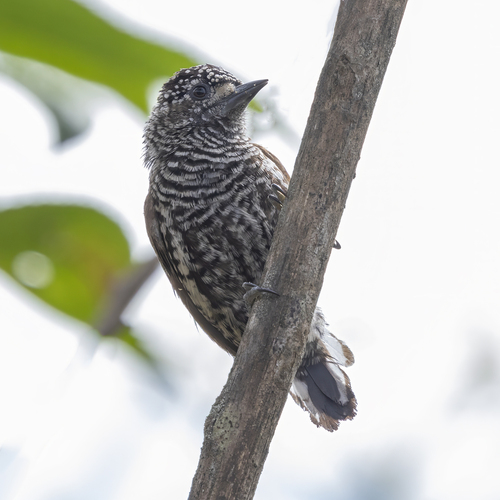
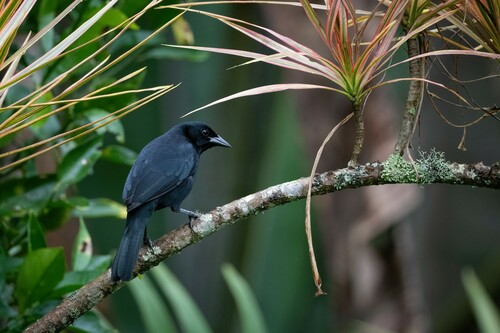
Black-cheeked Woodpecker

Black-cheeked Woodpecker

Melanerpes pucherani

Silhouette: Jason Dilworth · PhyloPic

LCLeast ConcernNTVUENCR
Daily sighting probability ~30% · Possible
at Guayaquil

In 3 days ~60% in a week ~90%

255 Verified sightings at Guayaquil
25,261 In all 25 parks From 2019 to 2026
November Best month
☀️ Diurnal When it's spotted

About the Black-cheeked Woodpecker

The black-cheeked woodpecker (Melanerpes pucherani) is a species of bird in subfamily Picinae of the woodpecker family Picidae. It is found from Mexico south to Ecuador. The black-cheeked woodpecker and several others were for a time placed in genus Tripsurus. It and the golden-naped woodpecker (M. chrysauchen) form a superspecies. The black-cheeked woodpecker is monotypic but assigning it two subspecies has sometimes been proposed.

The black-cheeked woodpecker's specific epithet commemorates the French zoologist Jacques Pucheran. The black-cheeked woodpecker is 17 to 19 cm (6.7 to 7.5 in) long and weighs 42 to 68 g (1.5 to 2.4 oz). The sexes' plumage is alike except for their head pattern. Adult males have a golden yellow forehead and a red crown and nape. Adult females have a white to buffy white forehead, a black central crown, and a red hindcrown and nape. Both sexes have black around the eye that extends down the side of the neck and a white line behind the eye. Their upper back has black and white bars and their lower back and uppertail coverts are white with a pale buff tinge and sometimes some blackish bars. Their flight feathers... Wikipedia →

Sounds

Call0:08

Mexico · 2022

© Sue Riffe · XC772751 · CC BY-NC-SA 4.0

Excavating cavity1:12

Panama · 2019

© Jerome Fischer · XC456875 · CC BY-NC-SA 4.0

Alarm call0:28

Ecuador · 1997

© Olaf Jahn · XC261882 · CC BY-NC-SA 4.0

Global Distribution

Parks Where Found

# Park Country Daily sighting probability
1 Gandoca-Manzanillo Wildlife Refuge 🇨🇷 Costa Rica
~60%
2 Arenal Volcano National Park 🇨🇷 Costa Rica
~50%
3 Cahuita National Park 🇨🇷 Costa Rica
~50%
4 Bastimentos Island National Marine Park 🇵🇦 Panama
~50%
5 Braulio Carrillo National Park 🇨🇷 Costa Rica
~40%
6 Tenorio Volcano National Park 🇨🇷 Costa Rica
~40%
7 Chagres National Park 🇵🇦 Panama
~30%
8 Darién National Park 🇵🇦 Panama
~30%
9 Tortuguero National Park 🇨🇷 Costa Rica
~30%
10 Utría National Natural Park 🇨🇴 Colombia
~30%
11 Pico Bonito National Park 🇭🇳 Honduras
~30%
12 La Amistad International Park (Panama) 🇵🇦 Panama
~30%
13 Soberanía National Park 🇵🇦 Panama
~30%
14 Cockscomb Basin Wildlife Sanctuary 🇧🇿 Belize
~20%
15 Montes Azules Biosphere Reserve 🇲🇽 Mexico
~20%
16 San Lorenzo Protected Forest 🇵🇦 Panama
~10%
17 Rincón de la Vieja National Park 🇨🇷 Costa Rica
<5%
18 Tapantí-Macizo de la Muerte National Park 🇨🇷 Costa Rica
<5%
19 Machalilla National Park 🇪🇨 Ecuador
<5%
20 Poás Volcano National Park 🇨🇷 Costa Rica
<5%
21 Farallones de Cali National Natural Park 🇨🇴 Colombia
<5%
22 Parque Natural Metropolitano 🇵🇦 Panama
<5%
23 Santa Rosa National Park 🇨🇷 Costa Rica
<5%
24 Tikal National Park 🇬🇹 Guatemala
<5%
25 Monteverde Cloud Forest Reserve 🇨🇷 Costa Rica
<5%

Cities Where Found

# City Country Daily sighting probability
1 Guayaquil 🇪🇨 Ecuador
~30%
2 San José 🇨🇷 Costa Rica
<5%
3 Panama City 🇵🇦 Panama
<5%

Before you go

What are the chances of seeing a Black-cheeked Woodpecker in Guayaquil?

Possible

About 30% of wildlife watchers report a Black-cheeked Woodpecker sighting in Guayaquil on a given day, based on 255 verified sightings from GBIF citizen-science data. It is the 27th most-seen of the 167 birds we can rate there. Over three days the chance rises to about 60%, and over a week to about 90%, if each day is a fresh chance.

When is the best time to see a Black-cheeked Woodpecker in Guayaquil?

November

In that month about 40% of wildlife watchers report a Black-cheeked Woodpecker in Guayaquil on a given day, against about 20% in January–February and July, the lowest months. That is one of Guayaquil's driest months, with about 10 mm of rain against 220 mm in February.

What time of day is best to see a Black-cheeked Woodpecker?

Between 10 am and 1 pm

Across all the parks we cover, that three-hour window holds the most Black-cheeked Woodpecker sightings with a recorded time, and about 9 in 10 of them come between 6 am and 6 pm: it is a daytime animal.

Is Guayaquil the best place to see a Black-cheeked Woodpecker?

Yes

Of the 3 cities where we can rate Black-cheeked Woodpecker sightings, Guayaquil has the highest daily chance: about 30%. Next come San José (Costa Rica, under 5%) and Panama City (Panama, under 5%).

Which relatives of the Black-cheeked Woodpecker live in Guayaquil?

Same family: Picidae

The closest relatives of the Black-cheeked Woodpecker that you can see in Guayaquil (family Picidae, Woodpeckers) are Golden-olive Woodpecker (about 20%) and Scarlet-backed Woodpecker (about 20%), with each one's daily chance of a sighting.

Where does the Black-cheeked Woodpecker sighting chance come from?

GBIF citizen-science records

It is estimated from how often the Black-cheeked Woodpecker is recorded against all the birds logged in Guayaquil (255 verified sightings), calibrated against known sighting rates. Figures are rounded to the nearest 10% because citizen-science data supports honest approximations, not decimals, and months with records from fewer than five people show "—". How it works.

← Back to Guayaquil