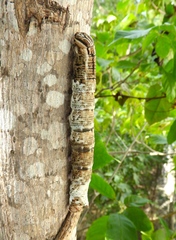
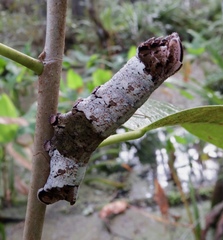
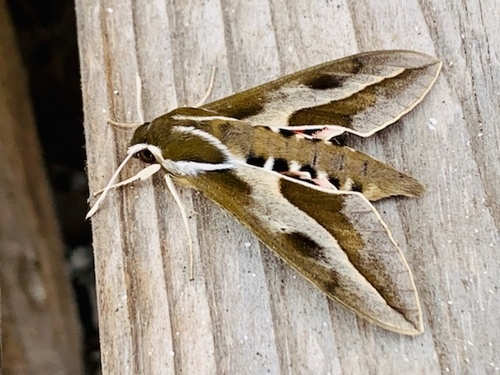
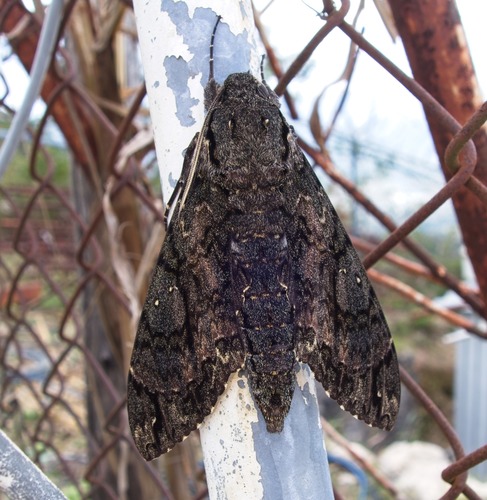
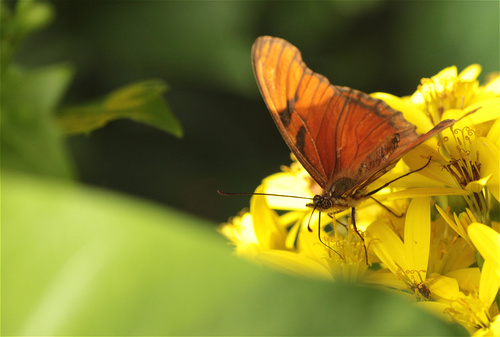
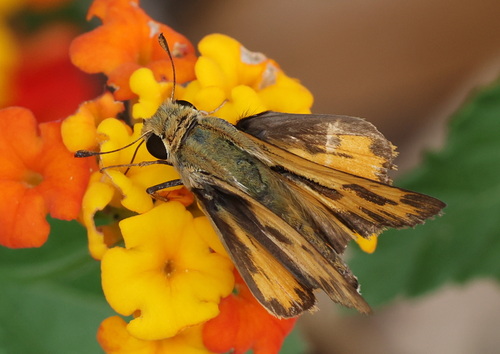
Fig Sphinx

Fig Sphinx

Pachylia ficus

Daily sighting probability ~20% · Possible
at Lima

In 3 days ~40% in a week ~70%

79 Verified sightings at Lima
126 In all 15 parks From 2019 to 2026
April Best month
☀️🌙 Day & Night When it's spotted

About the Fig Sphinx

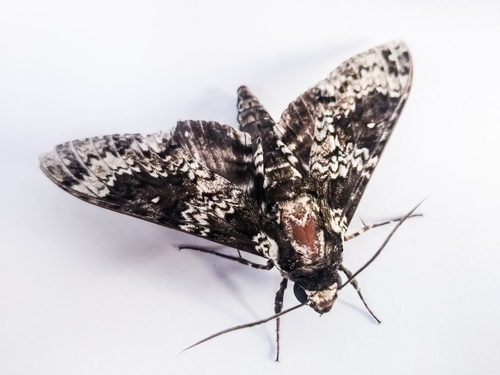
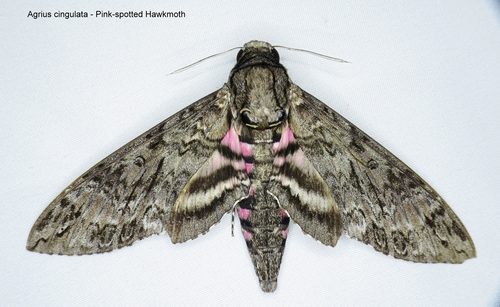
Pachylia ficus, known as the fig sphinx, is a moth of the family Sphingidae. It lives across South America from Uruguay through to Central America, and to the southern tip of the United States, straying into Arizona and Texas.

It has a wingspan of 4+3⁄8–5+1⁄2 inches (110–140 mm), with orange-brown wings. There are several generations per year in the tropics, peninsular Florida and southern Texas. Adults have been recorded in February, September and November in Brazil and in June in Panama. The adults feed on the nectar of various flowers, including Asystasia gangetica and the endangered ghost orchid (Dendrophylax lindenii). They also pollinate the ghost orchid.

The larvae have been recorded feeding on Ficus aurea, Ficus carica, Ficus microcarpa, Ficus religiosa, Ficus pumila, Ficus gamelleira, Ficus prinoides, Ficus pumila and Artocarpus integrifolius. There are several colour morphs. Pupation takes place in a cocoon spun amongst leaf litter.

Fig sphinx Moths of America Wikipedia →

Global Distribution

Parks Where Found

# Park Country Daily sighting probability
1 Tayrona National Natural Park 🇨🇴 Colombia
~20%
2 Serra dos Órgãos National Park 🇧🇷 Brazil
~20%
3 Masaya Volcano National Park 🇳🇮 Nicaragua
~10%
4 Piedras Blancas National Park 🇨🇷 Costa Rica
~10%
5 Tambopata National Reserve 🇵🇪 Peru
~10%
6 Yasuní National Park 🇪🇨 Ecuador
~10%
7 Corcovado National Park 🇨🇷 Costa Rica
~10%
8 Iguazú National Park 🇦🇷 Argentina
~10%
9 Parque Natural Metropolitano 🇵🇦 Panama
~10%
10 Iguaçu National Park 🇧🇷 Brazil
~10%
11 Braulio Carrillo National Park 🇨🇷 Costa Rica
~10%
12 Tapantí-Macizo de la Muerte National Park 🇨🇷 Costa Rica
~10%
13 Soberanía National Park 🇵🇦 Panama
~10%
14 Everglades National Park 🇺🇸 United States
<5%
15 Monteverde Cloud Forest Reserve 🇨🇷 Costa Rica
<5%

Cities Where Found

# City Country Daily sighting probability
1 Manaus 🇧🇷 Brazil
~20%
2 Lima 🇵🇪 Peru
~20%
3 São Luís 🇧🇷 Brazil
~10%
4 Puebla 🇲🇽 México
~10%
5 San Luis Potosí 🇲🇽 México
~10%
6 Panama City 🇵🇦 Panama
~10%
7 San José 🇨🇷 Costa Rica
~10%
8 Miami 🇺🇸 United States
~10%
9 San Salvador 🇸🇻 El Salvador
~10%
10 Medellín 🇨🇴 Colombia
~10%

Before you go

What are the chances of seeing a Fig Sphinx in Lima?

Possible

About 20% of wildlife watchers report a Fig Sphinx sighting in Lima on a given day, based on 79 verified sightings from GBIF citizen-science data. It is the 10th most-seen of the 95 insects we can rate there. Over three days the chance rises to about 40%, and over a week to about 70%, if each day is a fresh chance.

When is the best time to see a Fig Sphinx in Lima?

April and June

In those months about 30% of wildlife watchers report a Fig Sphinx in Lima on a given day, against about 10% in August to January, the lowest months.

What time of day is best to see a Fig Sphinx?

Between 8 and 11 pm

Across all the parks we cover, that three-hour window holds the most Fig Sphinx sightings with a recorded time, and about 6 in 10 of them come between 6 pm and 6 am: it is seen both by day and at night.

Is Lima the best place to see a Fig Sphinx?

Among the best

Of the 14 cities where we can rate Fig Sphinx sightings, Lima ranks 2nd at about 20%, level with the leaders once rounded. The best odds are in Manaus (Brazil, about 20%).

Which relatives of the Fig Sphinx live in Lima?

Same family: Sphingidae

The closest relatives of the Fig Sphinx that you can see in Lima (family Sphingidae, Sphinx Moths) are Hyles annei (about 10%), Giant Sphinx (about 10%) and Rustic Sphinx (about 10%), with each one's daily chance of a sighting.

Where does the Fig Sphinx sighting chance come from?

GBIF citizen-science records

It is estimated from how often the Fig Sphinx is recorded against all the insects logged in Lima (79 verified sightings), calibrated against known sighting rates. Figures are rounded to the nearest 10% because citizen-science data supports honest approximations, not decimals, and months with records from fewer than five people show "—". How it works.

← Back to Lima