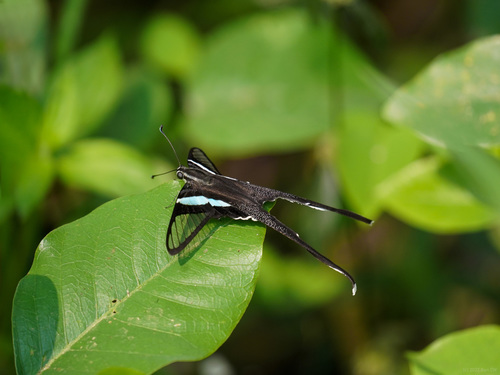
Lesser Grass Blue

Lesser Grass Blue

Zizina otis

Daily sighting probability ~20% · Possible
at Danum Valley Conservation Area

In 3 days ~40% in a week ~70%

7 Verified sightings at Danum Valley Conservation Area From 2019 to 2026
397 In all 18 parks
January Best month
☀️ Diurnal When it's spotted

About the Lesser Grass Blue

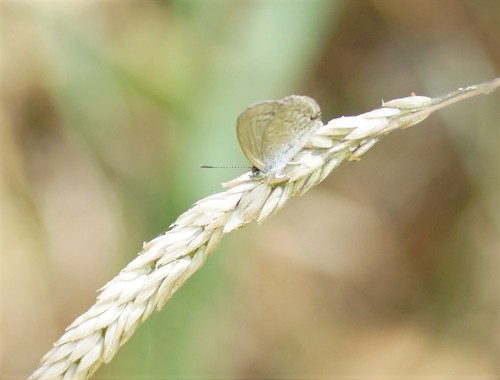
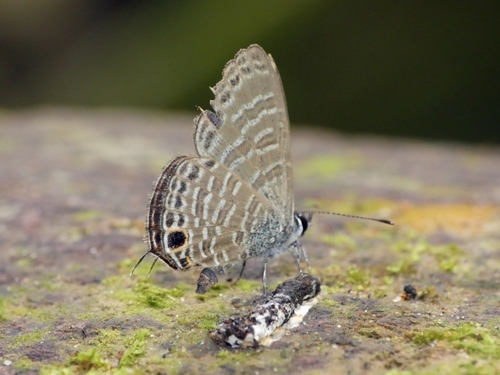
Zizina otis, the lesser grass blue, is a species of blue (Lycaenidae) butterfly found in south and southeast Asia. The species was first described by Johan Christian Fabricius in 1787. The lesser grass blue is often misidentified as Zizina labradus, the common grass blue.

Zizina otis occurs in south Asia. It was reported from the Hawaiian island of Oahu in 2008. While Zizina otis labradus is found in the North Island of New Zealand and the northern part of the South Island, Zizina otis oxleyi is found only in the southern part of the South Island.

Pale violet blue, with a silvery sheen in certain lights, forewing: a broad brown edging along the termen, which covers in some specimens quite the outer fourth of the wing, while in others is much narrower. It is always broadest at the apex and is bounded by an anteciliary darker line, beyond which the cilia are brownish at base and white outwardly.

Hindwing: anterior or costal third to half and apex brown; a slender black anteciliary line, beyond which the cilia are as in the forewing. Brownish grey. Forewing: a short, transverse, dusky lunule on the discocellulars... Wikipedia →
Global Distribution

Parks Where Found

# Park Country Daily sighting probability
1 Kosciuszko National Park 🇦🇺 Australia
~30%
2 Udawalawe National Park 🇱🇰 Sri Lanka
~30%
3 Lamington National Park 🇦🇺 Australia
~20%
4 Flinders Ranges National Park 🇦🇺 Australia
~20%
5 Hattah-Kulkyne National Park 🇦🇺 Australia
~20%
6 Blue Mountains National Park 🇦🇺 Australia
~20%
7 Wilsons Promontory National Park 🇦🇺 Australia
~20%
8 Danum Valley Conservation Area 🇲🇾 Malaysia
~20%
9 Kanha National Park 🇮🇳 India
~10%
10 Grampians National Park 🇦🇺 Australia
~10%
11 Great Otway National Park 🇦🇺 Australia
~10%
12 Noosa National Park 🇦🇺 Australia
~10%
13 Royal National Park 🇦🇺 Australia
~10%
14 Booderee National Park 🇦🇺 Australia
~10%
15 Minneriya National Park 🇱🇰 Sri Lanka
~10%
16 Daintree National Park 🇦🇺 Australia
~10%
17 Kaeng Krachan National Park 🇹🇭 Thailand
~10%
18 Springbrook National Park 🇦🇺 Australia
~10%

Cities Where Found

# City Country Daily sighting probability
1 Davao City 🇵🇭 Philippines
~40%
2 Kota 🇮🇳 India
~40%
3 Vadodara 🇮🇳 India
~30%
4 Kaohsiung 🇹🇼 Taiwan
~20%
5 Jakarta 🇮🇩 Indonesia
~20%
6 Prayagraj 🇮🇳 India
~20%
7 Tainan 🇹🇼 Taiwan
~20%
8 Manila 🇵🇭 Philippines
~20%
9 Yogyakarta 🇮🇩 Indonesia
~20%
10 Singapore 🇸🇬 Singapore
~20%

Before you go

What are the chances of seeing a Lesser Grass Blue in Danum Valley Conservation Area?

Possible

About 20% of wildlife watchers report a Lesser Grass Blue sighting in Danum Valley Conservation Area on a given day, based on 7 verified sightings from GBIF citizen-science data from 2019 to 2026. It is the 55th most-seen of the 102 insects we can rate there. Over three days the chance rises to about 40%, and over a week to about 70%, if each day is a fresh chance.

When is the best time to see a Lesser Grass Blue in Danum Valley Conservation Area?

January

In that month about 40% of wildlife watchers report a Lesser Grass Blue in Danum Valley Conservation Area on a given day, against under 5% in March–April, June–August and November–December, the lowest months.

What time of day is best to see a Lesser Grass Blue?

Between 9 am and noon

Across all the parks we cover, that three-hour window holds the most Lesser Grass Blue sightings with a recorded time, and about 9 in 10 of them come between 6 am and 6 pm: it is a daytime animal.

Is Danum Valley Conservation Area the best place to see a Lesser Grass Blue?

8th of 18

Of the 18 parks where we can rate Lesser Grass Blue sightings, Danum Valley Conservation Area ranks 8th at about 20%. The best odds are in Kosciuszko National Park (Australia, about 30%), Udawalawe National Park (Sri Lanka, about 30%) and Lamington National Park (Australia, about 20%).

Where does the Lesser Grass Blue sighting chance come from?

GBIF citizen-science records

It is estimated from how often the Lesser Grass Blue is recorded against all the insects logged in Danum Valley Conservation Area (7 verified sightings from 2019 to 2026), calibrated against known sighting rates. Figures are rounded to the nearest 10% because citizen-science data supports honest approximations, not decimals, and months with records from fewer than five people show "—". How it works.

← Back to Danum Valley Conservation Area