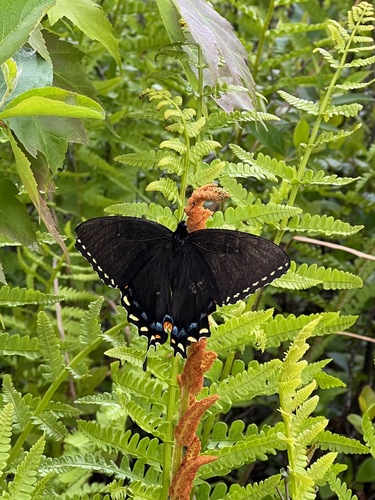
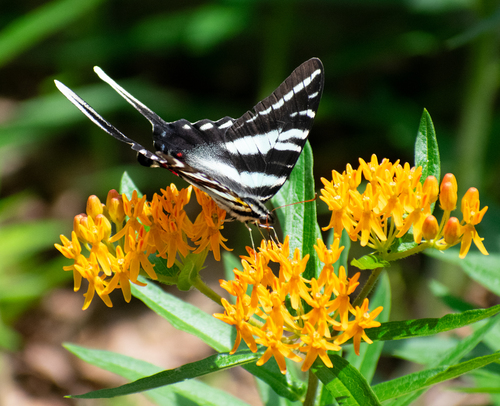
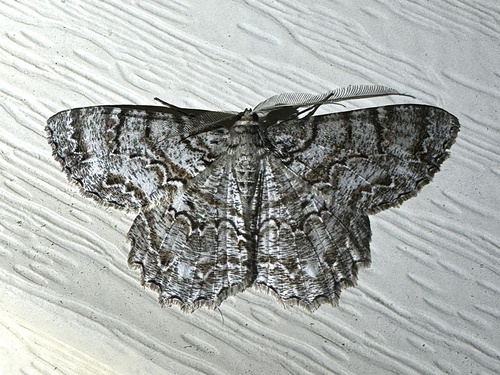
Black Swallowtail

Black Swallowtail

Papilio polyxenes

Daily sighting probability ~10% · With luck
at Great Smoky Mountains National Park

In 3 days ~20% in a week ~40%

19 Verified sightings at Great Smoky Mountains National Park From 2019 to 2026
628 In all 18 parks
August Best month
☀️ Diurnal When it's spotted

About the Black Swallowtail

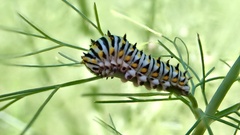
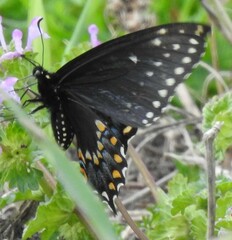
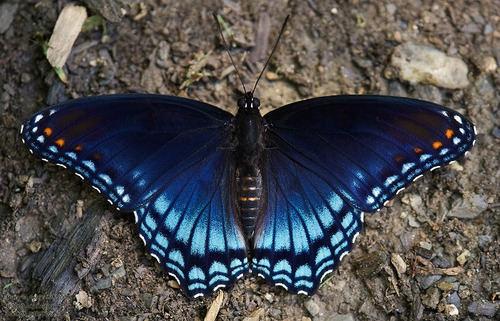
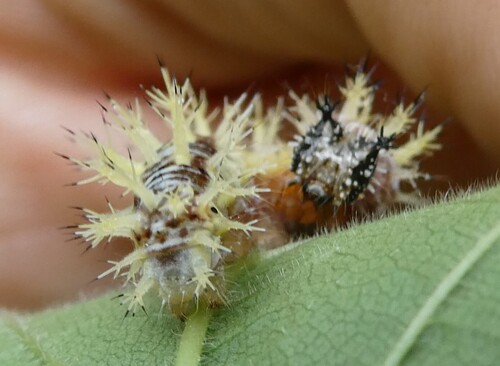
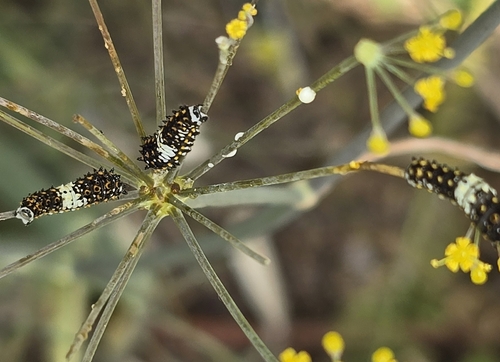
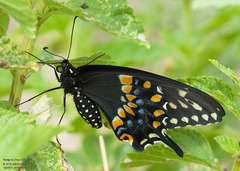
Papilio polyxenes, the (eastern) black swallowtail, American swallowtail or parsnip swallowtail, is a butterfly found throughout much of North America. An extremely similar-appearing species, Papilio joanae, occurs in the Ozark Mountains region, but it appears to be closely related to Papilio machaon, rather than P. polyxenes. The species is named after the figure in Greek mythology, Polyxena (pron.: /pəˈlɪksɨnə/; Greek: Πολυξένη), who was the youngest daughter of King Priam of Troy. Its caterpillar is often called the "parsleyworm" because the caterpillar feeds on parsley.

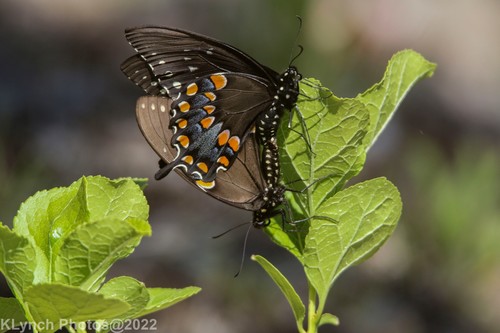
The Papilio polyxenes demonstrates polyandry and a lek mating system, showing no male parental care and display sites. Females are therefore able to choose males based on these sites and males are the only resource the females find at these sites.

Papilio polyxenes is part of the tribe Papilionini of the swallowtail butterfly family, Papilionidae. The members of this tribe all have tails on the hindwings, and therefore include species named swallowtail. P. polyxenes is part of the genus Papilio, which is the biggest group of the family Papilionidae. Subspecies polyxenes, once found in Cuba, is now... Wikipedia →
Global Distribution

Parks Where Found

# Park Country Daily sighting probability
1 Joshua Tree National Park 🇺🇸 United States
~30%
2 Guadalupe Mountains National Park 🇺🇸 United States
~20%
3 Death Valley National Park 🇺🇸 United States
~20%
4 Everglades National Park 🇺🇸 United States
~20%
5 Big Bend National Park 🇺🇸 United States
~10%
6 Grand Canyon National Park 🇺🇸 United States
~10%
7 Lago de Yojoa 🇭🇳 Honduras
~10%
8 Shenandoah National Park 🇺🇸 United States
~10%
9 Point Pelee National Park 🇨🇦 Canada
~10%
10 Volcán Barú National Park 🇵🇦 Panama
~10%
11 Cumbres de Monterrey National Park 🇲🇽 Mexico
~10%
12 Merritt Island National Wildlife Refuge 🇺🇸 United States
~10%
13 Congaree National Park 🇺🇸 United States
~10%
14 Acadia National Park 🇺🇸 United States
~10%
15 Saguaro National Park 🇺🇸 United States
~10%
16 Monteverde Cloud Forest Reserve 🇨🇷 Costa Rica
~10%
17 La Amistad International Park (Panama) 🇵🇦 Panama
~10%
18 Great Smoky Mountains National Park 🇺🇸 United States
~10%

Cities Where Found

# City Country Daily sighting probability
1 Detroit 🇺🇸 United States
~40%
2 Chicago 🇺🇸 United States
~30%
3 Philadelphia 🇺🇸 United States
~30%
4 Minneapolis [Saint Paul] 🇺🇸 United States
~30%
5 Puebla 🇲🇽 México
~20%
6 Toronto 🇨🇦 Canada
~20%
7 Montreal 🇨🇦 Canada
~20%
8 Toluca 🇲🇽 México
~20%
9 Austin 🇺🇸 United States
~20%
10 Mexico City 🇲🇽 México
~20%

Before you go

What are the chances of seeing a Black Swallowtail in Great Smoky Mountains National Park?

With luck

About 10% of wildlife watchers report a Black Swallowtail sighting in Great Smoky Mountains National Park on a given day, based on 19 verified sightings from GBIF citizen-science data from 2019 to 2026. It is the 250th most-seen of the 822 insects we can rate there. Over three days the chance rises to about 20%, and over a week to about 40%, if each day is a fresh chance.

When is the best time to see a Black Swallowtail in Great Smoky Mountains National Park?

June to October

In those months about 10% of wildlife watchers report a Black Swallowtail in Great Smoky Mountains National Park on a given day, against under 5% in November to May, the lowest months.

What time of day is best to see a Black Swallowtail?

Between 10 am and 1 pm

Across all the parks we cover, that three-hour window holds the most Black Swallowtail sightings with a recorded time, and about 9 in 10 of them come between 6 am and 6 pm: it is a daytime animal.

Which relatives of the Black Swallowtail live in Great Smoky Mountains National Park?

Same genus: Papilio

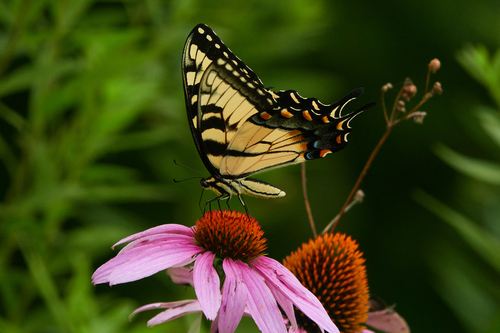
The closest relatives of the Black Swallowtail that you can see in Great Smoky Mountains National Park (genus Papilio, Common Swallowtails) are Eastern Tiger Swallowtail (about 50%), Spicebush Swallowtail (about 30%) and Appalachian Tiger Swallowtail (about 10%), with each one's daily chance of a sighting.

Where does the Black Swallowtail sighting chance come from?

GBIF citizen-science records

It is estimated from how often the Black Swallowtail is recorded against all the insects logged in Great Smoky Mountains National Park (19 verified sightings from 2019 to 2026), calibrated against known sighting rates. Figures are rounded to the nearest 10% because citizen-science data supports honest approximations, not decimals, and months with records from fewer than five people show "—". How it works.

← Back to Great Smoky Mountains National Park