About the Royal Spoonbill
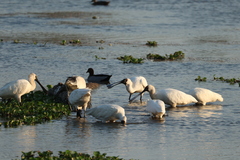
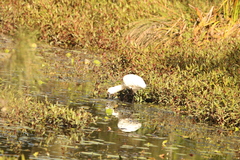
The royal spoonbill (Platalea regia), also known as the black-billed spoonbill lives in intertidal flats and shallows of fresh and saltwater wetlands in Australia, New Zealand, Indonesia, Papua New Guinea, and the Solomon Islands. (In New Zealand, it is also known by the Māori name kōtuku ngutupapa.) It has also been recorded as a vagrant in New Caledonia. It is one of 6 spoonbill species world wide. The royal spoonbill lives in wetlands and feeds on crustaceans, fish and small insects by sweeping its bill from side to side. It always flies with its head extended. Widespread throughout its large range, the royal spoonbill is evaluated as Least Concern on the IUCN Red List of Threatened Species.
The renowned ornithologist John Gould first described the royal spoonbill in 1838, naming it Platalea regia and noting its similarity to the Eurasian spoonbill (P. leucorodia). A 2010 study of mitochondrial DNA of the spoonbills by Chesser and colleagues found that the royal and black-faced spoonbills were each other's closest relatives.
The royal spoonbill is a large, white bird with a black, spoon-shaped bill. It is approximately 80 cm (31 in) tall, 74–81 cm... Wikipedia →