About the Giant Honey Bee
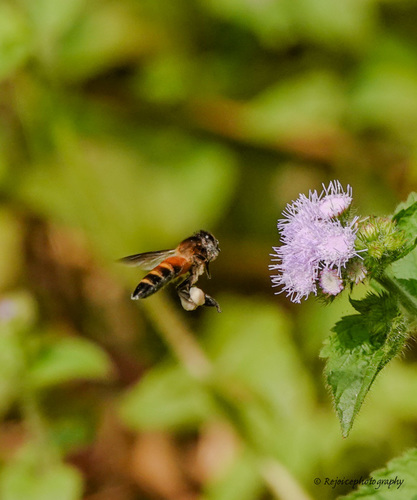
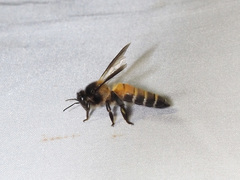
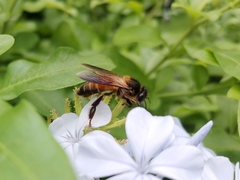
Apis dorsata, the rock bee or giant honey bee, is a honey bee of South and Southeast Asia. They are typically around 17–20 mm (0.7–0.8 in) long and nests are mainly built in exposed places far off the ground, like on tree limbs, under cliff overhangs, and under buildings. These social bees are known for their aggressive defense strategies and vicious behavior when disturbed. Though the species is not domesticated, indigenous peoples have traditionally used it as a source of honey and beeswax, a practice known as honey hunting.
Apis dorsata belongs to the subgenus Megapis in the family Apidae. This honeybee is most closely related to A. mellifera (the western honey bee), A. cerana, and A. florea. There are a few hypotheses as to when A. dorsata diverged from A. florea and A. cerana, as it is unclear which divergence occurred first. Currently, the consensus hypothesis provides a family tree that claims that A. dorsata diverged from both A. cerana and A. florea at the same time. Wikipedia →