Olive-backed Oriole

Olive-backed Oriole

Oriolus sagittatus

Silhouette: L. Shyamal · PhyloPic

LCLeast ConcernNTVUENCR
Daily sighting probability ~10% · With luck
at Litchfield National Park

In 3 days ~20% in a week ~40%

26 Verified sightings at Litchfield National Park From 2019 to 2026
2,305 In all 13 parks
September Best month
☀️ Diurnal When it's spotted

About the Olive-backed Oriole

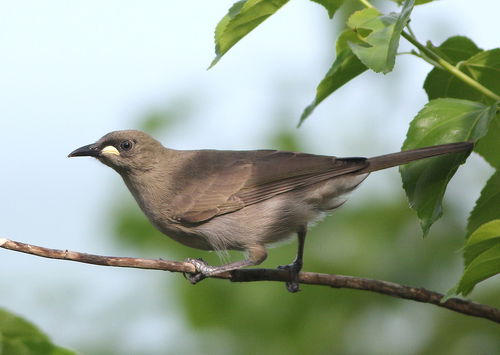
The olive-backed oriole (Oriolus sagittatus), or white-bellied oriole, is a very common medium-sized passerine bird native to northern and eastern Australia and south-central New Guinea. The most wide-ranging of the Australasian orioles, it is noisy and conspicuous.

The olive-backed oriole was originally described in the genus Coracias by the English ornithologist John Latham in 1801. Found in north-western and north-central Australia Not bright in colour, it is olive-backed with small dark streaks, with a light chest having black streaks. Females have cinnamon-edged wings and both sexes have reddish bills and eyes. Where the green oriole specialises in damp, thickly vegetated habitats in the tropical far north, the olive... Wikipedia →

Sounds

Song0:23

Australia · 2025

© Peter Boesman · XC1066782 · CC BY-NC-ND 4.0

Call0:20

Australia · 2021

© Phil Gregory · XC690880 · CC BY-NC-SA 4.0

Begging call0:33

Australia · 2020

© James Lambert · XC604354 · CC BY-NC-SA 4.0

Global Distribution

Parks Where Found

# Park Country Daily sighting probability
1 Nitmiluk National Park 🇦🇺 Australia
~30%
2 Royal National Park 🇦🇺 Australia
~20%
3 Noosa National Park 🇦🇺 Australia
~20%
4 Springbrook National Park 🇦🇺 Australia
~20%
5 Blue Mountains National Park 🇦🇺 Australia
~10%
6 Kosciuszko National Park 🇦🇺 Australia
~10%
7 Litchfield National Park 🇦🇺 Australia
~10%
8 Great Otway National Park 🇦🇺 Australia
~10%
9 Kakadu National Park 🇦🇺 Australia
~10%
10 Booderee National Park 🇦🇺 Australia
~10%
11 Grampians National Park 🇦🇺 Australia
~10%
12 Daintree National Park 🇦🇺 Australia
<5%
13 Lamington National Park 🇦🇺 Australia
<5%

Cities Where Found

# City Country Daily sighting probability
1 Brisbane 🇦🇺 Australia
~30%
2 Sydney 🇦🇺 Australia
~10%
3 Melbourne 🇦🇺 Australia
<5%

Zoos & Centres Where Found

# Zoo / Centre Country
1 Taronga Zoo 🇦🇺 Australia In captivity
2 Featherdale Sydney Wildlife Park 🇦🇺 Australia In captivity

Before you go

What are the chances of seeing an Olive-backed Oriole in Litchfield National Park?

With luck

About 10% of wildlife watchers report an Olive-backed Oriole sighting in Litchfield National Park on a given day, based on 26 verified sightings from GBIF citizen-science data from 2019 to 2026. It is the 75th most-seen of the 110 birds we can rate there. Over three days the chance rises to about 20%, and over a week to about 40%, if each day is a fresh chance.

When is the best time to see an Olive-backed Oriole in Litchfield National Park?

September

In that month about 20% of wildlife watchers report an Olive-backed Oriole in Litchfield National Park on a given day, against under 5% in February–June and November–December, the lowest months. That is one of Litchfield National Park's driest months, with about 15 mm of rain against 400 mm in January.

What time of day is best to see an Olive-backed Oriole?

Between 8 and 11 am

Across all the parks we cover, that three-hour window holds the most Olive-backed Oriole sightings with a recorded time, and about 9 in 10 of them come between 6 am and 6 pm: it is a daytime animal.

Is Litchfield National Park the best place to see an Olive-backed Oriole?

7th of 13

Of the 13 parks where we can rate Olive-backed Oriole sightings, Litchfield National Park ranks 7th at about 10%. The best odds are in Nitmiluk National Park (Australia, about 30%), Royal National Park (Australia, about 20%) and Noosa National Park (Australia, about 20%).

Where does the Olive-backed Oriole sighting chance come from?

GBIF citizen-science records

It is estimated from how often the Olive-backed Oriole is recorded against all the birds logged in Litchfield National Park (26 verified sightings from 2019 to 2026), calibrated against known sighting rates. Figures are rounded to the nearest 10% because citizen-science data supports honest approximations, not decimals, and months with records from fewer than five people show "—". How it works.

← Back to Litchfield National Park