Dirce Beauty

Dirce Beauty

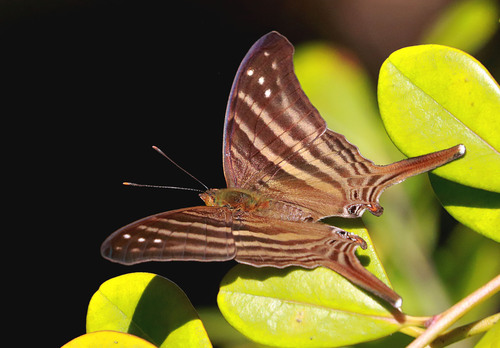
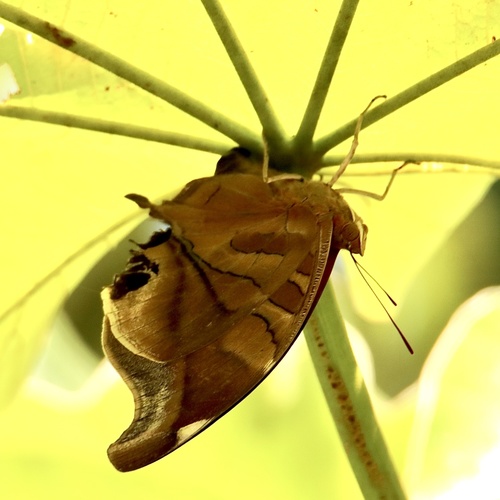
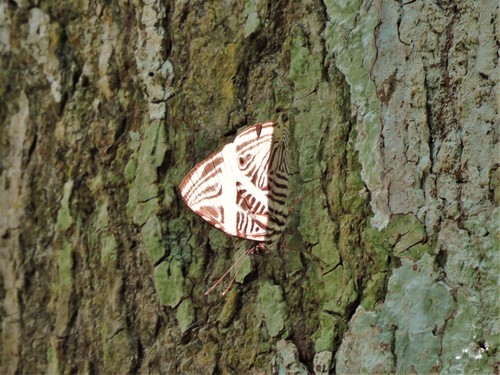
Colobura dirce

Daily sighting probability ~10% · With luck
at Manu National Park

In 3 days ~30% in a week ~60%

19 Verified sightings at Manu National Park From 2019 to 2026
313 In all 20 parks
September Best month
☀️ Diurnal When it's spotted

About the Dirce Beauty

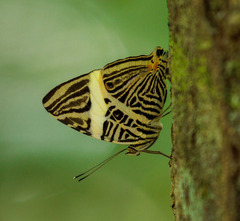
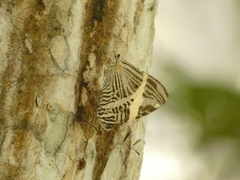
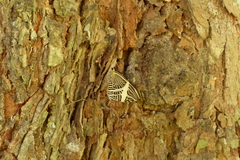
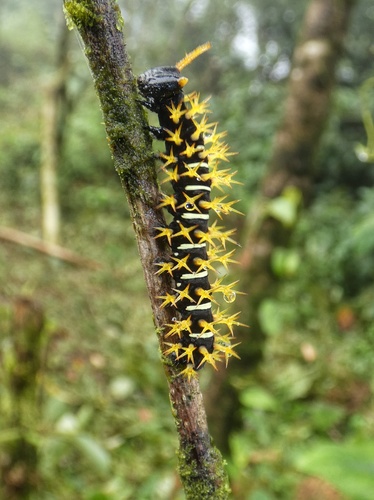
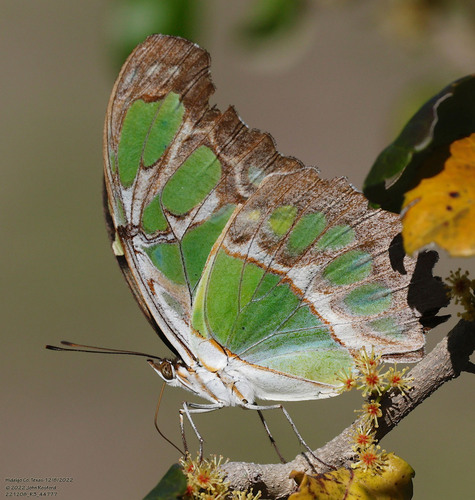
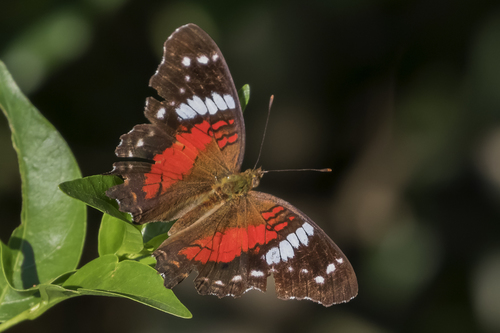
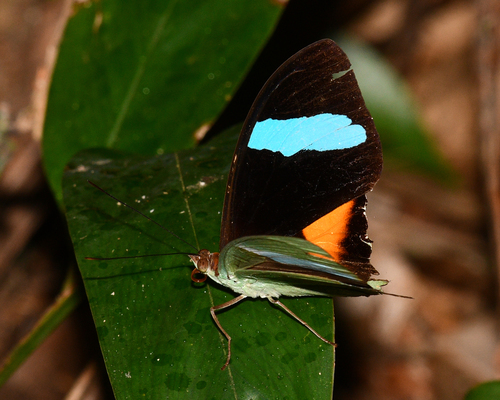
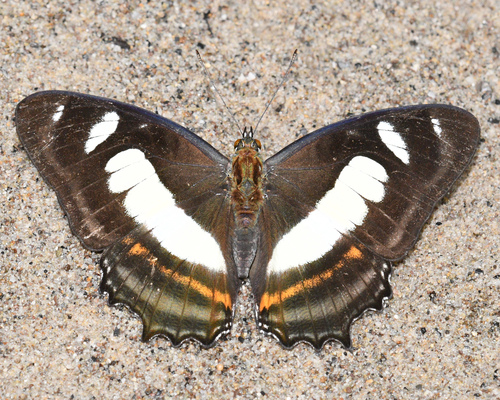
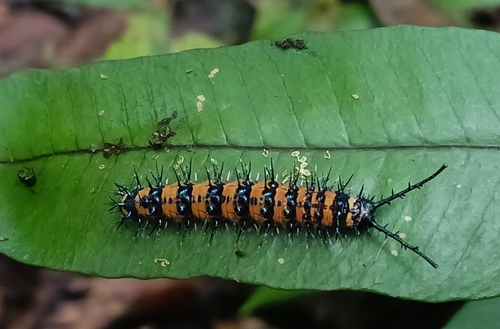
Colobura dirce, the mosaic or zebra mosaic, is a butterfly of the family Nymphalidae. It is found in Central America. the Caribbean, and northern South America. The length of the forewings is about 33 mm. The larvae feed on Cecropia species. Wikipedia →

Global Distribution

Parks Where Found

# Park Country Daily sighting probability
1 Pico Bonito National Park 🇭🇳 Honduras
~30%
2 Masaya Volcano National Park 🇳🇮 Nicaragua
~20%
3 Lago de Yojoa 🇭🇳 Honduras
~20%
4 Iguazú National Park 🇦🇷 Argentina
~20%
5 Chagres National Park 🇵🇦 Panama
~20%
6 Iguaçu National Park 🇧🇷 Brazil
~20%
7 Serra dos Órgãos National Park 🇧🇷 Brazil
~20%
8 Biotopo Cerro Cahuí 🇬🇹 Guatemala
~20%
9 Manuel Antonio National Park 🇨🇷 Costa Rica
~10%
10 Ostional Wildlife Refuge 🇨🇷 Costa Rica
~10%
11 Manu National Park 🇵🇪 Peru
~10%
12 Tenorio Volcano National Park 🇨🇷 Costa Rica
~10%
13 Soberanía National Park 🇵🇦 Panama
~10%
14 Piedras Blancas National Park 🇨🇷 Costa Rica
~10%
15 Parque Natural Metropolitano 🇵🇦 Panama
~10%
16 Tijuca National Park 🇧🇷 Brazil
~10%
17 Cahuita National Park 🇨🇷 Costa Rica
~10%
18 Arenal Volcano National Park 🇨🇷 Costa Rica
~10%
19 La Amistad International Park (Panama) 🇵🇦 Panama
~10%
20 Monteverde Cloud Forest Reserve 🇨🇷 Costa Rica
~10%

Cities Where Found

# City Country Daily sighting probability
1 Salvador 🇧🇷 Brazil
~30%
2 Manaus 🇧🇷 Brazil
~30%
3 Valencia 🇻🇪 Venezuela
~20%
4 Santo Domingo 🇩🇴 Dominican Republic
~20%
5 João Pessoa 🇧🇷 Brazil
~20%
6 Recife 🇧🇷 Brazil
~20%
7 São Luís 🇧🇷 Brazil
~20%
8 Belém 🇧🇷 Brazil
~20%
9 San Pedro Sula 🇭🇳 Honduras
~20%
10 San José 🇨🇷 Costa Rica
~20%

Before you go

What are the chances of seeing a Dirce Beauty in Manu National Park?

With luck

About 10% of wildlife watchers report a Dirce Beauty sighting in Manu National Park on a given day, based on 19 verified sightings from GBIF citizen-science data from 2019 to 2026. It is the 70th most-seen of the 366 insects we can rate there. Over three days the chance rises to about 30%, and over a week to about 60%, if each day is a fresh chance.

When is the best time to see a Dirce Beauty in Manu National Park?

July, September and November–December

In those months about 20% of wildlife watchers report a Dirce Beauty in Manu National Park on a given day, against under 5% in March–April, June and October, the lowest months.

What time of day is best to see a Dirce Beauty?

Between 11 am and 2 pm

Across all the parks we cover, that three-hour window holds the most Dirce Beauty sightings with a recorded time, and about 9 in 10 of them come between 6 am and 6 pm: it is a daytime animal.

Is Manu National Park the best place to see a Dirce Beauty?

11th of 20

Of the 20 parks where we can rate Dirce Beauty sightings, Manu National Park ranks 11th at about 10%. The best odds are in Pico Bonito National Park (Honduras, about 30%), Masaya Volcano National Park (Nicaragua, about 20%) and Lago de Yojoa (Honduras, about 20%).

Where does the Dirce Beauty sighting chance come from?

GBIF citizen-science records

It is estimated from how often the Dirce Beauty is recorded against all the insects logged in Manu National Park (19 verified sightings from 2019 to 2026), calibrated against known sighting rates. Figures are rounded to the nearest 10% because citizen-science data supports honest approximations, not decimals, and months with records from fewer than five people show "—". How it works.
← Back to Manu National Park