
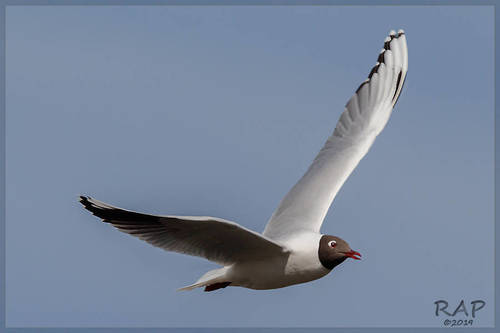
Parasitic Jaeger

Parasitic Jaeger

Stercorarius parasiticus

Silhouette: Liam Quinn (photo) and Albertonykus (silhouette) · PhyloPic

LCLeast ConcernNTVUENCR
Daily sighting probability <5% · Rare
at Nahuel Huapi National Park

In 3 days <5% in a week ~10%

12 Verified sightings at Nahuel Huapi National Park From 2019 to 2026
3,244 In all 22 parks
December Best month
☀️ Diurnal When it's spotted

About the Parasitic Jaeger

The parasitic jaeger or arctic skua (Stercorarius parasiticus), also known as the parasitic skua or arctic jaeger, is a seabird in the skua family Stercorariidae. It is a migratory species breeding in Northern Fennoscandia, Scotland, Iceland, Greenland, Northern Canada, Alaska, and Siberia and wintering across the southern hemisphere. Kleptoparasitism is a major source of food for this species during migration and winter, and is where the name is derived from.

The parasitic jaeger was formally described in 1758 by the Swedish naturalist Carl Linnaeus in the tenth edition of his Systema Naturae under the binomial name Larus parasiticus. Linnaeus specified the type locality as "within the Tropic of Cancer of Europe, America and Asia" but this is now restricted to the Swedish coastline. The parasitic jaeger is now placed with the six other skuas in the genus Stercorarius that was introduced in 1760 by the French zoologist Mathurin Jacques Brisson. The species is considered to be monotypic: no subspecies are recognised. The genus name Stercorarius is Latin and means "of dung"; the food disgorged by other birds when pursued by skuas was once thought to be excrement. The specific... Wikipedia →

Sounds

Flight call0:13

Norway · 2026

© Teet Sirotkin · XC1157231 · CC BY-SA 4.0

Call0:10

Sweden · 2025

© Lars Edenius · XC1022096 · CC BY-NC-SA 4.0

Recording0:50

United Kingdom · 2021

© Peter Stronach · XC691581 · CC BY-NC-SA 4.0

Global Distribution

Parks Where Found

# Park Country Daily sighting probability
1 Svalbard 🇳🇴 Norway
~80%
2 Vatnajokull National Park 🇮🇸 Iceland
~60%
3 Bastimentos Island National Marine Park 🇵🇦 Panama
<5%
4 Wadden Sea National Park 🇩🇪 Germany
<5%
5 Channel Islands National Park 🇺🇸 United States
<5%
6 El Vizcaíno Biosphere Reserve 🇲🇽 Mexico
<5%
7 Kenai Fjords National Park 🇺🇸 United States
<5%
8 La Amistad International Park (Panama) 🇵🇦 Panama
<5%
9 Great Bear Rainforest 🇨🇦 Canada
<5%
10 Wilsons Promontory National Park 🇦🇺 Australia
<5%
11 Nahuel Huapi National Park 🇦🇷 Argentina
<5%
12 Table Mountain National Park 🇿🇦 South Africa
<5%
13 Cabo Blanco Absolute Nature Reserve 🇨🇷 Costa Rica
<5%
14 Celestún Biosphere Reserve 🇲🇽 Mexico
<5%
15 Merritt Island National Wildlife Refuge 🇺🇸 United States
<5%
16 Pacific Rim National Park Reserve 🇨🇦 Canada
<5%
17 Acadia National Park 🇺🇸 United States
<5%
18 Manuel Antonio National Park 🇨🇷 Costa Rica
<5%
19 Olympic National Park 🇺🇸 United States
<5%
20 Redwood National Park 🇺🇸 United States
<5%
21 Galápagos Islands 🇪🇨 Ecuador
<5%
22 Point Pelee National Park 🇨🇦 Canada
<5%

Cities Where Found

# City Country Daily sighting probability
1 Dakar 🇸🇳 Senegal
~30%
2 Tel Aviv 🇮🇱 Israel
<5%
3 Busan 🇰🇷 South Korea
<5%
4 Kuwait City 🇰🇼 Kuwait
<5%
5 Rotterdam [The Hague] 🇳🇱 Netherlands
<5%
6 Kozhikode 🇮🇳 India
<5%
7 San Diego 🇺🇸 United States
<5%
8 Dublin 🇮🇪 Ireland
<5%
9 San Francisco 🇺🇸 United States
<5%
10 Melbourne 🇦🇺 Australia
<5%

Before you go

What are the chances of seeing a Parasitic Jaeger in Nahuel Huapi National Park?

Rare

Under 5% of wildlife watchers report a Parasitic Jaeger sighting in Nahuel Huapi National Park on a given day, based on 12 verified sightings from GBIF citizen-science data from 2019 to 2026. It is the 104th most-seen of the 111 birds we can rate there. Over three days the chance rises to under 5%, and over a week to about 10%, if each day is a fresh chance.

When is the best time to see a Parasitic Jaeger in Nahuel Huapi National Park?

December

In that month about 10% of wildlife watchers report a Parasitic Jaeger in Nahuel Huapi National Park on a given day, against under 5% in January to November, the lowest months. That is one of Nahuel Huapi National Park's driest months, with about 80 mm of rain against 310 mm in June.

What time of day is best to see a Parasitic Jaeger?

Between 9 am and noon

Across all the parks we cover, that three-hour window holds the most Parasitic Jaeger sightings with a recorded time, and about 9 in 10 of them come between 6 am and 6 pm: it is a daytime animal.

Which relatives of the Parasitic Jaeger live in Nahuel Huapi National Park?

Same order: Charadriiformes

The closest relatives of the Parasitic Jaeger that you can see in Nahuel Huapi National Park (order Charadriiformes, Shorebirds and Allies) are Southern Lapwing (about 60%) and Dominican Gull (about 60%), with each one's daily chance of a sighting.

Where does the Parasitic Jaeger sighting chance come from?

GBIF citizen-science records

It is estimated from how often the Parasitic Jaeger is recorded against all the birds logged in Nahuel Huapi National Park (12 verified sightings from 2019 to 2026), calibrated against known sighting rates. Figures are rounded to the nearest 10% because citizen-science data supports honest approximations, not decimals, and months with records from fewer than five people show "—". How it works.

← Back to Nahuel Huapi National Park