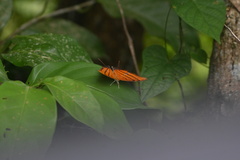
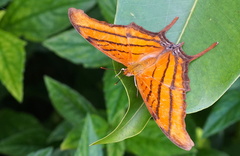
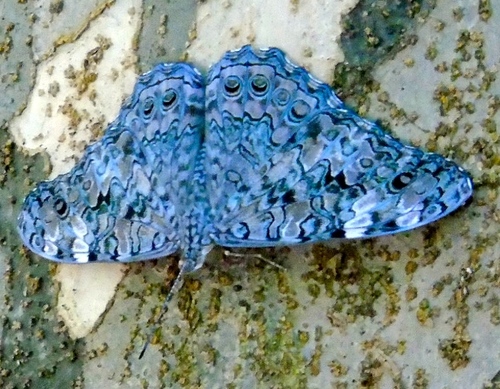
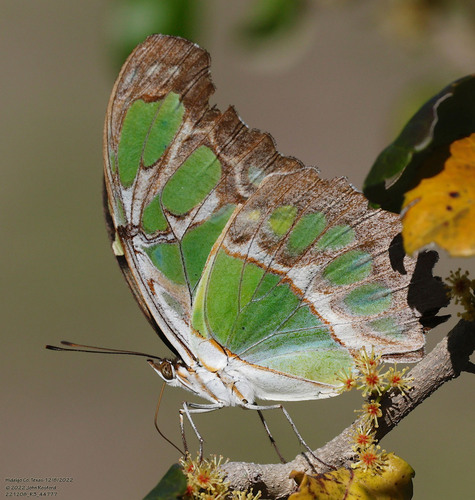
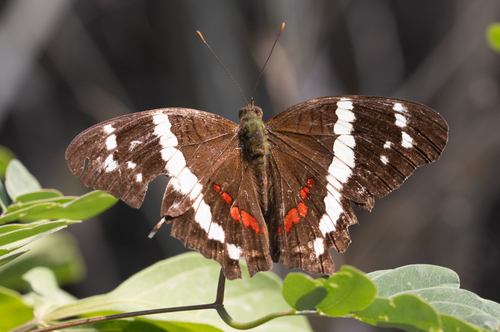
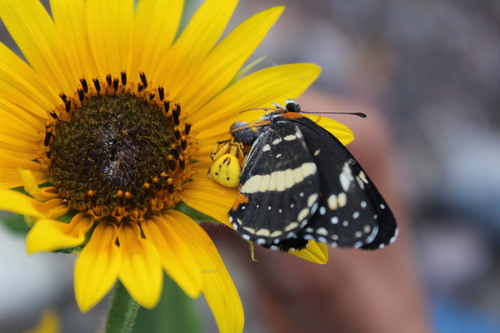
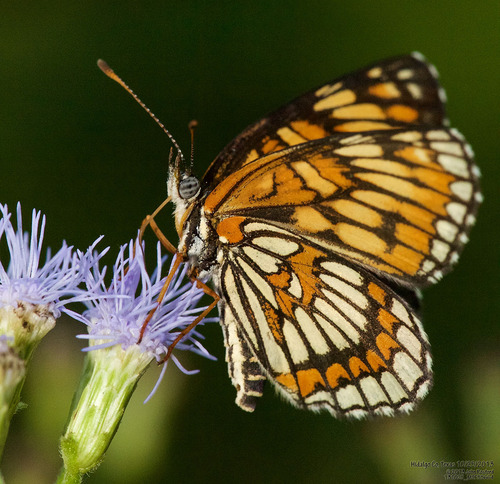
Ruddy Daggerwing

Ruddy Daggerwing

Marpesia petreus

Daily sighting probability ~10% · With luck
at Sian Ka'an Biosphere Reserve

In 3 days ~40% in a week ~60%

8 Verified sightings at Sian Ka'an Biosphere Reserve From 2019 to 2026
443 In all 25 parks
December Best month
☀️ Diurnal When it's spotted

About the Ruddy Daggerwing

Marpesia petreus, the ruddy daggerwing, is a species of butterfly belonging to the family Nymphalidae. It is found in Brazil north through Central America, Mexico, and the West Indies to southern Florida. Strays are found as far north as Arizona, Colorado, Nebraska, Kansas, and southern Texas.

The wingspan is 70–95 mm. The larvae feed on Ficus carica, Ficus pumila, and Ficus citrifolia. Wikipedia →

Global Distribution

Parks Where Found

# Park Country Daily sighting probability
1 Iguazú National Park 🇦🇷 Argentina
~20%
2 Cuyabeno Wildlife Reserve 🇪🇨 Ecuador
~20%
3 Iguaçu National Park 🇧🇷 Brazil
~20%
4 Serra dos Órgãos National Park 🇧🇷 Brazil
~20%
5 Rincón de la Vieja National Park 🇨🇷 Costa Rica
~20%
6 Big Cypress National Preserve 🇺🇸 United States
~20%
7 Ostional Wildlife Refuge 🇨🇷 Costa Rica
~20%
8 Santa Rosa National Park 🇨🇷 Costa Rica
~20%
9 Lago de Yojoa 🇭🇳 Honduras
~20%
10 Masaya Volcano National Park 🇳🇮 Nicaragua
~10%
11 Sian Ka'an Biosphere Reserve 🇲🇽 Mexico
~10%
12 Calakmul Biosphere Reserve 🇲🇽 Mexico
~10%
13 Yasuní National Park 🇪🇨 Ecuador
~10%
14 Tijuca National Park 🇧🇷 Brazil
~10%
15 Braulio Carrillo National Park 🇨🇷 Costa Rica
~10%
16 Tambopata National Reserve 🇵🇪 Peru
~10%
17 Tortuguero National Park 🇨🇷 Costa Rica
~10%
18 Everglades National Park 🇺🇸 United States
~10%
19 Cañón del Sumidero National Park 🇲🇽 Mexico
~10%
20 Corcovado National Park 🇨🇷 Costa Rica
~10%
21 Manuel Antonio National Park 🇨🇷 Costa Rica
~10%
22 Soberanía National Park 🇵🇦 Panama
~10%
23 Arenal Volcano National Park 🇨🇷 Costa Rica
~10%
24 Monteverde Cloud Forest Reserve 🇨🇷 Costa Rica
<5%
25 Cumbres de Monterrey National Park 🇲🇽 Mexico
<5%

Cities Where Found

# City Country Daily sighting probability
1 Porto Alegre 🇧🇷 Brazil
~30%
2 Curitiba 🇧🇷 Brazil
~30%
3 São Paulo 🇧🇷 Brazil
~20%
4 San Pedro Sula 🇭🇳 Honduras
~20%
5 Cali 🇨🇴 Colombia
~20%
6 Miami 🇺🇸 United States
~10%
7 Rio de Janeiro 🇧🇷 Brazil
~10%
8 Belo Horizonte 🇧🇷 Brazil
~10%
9 Niterói 🇧🇷 Brazil
~10%
10 Campinas 🇧🇷 Brazil
~10%

Before you go

What are the chances of seeing a Ruddy Daggerwing in Sian Ka'an Biosphere Reserve?

With luck

About 10% of wildlife watchers report a Ruddy Daggerwing sighting in Sian Ka'an Biosphere Reserve on a given day, based on 8 verified sightings from GBIF citizen-science data from 2019 to 2026. It is the 9th most-seen of the 20 insects we can rate there. Over three days the chance rises to about 40%, and over a week to about 60%, if each day is a fresh chance.

When is the best time to see a Ruddy Daggerwing in Sian Ka'an Biosphere Reserve?

June and December

In those months about 30% of wildlife watchers report a Ruddy Daggerwing in Sian Ka'an Biosphere Reserve on a given day, against under 5% in January–April and July–October, the lowest months. Those are among Sian Ka'an Biosphere Reserve's wettest months, with about 150 mm of rain a month against 30 mm in March.

What time of day is best to see a Ruddy Daggerwing?

Between 10 am and 1 pm

Across all the parks we cover, that three-hour window holds the most Ruddy Daggerwing sightings with a recorded time, and about 9 in 10 of them come between 6 am and 6 pm: it is a daytime animal.

Is Sian Ka'an Biosphere Reserve the best place to see a Ruddy Daggerwing?

11th of 25

Of the 25 parks where we can rate Ruddy Daggerwing sightings, Sian Ka'an Biosphere Reserve ranks 11th at about 10%. The best odds are in Iguazú National Park (Argentina, about 20%), Cuyabeno Wildlife Reserve (Ecuador, about 20%) and Iguaçu National Park (Brazil, about 20%).

Where does the Ruddy Daggerwing sighting chance come from?

GBIF citizen-science records

It is estimated from how often the Ruddy Daggerwing is recorded against all the insects logged in Sian Ka'an Biosphere Reserve (8 verified sightings from 2019 to 2026), calibrated against known sighting rates. Figures are rounded to the nearest 10% because citizen-science data supports honest approximations, not decimals, and months with records from fewer than five people show "—". How it works.
← Back to Sian Ka'an Biosphere Reserve