


Completed


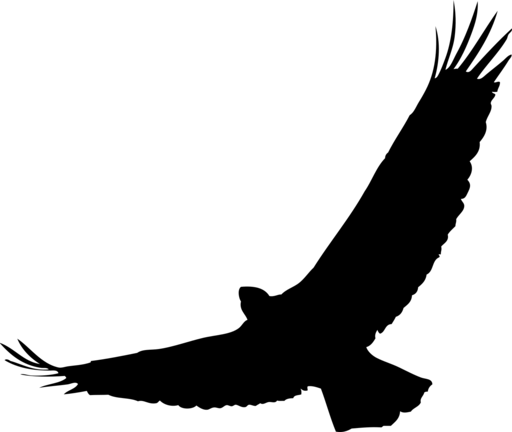
African Fish-Eagle
Haliaeetus vocifer
Silhouette: Ron Holmes/U. S. Fish and Wildlife Service (source photo), T. Michael Keesey (vectorization) · PhyloPic
- KingdomAnimalia (Animals)
- PhylumChordata (Chordates)
- ClassAves (Birds)
- OrderAccipitriformes (Hawks, Eagles, Kites, and Allies)
- FamilyAccipitridae (Hawks, Eagles, and Kites)
- GenusHaliaeetus (Northern Sea-Eagles and Fish-Eagles)
- SpeciesHaliaeetus vocifer (African Fish-Eagle)
In 3 days ~10% in a week ~20%
10 Verified sightings at Aberdare National Park From 2019 to 2026
21,078 In all 48 parks
June Best month
☀️ Diurnal When it's spotted
About the African Fish-Eagle
The African fish eagle (Icthyophaga vocifer) or the African sea eagle is a large species of eagle found throughout sub-Saharan Africa wherever large bodies of open water with an abundant food supply occur. It is the national bird of Malawi, Namibia, Zambia, and Zimbabwe. As a result of its large range, it is known in many languages. Examples of names include: visarend in Afrikaans, nkwazi in Chewa, aigle pêcheur in French, idì in Yoruba, hungwe in Shona, inkwazi in isiZulu, and ntšhu in Northern Sotho. Though this species may superficially resemble the bald eagle in appearance they are not closely related and the two species occur on different continents, with the bald eagle being endemic to North America.
The African fish eagle is a species placed in the genus Icthyophaga (fish eagles). Its closest relative appears to be the critically endangered Madagascar fish eagle (I. vociferoides). Like all sea eagle species pairs, this one consists of a white-headed species (the African fish eagle) and a tan-headed one (Madagascar fish eagle). These are an ancient lineage of sea eagles; like other sea eagles, they have dark talons, beaks, and eyes. Both species have at least partially... Wikipedia →
Recent sightings of African Fish-Eagle in Aberdare National Park
LIVEiNaturalistGlobal Distribution
Parks Where Found
Zoos & Centres Where Found
Closest Relatives at Aberdare National Park




Before you go
What are the chances of seeing an African Fish-Eagle in Aberdare National Park?
Rare
Under 5% of wildlife watchers report an African Fish-Eagle sighting in Aberdare National Park on a given day, based on 10 verified sightings from GBIF citizen-science data from 2019 to 2026. It is the 162nd most-seen of the 217 birds we can rate there. Over three days the chance rises to about 10%, and over a week to about 20%, if each day is a fresh chance.
When is the best time to see an African Fish-Eagle in Aberdare National Park?
May and June
In those months about 10% of wildlife watchers report an African Fish-Eagle in Aberdare National Park on a given day, against under 5% in July to April, the lowest months.
What time of day is best to see an African Fish-Eagle?
Between 10 am and 1 pm
Across all the parks we cover, that three-hour window holds the most African Fish-Eagle sightings with a recorded time, and about 8 in 10 of them come between 6 am and 6 pm: it is a daytime animal.
Is Aberdare National Park the best place to see an African Fish-Eagle?
45th of 48
Of the 48 parks where we can rate African Fish-Eagle sightings, Aberdare National Park ranks 45th at under 5%. The best odds are in Lake Nakuru National Park (Kenya, about 80%), Niokolo-Koba National Park (Senegal, about 70%) and Akagera National Park (Rwanda, about 70%). All parks ranked.
Which relatives of the African Fish-Eagle live in Aberdare National Park?
Same family: Accipitridae
The closest relatives of the African Fish-Eagle that you can see in Aberdare National Park (family Accipitridae, Hawks, Eagles, and Kites) are Augur Buzzard (about 50%), Mountain Buzzard (about 30%) and African Harrier-Hawk (about 20%), with each one's daily chance of a sighting.
Where does the African Fish-Eagle sighting chance come from?
GBIF citizen-science records
It is estimated from how often the African Fish-Eagle is recorded against all the birds logged in Aberdare National Park (10 verified sightings from 2019 to 2026), calibrated against known sighting rates. Figures are rounded to the nearest 10% because citizen-science data supports honest approximations, not decimals, and months with records from fewer than five people show "—". How it works.
