Black-headed Heron

Black-headed Heron

Ardea melanocephala

Silhouette: Giles Laurent · PhyloPic

LCLeast ConcernNTVUENCR
Daily sighting probability ~10% · With luck
at Bwindi Impenetrable National Park

In 3 days ~20% in a week ~40%

125 Verified sightings at Bwindi Impenetrable National Park From 2019 to 2026
14,200 In all 53 parks
March Best month
☀️ Diurnal When it's spotted

About the Black-headed Heron

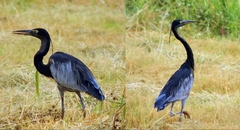
The black-headed heron (Ardea melanocephala) is a wading bird of the heron family Ardeidae, common throughout much of sub-Saharan Africa and Madagascar. It is mainly resident, but some west African birds move further north in the rainy season.

This species usually breeds in the wet season in colonies in trees, reedbeds or cliffs. It builds a bulky stick nest and lays 2–4 eggs. It often feeds in shallow water, spearing fish or frogs with its long, sharp bill. It also hunts well away from water, taking large insects, small mammals, and birds. It waits motionless for its prey, or slowly stalk its victim.

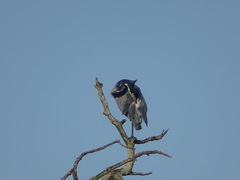
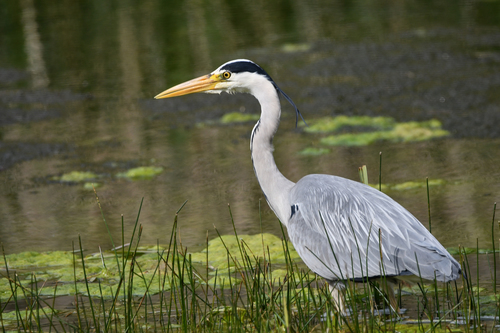
The black-headed heron is a large bird, standing 85 cm tall, and it has a 150 cm wingspan. It is nearly as large as the grey heron, which it resembles in appearance, although it is generally darker. Its plumage is largely grey above, and paler grey below. It has a powerful dusky bill.

The flight is slow, with the neck retracted. This is characteristic of herons and bitterns, and distinguishes them from storks, cranes, and spoonbills, which extend their necks. The white underwing coverts are striking in flight.

The call is a loud croaking. Black-headed... Wikipedia →

Sounds

Call1:13

Kenya · 2024

© Peter Boesman · XC947948 · CC BY-NC-ND 4.0

Song0:12

Cameroon · 2019

© Andres Angulo Rubiano · XC492346 · CC BY-NC-SA 4.0

Begging call0:48

Kenya · 2018

© Frank Lambert · XC455447 · CC BY-NC-ND 4.0

Global Distribution

Parks Where Found

# Park Country Daily sighting probability
1 Nairobi National Park 🇰🇪 Kenya
~50%
2 Ngorongoro Conservation Area 🇹🇿 Tanzania
~50%
3 Serengeti National Park 🇹🇿 Tanzania
~50%
4 Arusha National Park 🇹🇿 Tanzania
~50%
5 Addo Elephant National Park 🇿🇦 South Africa
~40%
6 West Coast National Park 🇿🇦 South Africa
~40%
7 South Luangwa National Park 🇿🇲 Zambia
~40%
8 Lake Nakuru National Park 🇰🇪 Kenya
~40%
9 Amboseli National Park 🇰🇪 Kenya
~40%
10 Masai Mara National Reserve 🇰🇪 Kenya
~40%
11 Tsavo East National Park 🇰🇪 Kenya
~30%
12 Lower Zambezi National Park 🇿🇲 Zambia
~30%
13 Tarangire National Park 🇹🇿 Tanzania
~30%
14 Akagera National Park 🇷🇼 Rwanda
~30%
15 Queen Elizabeth National Park 🇺🇬 Uganda
~30%
16 De Hoop Nature Reserve 🇿🇦 South Africa
~30%
17 Samburu National Reserve 🇰🇪 Kenya
~30%
18 Murchison Falls National Park 🇺🇬 Uganda
~30%
19 Mikumi National Park 🇹🇿 Tanzania
~30%
20 Lake Mburo National Park 🇺🇬 Uganda
~30%
21 Aberdare National Park 🇰🇪 Kenya
~20%
22 Mana Pools National Park 🇿🇼 Zimbabwe
~20%
23 Liwonde National Park 🇲🇼 Malawi
~20%
24 Lake Manyara National Park 🇹🇿 Tanzania
~20%
25 Etosha National Park 🇳🇦 Namibia
~20%
26 Hwange National Park 🇿🇼 Zimbabwe
~20%
27 Mkomazi National Park 🇹🇿 Tanzania
~20%
28 Meru National Park 🇰🇪 Kenya
~20%
29 Garden Route National Park 🇿🇦 South Africa
~10%
30 Kibale National Park 🇺🇬 Uganda
~10%
31 iSimangaliso Wetland Park 🇿🇦 South Africa
~10%
32 Niokolo-Koba National Park 🇸🇳 Senegal
~10%
33 Pilanesberg National Park 🇿🇦 South Africa
~10%
34 Virunga National Park 🇨🇩 Democratic Republic of the Congo
~10%
35 Tsavo West National Park 🇰🇪 Kenya
~10%
36 Ruaha National Park 🇹🇿 Tanzania
~10%
37 Kafue National Park 🇿🇲 Zambia
~10%
38 Kidepo Valley National Park 🇺🇬 Uganda
~10%
39 Golden Gate Highlands National Park 🇿🇦 South Africa
~10%
40 Table Mountain National Park 🇿🇦 South Africa
~10%
41 Chobe National Park 🇧🇼 Botswana
~10%
42 Gonarezhou National Park 🇿🇼 Zimbabwe
~10%
43 Semuliki National Park 🇺🇬 Uganda
~10%
44 Bwindi Impenetrable National Park 🇺🇬 Uganda
~10%
45 Kruger National Park 🇿🇦 South Africa
~10%
46 Kgalagadi Transfrontier Park 🇿🇦 South Africa
~10%
47 Volcanoes National Park 🇷🇼 Rwanda
~10%
48 Bale Mountains National Park 🇪🇹 Ethiopia
<5%
49 uMkhuze Game Reserve 🇿🇦 South Africa
<5%
50 Gorongosa National Park 🇲🇿 Mozambique
<5%
51 Hluhluwe-Imfolozi Park 🇿🇦 South Africa
<5%
52 Moremi Game Reserve 🇧🇼 Botswana
<5%
53 Nyungwe National Park 🇷🇼 Rwanda
<5%

Cities Where Found

# City Country Daily sighting probability
1 Mombasa 🇰🇪 Kenya
~60%
2 Kigali 🇷🇼 Rwanda
~40%
3 Dar es-Salaam 🇹🇿 Tanzania
~40%
4 N'Djamena 🇹🇩 Chad
~40%
5 Kampala 🇺🇬 Uganda
~30%
6 Serrekunda 🇬🇲 Gambia
~20%
7 Lusaka 🇿🇲 Zambia
~20%
8 Johannesburg 🇿🇦 South Africa
~20%
9 Nairobi 🇰🇪 Kenya
~20%
10 Durban 🇿🇦 South Africa
~20%

Zoos & Centres Where Found

# Zoo / Centre Country
1 Johannesburg Zoo 🇿🇦 South Africa In captivity
2 Knysna Elephant Park 🇿🇦 South Africa In captivity
3 World of Birds Wildlife Sanctuary and Monkey Park 🇿🇦 South Africa In captivity

Before you go

What are the chances of seeing a Black-headed Heron in Bwindi Impenetrable National Park?

With luck

About 10% of wildlife watchers report a Black-headed Heron sighting in Bwindi Impenetrable National Park on a given day, based on 125 verified sightings from GBIF citizen-science data from 2019 to 2026. It is the 181st most-seen of the 400 birds we can rate there. Over three days the chance rises to about 20%, and over a week to about 40%, if each day is a fresh chance.

When is the best time to see a Black-headed Heron in Bwindi Impenetrable National Park?

March, May and July–November

In those months about 10% of wildlife watchers report a Black-headed Heron in Bwindi Impenetrable National Park on a given day, against under 5% in April, June and December–February, the lowest months.

What time of day is best to see a Black-headed Heron?

Between 8 and 11 am

Across all the parks we cover, that three-hour window holds the most Black-headed Heron sightings with a recorded time, and about 9 in 10 of them come between 6 am and 6 pm: it is a daytime animal.

Where does the Black-headed Heron sighting chance come from?

GBIF citizen-science records

It is estimated from how often the Black-headed Heron is recorded against all the birds logged in Bwindi Impenetrable National Park (125 verified sightings from 2019 to 2026), calibrated against known sighting rates. Figures are rounded to the nearest 10% because citizen-science data supports honest approximations, not decimals, and months with records from fewer than five people show "—". How it works.

← Back to Bwindi Impenetrable National Park