Pea Blue

Pea Blue

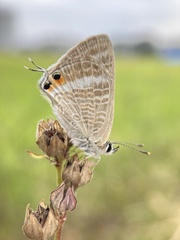
Lampides boeticus

Daily sighting probability <5% · Rare
at London

In 3 days ~10% in a week ~20%

6 Verified sightings at London
664 In all 24 parks From 2019 to 2026
September Best month
☀️ Diurnal When it's spotted

About the Pea Blue

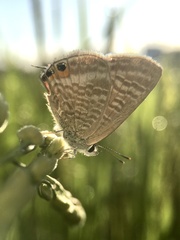
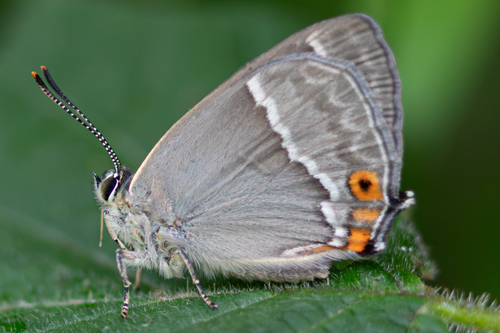
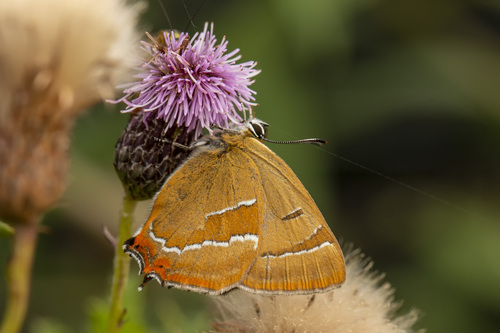
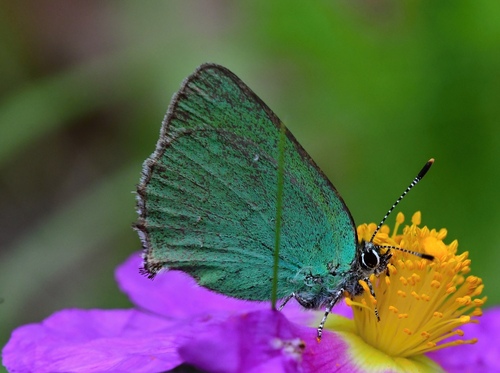
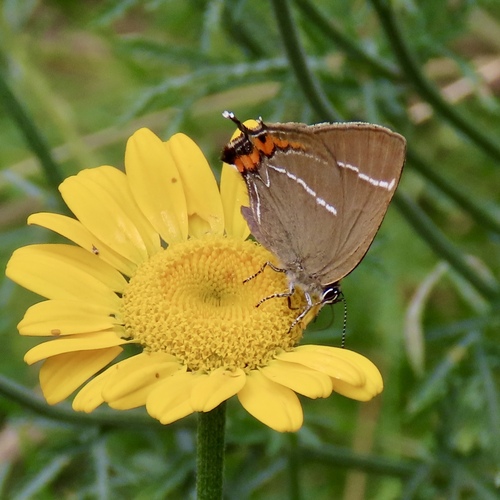
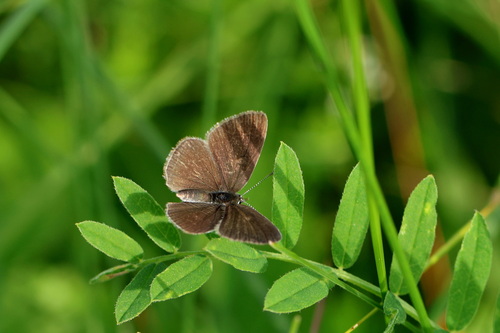
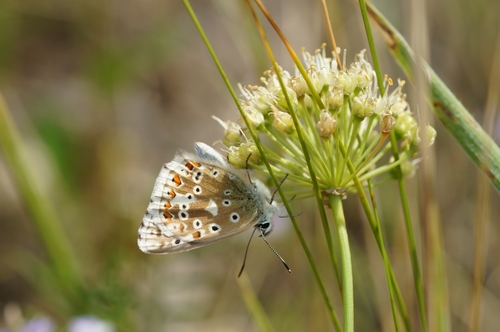
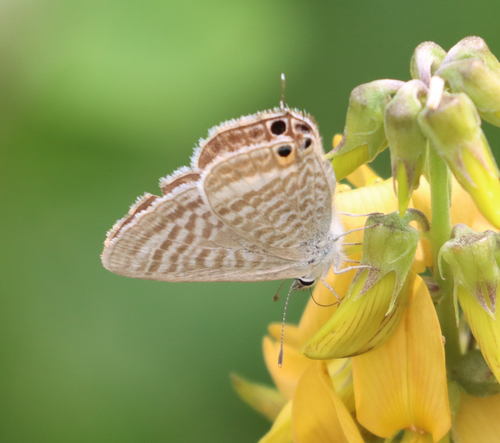
Lampides boeticus, the pea blue, or long-tailed blue, is a small butterfly that belongs to the lycaenids or gossamer-winged family. The Latin species name boeticus refers to Baetica, a province of the Roman Empire in the Iberian Peninsula. Its common name refers to the long streamers on its hind wings, the male's bright iridescent blue colour, and peas, which is the typical host plant of the butterfly.

This species was first described by Carl Linnaeus in 1767 and was initially named Papilio boeticus. This species can be found in Europe, Africa, South and Southeast Asia, and Australia. It is also found in the Hawaiian islands. It is also found in the Maldives.In New Zealand this species is regarded as being self introduced as was first observed in November 1965.

This species inhabits the edge of forests, mountain meadows and hot flowery places at an elevation up to 2,700 metres (8,900 ft) above sea level. The wingspan is 24–32 mm for males and 24–34 mm for females. In these small butterflies (although unusually large for their family) the males have a mainly blue violet upper face of the wings with... Wikipedia →
Global Distribution

Parks Where Found

# Park Country Daily sighting probability
1 Horton Plains National Park 🇱🇰 Sri Lanka
~30%
2 Picos de Europa National Park 🇪🇸 Spain
~30%
3 Sierra Nevada National Park 🇪🇸 Spain
~30%
4 Aigüestortes National Park 🇪🇸 Spain
~20%
5 Sierra de Guadarrama National Park 🇪🇸 Spain
~20%
6 Nikko National Park 🇯🇵 Japan
~20%
7 Tangkoko Nature Reserve 🇮🇩 Indonesia
~20%
8 Pyrénées National Park 🇫🇷 France
~10%
9 Hattah-Kulkyne National Park 🇦🇺 Australia
~10%
10 Ordesa y Monte Perdido National Park 🇪🇸 Spain
~10%
11 Monfragüe National Park 🇪🇸 Spain
~10%
12 Noosa National Park 🇦🇺 Australia
~10%
13 Kgalagadi Transfrontier Park 🇿🇦 South Africa
~10%
14 Mercantour National Park 🇫🇷 France
~10%
15 Cévennes National Park 🇫🇷 France
~10%
16 Garden Route National Park 🇿🇦 South Africa
~10%
17 Namib-Naukluft National Park 🇳🇦 Namibia
~10%
18 iSimangaliso Wetland Park 🇿🇦 South Africa
~10%
19 Doñana National Park 🇪🇸 Spain
~10%
20 Addo Elephant National Park 🇿🇦 South Africa
~10%
21 Table Mountain National Park 🇿🇦 South Africa
~10%
22 Lamington National Park 🇦🇺 Australia
~10%
23 Kruger National Park 🇿🇦 South Africa
~10%
24 Blue Mountains National Park 🇦🇺 Australia
<5%

Cities Where Found

# City Country Daily sighting probability
1 Kanpur 🇮🇳 India
~30%
2 Nanchang 🇨🇳 China
~30%
3 Wuhan 🇨🇳 China
~20%
4 Jerusalem 🇮🇱 Israel
~20%
5 Tuen Mun 🇨🇳 China
~20%
6 Kunming 🇨🇳 China
~20%
7 Tel Aviv 🇮🇱 Israel
~20%
8 Hefei 🇨🇳 China
~20%
9 Kathmandu 🇳🇵 Nepal
~20%
10 Lusaka 🇿🇲 Zambia
~20%

Before you go

What are the chances of seeing a Pea Blue in London?

Rare

Under 5% of wildlife watchers report a Pea Blue sighting in London on a given day, based on 6 verified sightings from GBIF citizen-science data. It is the 1300th most-seen of the 1504 insects we can rate there. Over three days the chance rises to about 10%, and over a week to about 20%, if each day is a fresh chance.

When is the best time to see a Pea Blue in London?

Any time of year

In every month with enough records, under 5% of wildlife watchers report a Pea Blue in London on a given day, so our monthly data shows no clear season.

What time of day is best to see a Pea Blue?

Between 10 am and 1 pm

Across all the parks we cover, that three-hour window holds the most Pea Blue sightings with a recorded time, and about 9 in 10 of them come between 6 am and 6 pm: it is a daytime animal.

Is London the best place to see a Pea Blue?

71st of 71

Of the 71 cities where we can rate Pea Blue sightings, London ranks 71st at under 5%. The best odds are in Kanpur (India, about 30%), Nanchang (China, about 30%) and Wuhan (China, about 20%).

Which relatives of the Pea Blue live in London?

Same family: Lycaenidae

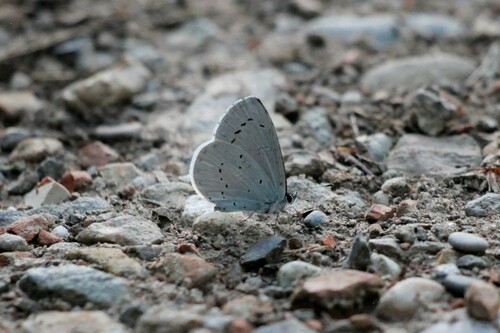
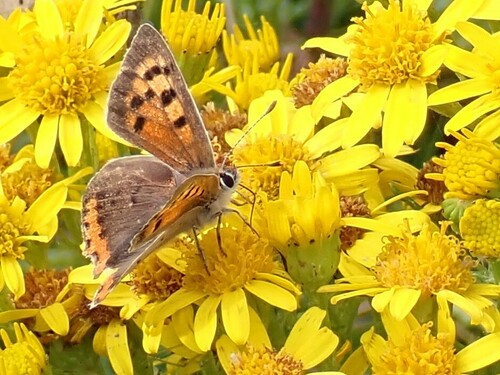
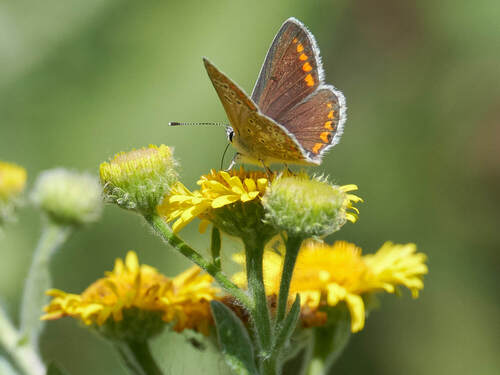
The closest relatives of the Pea Blue that you can see in London (family Lycaenidae, Gossamer-winged Butterflies) are Holly Blue (about 30%), Small Copper (about 20%) and Common Blue (about 20%), with each one's daily chance of a sighting.

Where does the Pea Blue sighting chance come from?

GBIF citizen-science records

It is estimated from how often the Pea Blue is recorded against all the insects logged in London (6 verified sightings), calibrated against known sighting rates. Figures are rounded to the nearest 10% because citizen-science data supports honest approximations, not decimals, and months with records from fewer than five people show "—". How it works.

← Back to London