


Completed
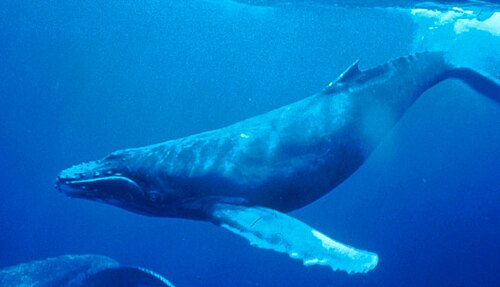


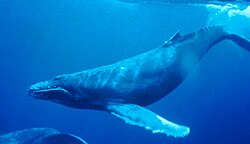
Humpback Whale
Megaptera novaeangliae
Silhouette: Chris huh · PhyloPic
- KingdomAnimalia (Animals)
- PhylumChordata (Chordates)
- ClassMammalia (Mammals)
- OrderCetacea
- FamilyBalaenopteridae (Rorquals)
- GenusMegaptera (Humpback Whales)
- SpeciesMegaptera novaeangliae (Humpback Whale)
In 3 days ~30% in a week ~50%
17 Verified sightings at iSimangaliso Wetland Park From 2019 to 2026
1,539 In all 32 parks
August Best month
☀️ Diurnal When it's spotted


Completed
About the Humpback Whale
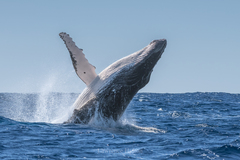
The humpback whale (Megaptera novaeangliae) is a species of baleen whale. It is a rorqual (a member of the family Balaenopteridae) and is the only species in the genus Megaptera. Adults range in length from 14–17 m (46–56 ft) and weigh up to 40 metric tons (44 short tons). The humpback has a distinctive body shape, with long pectoral fins and tubercles on its head. It is known for breaching and other distinctive surface behaviors, making it popular with whale watchers. Males produce a complex song that typically lasts from 4 to 33 minutes.
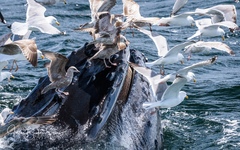
Found in oceans and seas around the world, humpback whales typically migrate between feeding areas towards the poles and breeding areas near the equator. Their diet consists mostly of krill and small fish, and they usually use bubbles to catch prey. They are polygynandrous breeders, with both sexes having multiple partners. Males will follow females and fight off rivals. Mothers give birth to calves in shallower water. Orcas are the main natural predators of humpback whales. The bodies of humpbacks host barnacles and whale lice.
Like other large whales, the humpback was a target for the whaling industry. Humans once hunted the species to the brink of extinction: its population fell to around 5,000 by the 1960s. Numbers have partially recovered to some 135,000 animals worldwide, but entanglement in fishing gear, collisions with ships, and noise pollution continue to affect the species. Wikipedia →
Sounds
Recording0:23
United States · 2022
© Charlotte Seid · iNaturalist · CC BY-NC 4.0
Recording0:42
United States · 2023
© sea-kangaroo · iNaturalist · CC BY-NC 4.0
Recording0:05
Ecuador · 2026
© Alaric Aguilar · iNaturalist · CC BY-NC 4.0
Recent sightings of Humpback Whale in iSimangaliso Wetland Park
LIVEiNaturalistGlobal Distribution
Parks Where Found
Cities Where Found
| # | City | Country | Daily sighting probability |
|---|---|---|---|
| 1 | Sydney | 🇦🇺 Australia | |
| 2 | San Francisco | 🇺🇸 United States | |
| 3 | Montreal | 🇨🇦 Canada | |
| 4 | Cape Town | 🇿🇦 South Africa | |
| 5 | Los Angeles | 🇺🇸 United States |
Zoos & Centres Where Found
| # | Zoo / Centre | Country | |
|---|---|---|---|
| 1 | Sea World | 🇦🇺 Australia |
Closest Relatives at iSimangaliso Wetland Park


Before you go
What are the chances of seeing a Humpback Whale in iSimangaliso Wetland Park?
With luck
About 10% of wildlife watchers report a Humpback Whale sighting in iSimangaliso Wetland Park on a given day, based on 17 verified sightings from GBIF citizen-science data from 2019 to 2026. It is the 26th most-seen of the 34 mammals we can rate there. Over three days the chance rises to about 30%, and over a week to about 50%, if each day is a fresh chance.
When is the best time to see a Humpback Whale in iSimangaliso Wetland Park?
August and September
In those months about 30% of wildlife watchers report a Humpback Whale in iSimangaliso Wetland Park on a given day, against under 5% in October and December–June, the lowest months. Those are among iSimangaliso Wetland Park's driest months, with about 40 mm of rain a month against 130 mm in February.
What time of day is best to see a Humpback Whale?
Between 11 am and 2 pm
Across all the parks we cover, that three-hour window holds the most Humpback Whale sightings with a recorded time, and about 9 in 10 of them come between 6 am and 6 pm: it is a daytime animal.
Is iSimangaliso Wetland Park the best place to see a Humpback Whale?
23rd of 32
Of the 32 parks where we can rate Humpback Whale sightings, iSimangaliso Wetland Park ranks 23rd at about 10%. The best odds are in Kenai Fjords National Park (United States, about 80%), Great Bear Rainforest (Canada, about 50%) and Marino Ballena National Park (Costa Rica, about 40%). All parks ranked.
Where does the Humpback Whale sighting chance come from?
GBIF citizen-science records
It is estimated from how often the Humpback Whale is recorded against all the mammals logged in iSimangaliso Wetland Park (17 verified sightings from 2019 to 2026), calibrated against known sighting rates. Figures are rounded to the nearest 10% because citizen-science data supports honest approximations, not decimals, and months with records from fewer than five people show "—". How it works.
