Tawny Pipit

Tawny Pipit

Anthus campestris

Silhouette: Susan Murphy (original photograph), T. Michael Keesey (vectorization) · PhyloPic

LCLeast ConcernNTVUENCR
Daily sighting probability <5% · Rare
at Ordesa y Monte Perdido National Park

In 3 days ~10% in a week ~30%

27 Verified sightings at Ordesa y Monte Perdido National Park From 2019 to 2026
1,027 In all 19 parks
June Best month
☀️ Diurnal When it's spotted

About the Tawny Pipit

The tawny pipit (Anthus campestris) is a medium-large passerine bird which breeds in much of the central Palearctic from northwest Africa and Portugal to Central Siberia and on to Inner Mongolia. It is a migrant moving in winter to tropical Africa and the Indian subcontinent.

The tawny pipit was formally described in 1758 by the Swedish naturalist Carl Linnaeus in the tenth edition of his Systema Naturae. He placed it with the larks and pipits in the genus Alauda and coined the binomial name Alauda campestris. Linnaeus specified the type locality as Europe but this has been restricted to Sweden. The specific epithet campestris is Latin meaning "of the fields", from campus meaning "field". The tawny pipit is now one of over 40 species placed in the genus Anthus that was introduced in 1805 by German naturalist Johann Matthäus Bechstein. The species is considered to be monotypic: no subspecies are recognised.

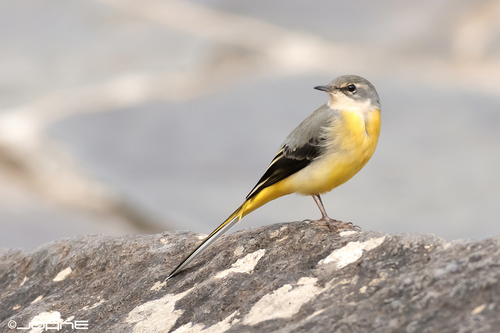
This is a large pipit, 16 centimetres (6.3 in) long with wing-span 25–28 centimetres (9.8–11.0 in), but is an undistinguished looking species on the ground, mainly sandy brown above and pale below. It is very similar to Richard's pipit, but is slightly... Wikipedia →


Sounds

Call0:17

India · 2026

© Lakshmi Ravishankar · XC1153855 · CC BY-NC-SA 4.0

Song0:11

Sweden · 2024

© Lars Edenius · XC911878 · CC BY-NC-SA 4.0

Alarm call0:32

Croatia · 2021

© Jarek Matusiak · XC668718 · CC BY-NC-ND 4.0

Global Distribution

Parks Where Found

# Park Country Daily sighting probability
1 Cévennes National Park 🇫🇷 France
~10%
2 Kiskunság National Park 🇭🇺 Hungary
~10%
3 Sierra Nevada National Park 🇪🇸 Spain
~10%
4 Camargue 🇫🇷 France
~10%
5 Ranthambore National Park 🇮🇳 India
~10%
6 Awash National Park 🇪🇹 Ethiopia
<5%
7 Ordesa y Monte Perdido National Park 🇪🇸 Spain
<5%
8 Sierra de Guadarrama National Park 🇪🇸 Spain
<5%
9 Keoladeo National Park 🇮🇳 India
<5%
10 Hortobágy National Park 🇭🇺 Hungary
<5%
11 Satpura National Park 🇮🇳 India
<5%
12 Jim Corbett National Park 🇮🇳 India
<5%
13 Biebrza National Park 🇵🇱 Poland
<5%
14 Kanha National Park 🇮🇳 India
<5%
15 Bandhavgarh National Park 🇮🇳 India
<5%
16 Chitwan National Park 🇳🇵 Nepal
<5%
17 Doñana National Park 🇪🇸 Spain
<5%
18 Pyrénées National Park 🇫🇷 France
<5%
19 Monfragüe National Park 🇪🇸 Spain
<5%

Cities Where Found

# City Country Daily sighting probability
1 Vasai-Virar 🇮🇳 India
~10%
2 Lahore 🇵🇰 Pakistan
~10%
3 Nashik 🇮🇳 India
<5%
4 Kalyan-Dombivli 🇮🇳 India
<5%
5 Abu Dhabi 🇦🇪 United Arab Emirates
<5%
6 Tel Aviv 🇮🇱 Israel
<5%
7 Doha 🇶🇦 Qatar
<5%
8 Beirut 🇱🇧 Lebanon
<5%
9 Pune 🇮🇳 India
<5%
10 Ramallah 🇵🇸 Palestine
<5%

Before you go

What are the chances of seeing a Tawny Pipit in Ordesa y Monte Perdido National Park?

Rare

Under 5% of wildlife watchers report a Tawny Pipit sighting in Ordesa y Monte Perdido National Park on a given day, based on 27 verified sightings from GBIF citizen-science data from 2019 to 2026. It is the 80th most-seen of the 105 birds we can rate there. Over three days the chance rises to about 10%, and over a week to about 30%, if each day is a fresh chance.

When is the best time to see a Tawny Pipit in Ordesa y Monte Perdido National Park?

May to July

In those months about 10% of wildlife watchers report a Tawny Pipit in Ordesa y Monte Perdido National Park on a given day, against under 5% in August to April, the lowest months.

What time of day is best to see a Tawny Pipit?

Between 8 and 11 am

Across all the parks we cover, that three-hour window holds the most Tawny Pipit sightings with a recorded time, and about 9 in 10 of them come between 6 am and 6 pm: it is a daytime animal.

Where does the Tawny Pipit sighting chance come from?

GBIF citizen-science records

It is estimated from how often the Tawny Pipit is recorded against all the birds logged in Ordesa y Monte Perdido National Park (27 verified sightings from 2019 to 2026), calibrated against known sighting rates. Figures are rounded to the nearest 10% because citizen-science data supports honest approximations, not decimals, and months with records from fewer than five people show "—". How it works.

← Back to Ordesa y Monte Perdido National Park