Squacco Heron

Squacco Heron

Ardeola ralloides

Silhouette: Andy Wilson · PhyloPic

LCLeast ConcernNTVUENCR
Daily sighting probability <5% · Rare
at Sierra de Guadarrama National Park

In 3 days <5% in a week ~10%

52 Verified sightings at Sierra de Guadarrama National Park From 2019 to 2026
7,901 In all 45 parks
August Best month
☀️ Diurnal When it's spotted

About the Squacco Heron

The squacco heron (Ardeola ralloides) is a small heron, 44–47 cm (17+1⁄2–18+1⁄2 in) long, of which the body is 20–23 cm (8–9 in), with 80–92 cm (31+1⁄2–36 in) wingspan. It is of Old World origins, breeding in southern Europe and the Greater Middle East.

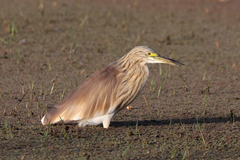
The squacco heron is a migrant, wintering in Africa. It is rare north of its breeding range. The species has been recorded in Fernando de Noronha islands, and more rarely in mainland South America, as a vagrant. This is a stocky species with a short neck, short thick bill and buff-brown back. In summer, adults have long neck feathers. Its appearance is transformed in flight, when it looks very white due to the colour of the wings.

The squacco heron's breeding habitat is marshy wetlands in warm countries. The birds nest in small colonies, often with other wading birds, usually on platforms of sticks in trees or shrubs. Three to four eggs are laid. They feed on fish, frogs and insects. The squacco heron is a host of the Acanthocephalan intestinal parasite Ardeirhynchus spiralis.

The English common name squacco comes via Francis Willughby (c. 1672) quoting a local Italian name sguacco. The current spelling... Wikipedia →

Sounds

Call0:10

Uganda · 2025

© Bernard BOUSQUET · XC1053361 · CC BY-NC-SA 4.0

Flight call0:12

Oman · 2024

© Stanislas Wroza · XC960178 · CC BY-NC-SA 4.0

Call0:14

Spain · 2022

© Corentin Rivière · XC839419 · CC BY-NC-SA 4.0

Global Distribution

Parks Where Found

# Park Country Daily sighting probability
1 Ankarafantsika National Park 🇲🇬 Madagascar
~50%
2 Amboseli National Park 🇰🇪 Kenya
~50%
3 Chobe National Park 🇧🇼 Botswana
~50%
4 Moremi Game Reserve 🇧🇼 Botswana
~40%
5 Akagera National Park 🇷🇼 Rwanda
~40%
6 Queen Elizabeth National Park 🇺🇬 Uganda
~40%
7 Liwonde National Park 🇲🇼 Malawi
~30%
8 Lower Zambezi National Park 🇿🇲 Zambia
~30%
9 Hortobágy National Park 🇭🇺 Hungary
~30%
10 uMkhuze Game Reserve 🇿🇦 South Africa
~30%
11 Murchison Falls National Park 🇺🇬 Uganda
~30%
12 Mana Pools National Park 🇿🇼 Zimbabwe
~20%
13 iSimangaliso Wetland Park 🇿🇦 South Africa
~20%
14 Kafue National Park 🇿🇲 Zambia
~20%
15 Niokolo-Koba National Park 🇸🇳 Senegal
~20%
16 Doñana National Park 🇪🇸 Spain
~20%
17 Camargue 🇫🇷 France
~20%
18 Gonarezhou National Park 🇿🇼 Zimbabwe
~20%
19 Ngorongoro Conservation Area 🇹🇿 Tanzania
~10%
20 Kidepo Valley National Park 🇺🇬 Uganda
~10%
21 Mikumi National Park 🇹🇿 Tanzania
~10%
22 Lake Nakuru National Park 🇰🇪 Kenya
~10%
23 Tarangire National Park 🇹🇿 Tanzania
~10%
24 South Luangwa National Park 🇿🇲 Zambia
~10%
25 Lake Mburo National Park 🇺🇬 Uganda
~10%
26 Virunga National Park 🇨🇩 Democratic Republic of the Congo
~10%
27 Fertő-Hanság National Park 🇭🇺 Hungary
~10%
28 Kiskunság National Park 🇭🇺 Hungary
~10%
29 Kruger National Park 🇿🇦 South Africa
~10%
30 Monfragüe National Park 🇪🇸 Spain
~10%
31 Tsavo West National Park 🇰🇪 Kenya
~10%
32 Hwange National Park 🇿🇼 Zimbabwe
<5%
33 Lake Manyara National Park 🇹🇿 Tanzania
<5%
34 Nairobi National Park 🇰🇪 Kenya
<5%
35 Pilanesberg National Park 🇿🇦 South Africa
<5%
36 Arusha National Park 🇹🇿 Tanzania
<5%
37 Gorongosa National Park 🇲🇿 Mozambique
<5%
38 Samburu National Reserve 🇰🇪 Kenya
<5%
39 Masai Mara National Reserve 🇰🇪 Kenya
<5%
40 Bavarian Forest National Park 🇩🇪 Germany
<5%
41 Sierra de Guadarrama National Park 🇪🇸 Spain
<5%
42 Serengeti National Park 🇹🇿 Tanzania
<5%
43 Tsavo East National Park 🇰🇪 Kenya
<5%
44 Garden Route National Park 🇿🇦 South Africa
<5%
45 Table Mountain National Park 🇿🇦 South Africa
<5%

Cities Where Found

# City Country Daily sighting probability
1 Antananarivo 🇲🇬 Madagascar
~80%
2 Ouagadougou 🇧🇫 Burkina Faso
~70%
3 Luxor 🇪🇬 Egypt
~60%
4 Cairo 🇪🇬 Egypt
~50%
5 Riyadh 🇸🇦 Saudi Arabia
~50%
6 Manama 🇧🇭 Bahrain
~40%
7 Dakar 🇸🇳 Senegal
~30%
8 Serrekunda 🇬🇲 Gambia
~30%
9 Accra 🇬🇭 Ghana
~30%
10 N'Djamena 🇹🇩 Chad
~30%

Zoos & Centres Where Found

# Zoo / Centre Country
1 Prague Zoo 🇨🇿 Czechia In captivity
2 Paris Zoological Park 🇫🇷 France In captivity
3 Walsrode World Bird Park 🇩🇪 Germany In captivity
4 Parc des oiseaux 🇫🇷 France In captivity
5 Aquarium du palais de la Porte Dorée 🇫🇷 France In captivity
6 Royev Ruchey Zoo 🇷🇺 Russia In captivity
7 Oasi Naturalistica di Sant'Alessio 🇮🇹 Italy In captivity
8 L'Oceanogràfic 🇪🇸 Spain In captivity
9 Rákosův pavilon 🇨🇿 Czechia In captivity
10 Velemlokárium 🇨🇿 Czechia In captivity

Before you go

What are the chances of seeing a Squacco Heron in Sierra de Guadarrama National Park?

Rare

Under 5% of wildlife watchers report a Squacco Heron sighting in Sierra de Guadarrama National Park on a given day, based on 52 verified sightings from GBIF citizen-science data from 2019 to 2026. It is the 155th most-seen of the 202 birds we can rate there. Over three days the chance rises to under 5%, and over a week to about 10%, if each day is a fresh chance.

When is the best time to see a Squacco Heron in Sierra de Guadarrama National Park?

August

In that month about 10% of wildlife watchers report a Squacco Heron in Sierra de Guadarrama National Park on a given day, against under 5% in September to July, the lowest months. That is one of Sierra de Guadarrama National Park's driest months, with about 20 mm of rain against 110 mm in November.

What time of day is best to see a Squacco Heron?

Between 7 and 10 am

Across all the parks we cover, that three-hour window holds the most Squacco Heron sightings with a recorded time, and about 8 in 10 of them come between 6 am and 6 pm: it is a daytime animal.

Which relatives of the Squacco Heron live in Sierra de Guadarrama National Park?

Same family: Ardeidae

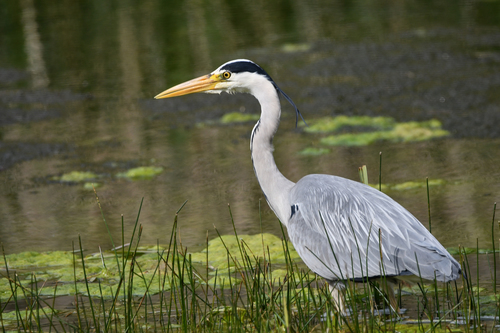
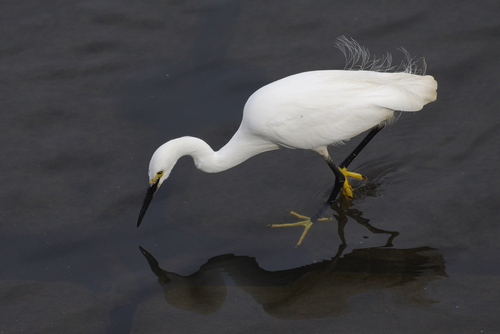
The closest relatives of the Squacco Heron that you can see in Sierra de Guadarrama National Park (family Ardeidae, Herons, Egrets, and Bitterns) are Grey Heron (about 30%), Little Egret (about 20%) and Great Egret (about 10%), with each one's daily chance of a sighting.

Where does the Squacco Heron sighting chance come from?

GBIF citizen-science records

It is estimated from how often the Squacco Heron is recorded against all the birds logged in Sierra de Guadarrama National Park (52 verified sightings from 2019 to 2026), calibrated against known sighting rates. Figures are rounded to the nearest 10% because citizen-science data supports honest approximations, not decimals, and months with records from fewer than five people show "—". How it works.

← Back to Sierra de Guadarrama National Park