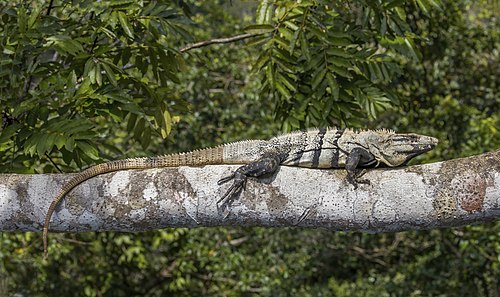

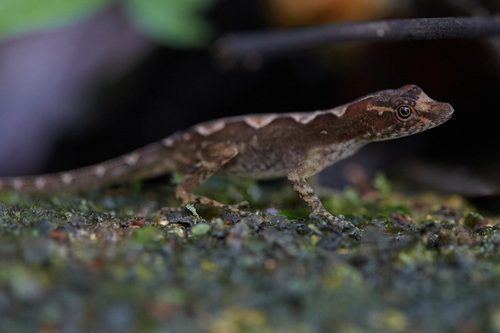
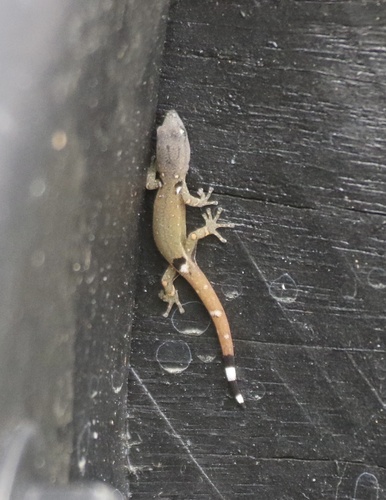
Black Spiny-tailed Iguana

Black Spiny-tailed Iguana

Ctenosaura similis

Silhouette: SeismicShrimp · PhyloPic

LCLeast ConcernNTVUENCR
Daily sighting probability ~10% · With luck
at Tenorio Volcano National Park

In 3 days ~30% in a week ~60%

6 Verified sightings at Tenorio Volcano National Park From 2019 to 2026
5,740 In all 25 parks
January Best month
☀️ Diurnal When it's spotted

About the Black Spiny-tailed Iguana

Ctenosaura similis, commonly known as the black iguana or black spiny-tailed iguana, is an iguanid lizard native to Mexico and Central America. It has been reported in some Colombian islands in the Caribbean Sea and Pacific Ocean, and has been introduced to the United States in the state of Florida. The largest species in the genus Ctenosaura, it is commonly found in areas such as grasslands and forests.

C. similis was first described by British zoologist John Edward Gray in 1831. The generic name—Ctenosaura—is derived from two Greek words: ctenos (Κτενός), meaning "comb" (referring to the comblike spines on the lizard's back and tail), and saura (σαύρα), meaning "lizard". The specific name—similis—is a Latin word meaning "similar to", a common description found in Linnaean taxonomy when referring to a new taxon.

The black spiny-tailed iguana is native to southern Mexico and Central America, ranging from the Isthmus of Tehuantepec southward to Panama, occurring at sea level to ca. 1,320 meters elevation, but it is absent from interior highlands. Its distribution is irregular and discontinuous on the Atlantic versant where it ranges through portions... Wikipedia →

Global Distribution

Parks Where Found

# Park Country Daily sighting probability
1 Rincón de la Vieja National Park 🇨🇷 Costa Rica
~90%
2 Manuel Antonio National Park 🇨🇷 Costa Rica
~90%
3 Palo Verde National Park 🇨🇷 Costa Rica
~90%
4 Ostional Wildlife Refuge 🇨🇷 Costa Rica
~90%
5 Cabo Blanco Absolute Nature Reserve 🇨🇷 Costa Rica
~90%
6 Santa Rosa National Park 🇨🇷 Costa Rica
~80%
7 Arrecifes de Cozumel National Park 🇲🇽 Mexico
~80%
8 Las Baulas Marine National Park 🇨🇷 Costa Rica
~80%
9 Carara National Park 🇨🇷 Costa Rica
~80%
10 Coiba National Park 🇵🇦 Panama
~70%
11 Marino Ballena National Park 🇨🇷 Costa Rica
~70%
12 Ría Lagartos Biosphere Reserve 🇲🇽 Mexico
~60%
13 Celestún Biosphere Reserve 🇲🇽 Mexico
~50%
14 Sian Ka'an Biosphere Reserve 🇲🇽 Mexico
~50%
15 Masaya Volcano National Park 🇳🇮 Nicaragua
~40%
16 Soberanía National Park 🇵🇦 Panama
~40%
17 Corcovado National Park 🇨🇷 Costa Rica
~40%
18 Biotopo Cerro Cahuí 🇬🇹 Guatemala
~40%
19 Tapantí-Macizo de la Muerte National Park 🇨🇷 Costa Rica
~10%
20 Tenorio Volcano National Park 🇨🇷 Costa Rica
~10%
21 Calakmul Biosphere Reserve 🇲🇽 Mexico
~10%
22 Monteverde Cloud Forest Reserve 🇨🇷 Costa Rica
~10%
23 Los Quetzales National Park 🇨🇷 Costa Rica
~10%
24 Parque Natural Metropolitano 🇵🇦 Panama
~10%
25 La Amistad International Park (Panama) 🇵🇦 Panama
<5%

Cities Where Found

# City Country Daily sighting probability
1 San Pedro Sula 🇭🇳 Honduras
~90%
2 Managua 🇳🇮 Nicaragua
~40%
3 Tegucigalpa 🇭🇳 Honduras
~30%
4 Panama City 🇵🇦 Panama
~20%
5 San Salvador 🇸🇻 El Salvador
~20%
6 San José 🇨🇷 Costa Rica
~20%
7 Miami 🇺🇸 United States
~20%

Zoos & Centres Where Found

# Zoo / Centre Country
1 Barcelona Zoo 🇪🇸 Spain In captivity
2 Columbus Zoo and Aquarium 🇺🇸 United States In captivity
3 Detroit Zoo 🇺🇸 United States In captivity
4 Xcaret 🇲🇽 Mexico In captivity
5 Wrocław Zoological Garden 🇵🇱 Poland In captivity
6 Great Plains Zoo 🇺🇸 United States In captivity
7 Zoo d'Amnéville 🇫🇷 France In captivity
8 London Zoo 🇬🇧 United Kingdom In captivity
9 Aquarama Barcelona 🇪🇸 Spain In captivity
10 Buin Zoo 🇨🇱 Chile In captivity
11 Alligator Adventure 🇺🇸 United States In captivity
12 ZooAmerica 🇺🇸 United States In captivity
13 Papiliorama 🇨🇭 Switzerland In captivity
14 Tiergarten Ulm 🇩🇪 Germany In captivity
15 Africarium 🇵🇱 Poland In captivity
16 Dallas World Aquarium 🇺🇸 United States In captivity
17 Acuario Inbursa 🇲🇽 Mexico In captivity
18 Aquarium d'Amnéville 🇫🇷 France In captivity
19 Biouniverzoo 🇲🇽 Mexico In captivity
20 International Animal Rescue – Costa Rica 🇨🇷 Costa Rica In captivity
21 terrarium ogrodu zoologicznego we Wrocławiu 🇵🇱 Poland In captivity

Before you go

What are the chances of seeing a Black Spiny-tailed Iguana in Tenorio Volcano National Park?

With luck

About 10% of wildlife watchers report a Black Spiny-tailed Iguana sighting in Tenorio Volcano National Park on a given day, based on 6 verified sightings from GBIF citizen-science data from 2019 to 2026. It is the 34th most-seen of the 38 reptiles we can rate there. Over three days the chance rises to about 30%, and over a week to about 60%, if each day is a fresh chance.

When is the best time to see a Black Spiny-tailed Iguana in Tenorio Volcano National Park?

January and September

In those months about 30% of wildlife watchers report a Black Spiny-tailed Iguana in Tenorio Volcano National Park on a given day, against under 5% in February–April, June, August and October–December, the lowest months.

What time of day is best to see a Black Spiny-tailed Iguana?

Between 1 and 4 pm

Across all the parks we cover, that three-hour window holds the most Black Spiny-tailed Iguana sightings with a recorded time, and nearly all of them come between 6 am and 6 pm: it is a daytime animal.

Where does the Black Spiny-tailed Iguana sighting chance come from?

GBIF citizen-science records

It is estimated from how often the Black Spiny-tailed Iguana is recorded against all the reptiles logged in Tenorio Volcano National Park (6 verified sightings from 2019 to 2026), calibrated against known sighting rates. Figures are rounded to the nearest 10% because citizen-science data supports honest approximations, not decimals, and months with records from fewer than five people show "—". How it works.

← Back to Tenorio Volcano National Park