Meadow Argus
Daily sighting probability ~10% · With luck
at Blue Mountains National Park

In 3 days ~40% in a week ~70%

70 Verified sightings at Blue Mountains National Park From 2019 to 2026
323 In all 17 parks
April Best month
☀️ Diurnal When it's spotted

About the Meadow Argus

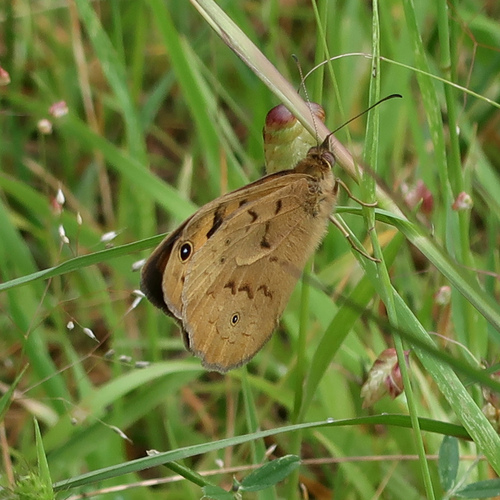
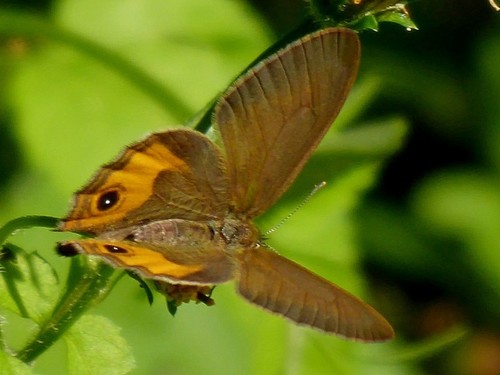
The meadow argus (Junonia villida) is a butterfly in the family Nymphalidae, commonly found in Australia and Nelsons Island. It is also known as Albin's Hampstead eye in the United Kingdom, where it has occurred only as an accidental import.

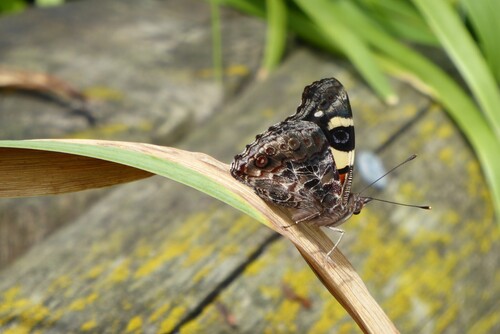
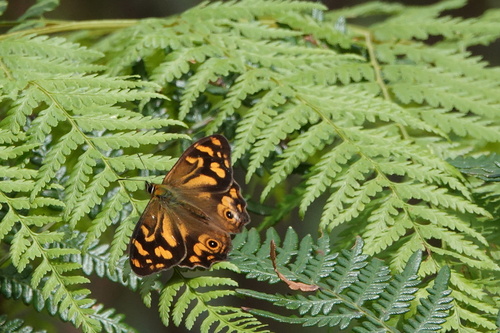
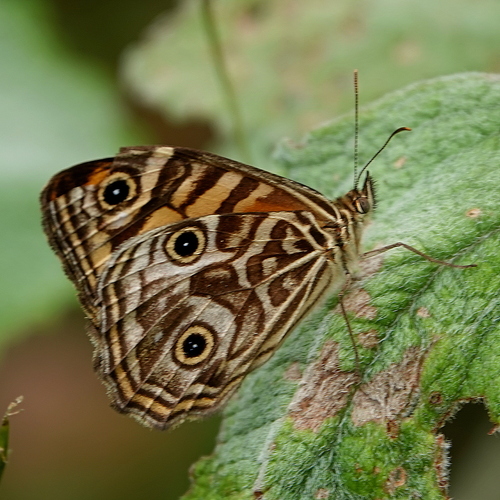
The meadow argus has two brownish wings, each covered with two distinctive black and blue eyespots as well as white and orange marks that appear on the edge of the wings. The eyespots are a defense mechanism that are not only used to frighten predators away, but also to confuse the predators into thinking that the eyespots are the target, allowing the butterfly to escape with only a small part of the wing being lost. The underside of the wings are mainly unmarked, except the lower part of the forewing has similar markings as the upperside. The wingspan measures 4 centimetres (1.6 in) in males and 4.3 centimetres (1.7) in females.

As the butterfly rests, it can sit in four different positions depending on the current situation. These positions include: If the sun is shining, the butterfly will open and relax its wings If danger approaches while in the sunlight the butterfly will open its wings further revealing eyespots on its... Wikipedia →

Global Distribution

Parks Where Found

# Park Country Daily sighting probability
1 Flinders Ranges National Park 🇦🇺 Australia
~50%
2 Hattah-Kulkyne National Park 🇦🇺 Australia
~40%
3 Kosciuszko National Park 🇦🇺 Australia
~20%
4 Cape Range 🇦🇺 Australia
~20%
5 Litchfield National Park 🇦🇺 Australia
~20%
6 Kakadu National Park 🇦🇺 Australia
~20%
7 Lamington National Park 🇦🇺 Australia
~20%
8 Royal National Park 🇦🇺 Australia
~20%
9 Uluru-Kata Tjuta National Park 🇦🇺 Australia
~20%
10 Grampians National Park 🇦🇺 Australia
~20%
11 Rottnest Island 🇦🇺 Australia
~10%
12 Blue Mountains National Park 🇦🇺 Australia
~10%
13 Noosa National Park 🇦🇺 Australia
~10%
14 Ningaloo Marine Park 🇦🇺 Australia
~10%
15 Booderee National Park 🇦🇺 Australia
~10%
16 Great Otway National Park 🇦🇺 Australia
~10%
17 Springbrook National Park 🇦🇺 Australia
~10%

Cities Where Found

# City Country Daily sighting probability
1 Brisbane 🇦🇺 Australia
~30%
2 Sydney 🇦🇺 Australia
~10%
3 Hobart 🇦🇺 Australia
~10%
4 Melbourne 🇦🇺 Australia
~10%
5 Perth 🇦🇺 Australia
~10%

Before you go

What are the chances of seeing a Meadow Argus in Blue Mountains National Park?

With luck

About 10% of wildlife watchers report a Meadow Argus sighting in Blue Mountains National Park on a given day, based on 70 verified sightings from GBIF citizen-science data from 2019 to 2026. It is the 33rd most-seen of the 789 insects we can rate there. Over three days the chance rises to about 40%, and over a week to about 70%, if each day is a fresh chance.

When is the best time to see a Meadow Argus in Blue Mountains National Park?

April

In that month about 30% of wildlife watchers report a Meadow Argus in Blue Mountains National Park on a given day, against under 5% in January and July, the lowest months.

What time of day is best to see a Meadow Argus?

Between 11 am and 2 pm

Across all the parks we cover, that three-hour window holds the most Meadow Argus sightings with a recorded time, and about 9 in 10 of them come between 6 am and 6 pm: it is a daytime animal.

Which relatives of the Meadow Argus live in Blue Mountains National Park?

Same family: Nymphalidae

The closest relatives of the Meadow Argus that you can see in Blue Mountains National Park (family Nymphalidae, Brush-footed Butterflies) are Swordgrass Brown (about 40%), Common Brown (about 30%) and Australian Painted Lady (about 30%), with each one's daily chance of a sighting.

Where does the Meadow Argus sighting chance come from?

GBIF citizen-science records

It is estimated from how often the Meadow Argus is recorded against all the insects logged in Blue Mountains National Park (70 verified sightings from 2019 to 2026), calibrated against known sighting rates. Figures are rounded to the nearest 10% because citizen-science data supports honest approximations, not decimals, and months with records from fewer than five people show "—". How it works.

← Back to Blue Mountains National Park