Nankeen Night-Heron

Nankeen Night-Heron

Nycticorax caledonicus

Silhouette: Ferran Sayol · PhyloPic

LCLeast ConcernNTVUENCR
Daily sighting probability ~10% · With luck
at Cape Range

In 3 days ~20% in a week ~40%

20 Verified sightings at Cape Range From 2019 to 2026
1,589 In all 15 parks
July Best month
☀️ Diurnal When it's spotted

About the Nankeen Night-Heron

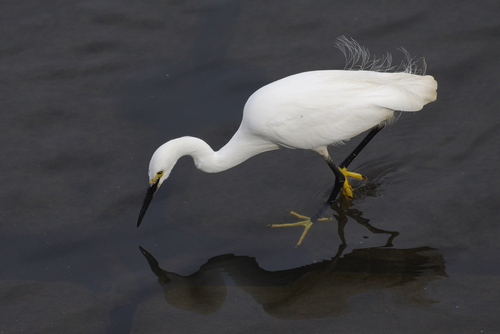
The nankeen night heron (Nycticorax caledonicus) is a heron that belongs to the genus Nycticorax and the family Ardeidae. Due to its distinctive reddish-brown colour, it is also commonly referred to as the rufous night heron. It is primarily nocturnal and is observed in a broad range of habitats, including forests, meadows, shores, reefs, marshes, grasslands, and swamps. The species is 55 to 65 cm (22 to 26 in) in length, with rich cinnamon upperparts and white underparts. The nankeen night heron has a stable population size, and is classified as a species of least concern by the International Union for Conservation of Nature (IUCN).

The nankeen night heron was formally described in 1789 by the German naturalist Johann Friedrich Gmelin in his revised and expanded edition of Carl Linnaeus's Systema Naturae. He placed it with herons, cranes and storks in the genus Ardea and coined the binomial name Ardea caledonica. Gmelin based his description on the "Caledonian night heron" that had been described in 1875 by the English ornithologist John Latham in his multi-volume work A General Synopsis of Birds. The heron had been observed in September 1774 on the island of New Caledonia... Wikipedia →

Sounds

Call0:09

Australia · 2026

© Marc Anderson · XC1179494 · CC BY-NC-ND 4.0

Begging call0:10

Malaysia · 2022

© Lim Ying Hien · XC762344 · CC BY-NC-ND 4.0

Flight call0:17

Philippines · 2014

© Stijn De Win / Birding2asia.com · XC175100 · CC BY-NC-SA 4.0

Global Distribution

Parks Where Found

# Park Country Daily sighting probability
1 Kakadu National Park 🇦🇺 Australia
~40%
2 Daintree National Park 🇦🇺 Australia
~20%
3 Tangkoko Nature Reserve 🇮🇩 Indonesia
~10%
4 Hattah-Kulkyne National Park 🇦🇺 Australia
~10%
5 Cape Range 🇦🇺 Australia
~10%
6 Ningaloo Marine Park 🇦🇺 Australia
~10%
7 Royal National Park 🇦🇺 Australia
~10%
8 Nitmiluk National Park 🇦🇺 Australia
<5%
9 Kinabatangan Wildlife Sanctuary 🇲🇾 Malaysia
<5%
10 Rottnest Island 🇦🇺 Australia
<5%
11 Grampians National Park 🇦🇺 Australia
<5%
12 Raja Ampat 🇮🇩 Indonesia
<5%
13 Danum Valley Conservation Area 🇲🇾 Malaysia
<5%
14 Great Otway National Park 🇦🇺 Australia
<5%
15 Blue Mountains National Park 🇦🇺 Australia
<5%

Cities Where Found

# City Country Daily sighting probability
1 Makassar 🇮🇩 Indonesia
~20%
2 Perth 🇦🇺 Australia
~10%
3 Manila 🇵🇭 Philippines
~10%
4 Denpasar 🇮🇩 Indonesia
~10%
5 Cebu City 🇵🇭 Philippines
~10%
6 Melbourne 🇦🇺 Australia
~10%
7 Brisbane 🇦🇺 Australia
<5%
8 Sydney 🇦🇺 Australia
<5%

Zoos & Centres Where Found

# Zoo / Centre Country
1 Prague Zoo 🇨🇿 Czechia In captivity
2 Tierpark Berlin 🇩🇪 Germany In captivity
3 Night Safari 🇸🇬 Singapore In captivity
4 Singapore Zoo 🇸🇬 Singapore In captivity
5 Lok Kawi Wildlife Park 🇲🇾 Malaysia In captivity
6 Perth Zoo 🇦🇺 Australia In captivity
7 Phillip Island Wildlife Park 🇦🇺 Australia In captivity
8 Bird Paradise 🇸🇬 Singapore In captivity
9 Rainforest Wild Asia 🇸🇬 Singapore In captivity
10 Hartley’s Crocodile Adventures 🇦🇺 Australia In captivity
11 Moonlit Sanctuary Wildlife Conservation Park 🇦🇺 Australia In captivity
12 River Wonders 🇸🇬 Singapore In captivity
13 Gorge Wildlife Park 🇦🇺 Australia In captivity
14 Albay Park and Wildlife 🇵🇭 Philippines In captivity
15 Dreamland Nature and Adventure Park 🇵🇭 Philippines In captivity
16 Featherdale Sydney Wildlife Park 🇦🇺 Australia In captivity
17 Rákosův pavilon 🇨🇿 Czechia In captivity
18 Velemlokárium 🇨🇿 Czechia In captivity
19 Ranger Red’s Zoo & Conservation Park 🇦🇺 Australia In captivity

Before you go

What are the chances of seeing a Nankeen Night-Heron in Cape Range?

With luck

About 10% of wildlife watchers report a Nankeen Night-Heron sighting in Cape Range on a given day, based on 20 verified sightings from GBIF citizen-science data from 2019 to 2026. It is the 63rd most-seen of the 84 birds we can rate there. Over three days the chance rises to about 20%, and over a week to about 40%, if each day is a fresh chance.

When is the best time to see a Nankeen Night-Heron in Cape Range?

March–April, July, September–October and December

In those months about 10% of wildlife watchers report a Nankeen Night-Heron in Cape Range on a given day, against under 5% in January, May–June, August and November, the lowest months. February has too few records to rate.

What time of day is best to see a Nankeen Night-Heron?

Between 10 am and 1 pm

Across all the parks we cover, that three-hour window holds the most Nankeen Night-Heron sightings with a recorded time, and about 8 in 10 of them come between 6 am and 6 pm: it is a daytime animal.

Is Cape Range the best place to see a Nankeen Night-Heron?

5th of 15

Of the 15 parks where we can rate Nankeen Night-Heron sightings, Cape Range ranks 5th at about 10%. The best odds are in Kakadu National Park (Australia, about 40%), Daintree National Park (Australia, about 20%) and Tangkoko Nature Reserve (Indonesia, about 10%).

Which relatives of the Nankeen Night-Heron live in Cape Range?

Same family: Ardeidae

The closest relatives of the Nankeen Night-Heron that you can see in Cape Range (family Ardeidae, Herons, Egrets, and Bitterns) are Pacific Reef Heron (about 70%), Great Egret (about 50%) and White-faced Heron (about 40%), with each one's daily chance of a sighting.

Where does the Nankeen Night-Heron sighting chance come from?

GBIF citizen-science records

It is estimated from how often the Nankeen Night-Heron is recorded against all the birds logged in Cape Range (20 verified sightings from 2019 to 2026), calibrated against known sighting rates. Figures are rounded to the nearest 10% because citizen-science data supports honest approximations, not decimals, and months with records from fewer than five people show "—". How it works.

← Back to Cape Range