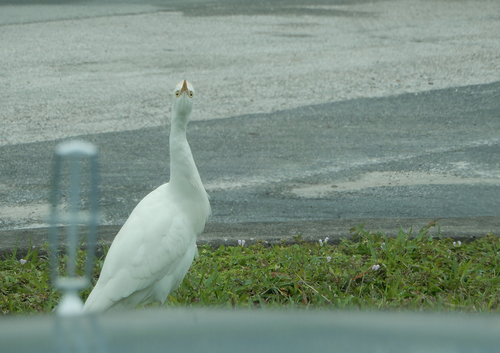
Cocoi Heron

Cocoi Heron

Ardea cocoi

Silhouette: Giles Laurent · PhyloPic

LCLeast ConcernNTVUENCR
Daily sighting probability ~30% · Possible
at Barranquilla

In 3 days ~70% in a week ~90%

193 Verified sightings at Barranquilla
8,714 In all 26 parks From 2019 to 2026
January Best month
☀️ Diurnal When it's spotted

About the Cocoi Heron

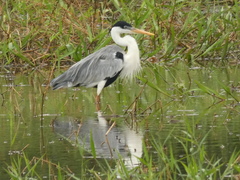
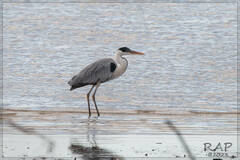
The cocoi heron (Ardea cocoi) is a species of long-legged wading bird in the heron family Ardeidae found across South America. It has predominantly pale grey plumage with a darker grey crest. A carnivore, it hunts fish and crustaceans in shallow water.

The cocoi heron was originally described by Carl Linnaeus in his 1766 12th edition of Systema Naturae, The origin of its species name is unknown, but may be related to the common name in Chile cuca, which in turn denotes the bird's call note. It is more widely known in South America as garza mora or "black heron".

The cocoi heron forms a superspecies with the similar Afro-Eurasian grey heron and North and Central American great blue heron, with all of these species showing similar skeletal morphology. The cocoi heron is the largest of the South American heron species and measures 95–130 cm (37.5–51 in) in length, although body sizes vary regionally; with southern individuals probably being the largest. Adult weight of both males and females can variously range from 1.14 to 3.2 kg (2.5 to 7 lb). In the adult, wing length has been recorded as 421–455 mm (16.5–18 in), tail length 161–173 mm... Wikipedia →

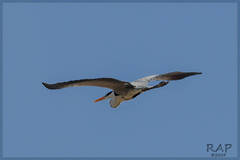
Sounds

Call0:04

Argentina · 2024

© Faustino Hollmann · XC1176819 · CC BY-NC-SA 4.0

Flight call0:30

Argentina · 2021

© Franco Vushurovich · XC667282 · CC BY-NC-SA 4.0

Recording0:05

Colombia · 2020

© Javier Ricardo Salamanca-Reyes · XC580864 · CC BY-NC-SA 4.0

Global Distribution

Parks Where Found

# Park Country Daily sighting probability
1 Parque Estadual Encontro das Águas 🇧🇷 Brazil
~90%
2 Cuyabeno Wildlife Reserve 🇪🇨 Ecuador
~50%
3 Iberá National Park 🇦🇷 Argentina
~50%
4 Anavilhanas National Park 🇧🇷 Brazil
~40%
5 El Impenetrable National Park 🇦🇷 Argentina
~30%
6 Yasuní National Park 🇪🇨 Ecuador
~30%
7 Tambopata National Reserve 🇵🇪 Peru
~20%
8 Manu National Park 🇵🇪 Peru
~20%
9 Amacayacu National Natural Park 🇨🇴 Colombia
~10%
10 Sierra de la Macarena National Park 🇨🇴 Colombia
~10%
11 El Palmar National Park 🇦🇷 Argentina
~10%
12 Machalilla National Park 🇪🇨 Ecuador
~10%
13 Caroni Swamp 🇹🇹 Trinidad and Tobago
~10%
14 Tijuca National Park 🇧🇷 Brazil
~10%
15 Utría National Natural Park 🇨🇴 Colombia
~10%
16 Iguaçu National Park 🇧🇷 Brazil
<5%
17 Iguazú National Park 🇦🇷 Argentina
<5%
18 Soberanía National Park 🇵🇦 Panama
<5%
19 Península Valdés 🇦🇷 Argentina
<5%
20 Darién National Park 🇵🇦 Panama
<5%
21 Serra da Canastra National Park 🇧🇷 Brazil
<5%
22 Chagres National Park 🇵🇦 Panama
<5%
23 Serra dos Órgãos National Park 🇧🇷 Brazil
<5%
24 Tayrona National Natural Park 🇨🇴 Colombia
<5%
25 Nahuel Huapi National Park 🇦🇷 Argentina
<5%
26 Parque Natural Metropolitano 🇵🇦 Panama
<5%

Cities Where Found

# City Country Daily sighting probability
1 Barranquilla 🇨🇴 Colombia
~30%
2 Buenos Aires 🇦🇷 Argentina
~30%
3 Santa Cruz de la Sierra 🇧🇴 Bolivia
~30%
4 Guayaquil 🇪🇨 Ecuador
~20%
5 Rio de Janeiro 🇧🇷 Brazil
~20%
6 Montevideo 🇺🇾 Uruguay
~20%
7 São Paulo 🇧🇷 Brazil
~10%
8 Panama City 🇵🇦 Panama
~10%
9 Asuncion 🇵🇾 Paraguay
~10%
10 Maracaibo 🇻🇪 Venezuela
~10%

Zoos & Centres Where Found

# Zoo / Centre Country
1 Parque das Aves 🇧🇷 Brazil In captivity
2 Parque Temático Hacienda Nápoles 🇨🇴 Colombia In captivity
3 São Paulo Zoo 🇧🇷 Brazil In captivity
4 Temaikén 🇦🇷 Argentina In captivity
5 Bioparque Educativo Quillón 🇨🇱 Chile In captivity
6 Aviario Nacional de Colombia 🇨🇴 Colombia In captivity
7 Buin Zoo 🇨🇱 Chile In captivity
8 Mangal das Garças 🇧🇷 Brazil In captivity

Before you go

What are the chances of seeing a Cocoi Heron in Barranquilla?

Possible

About 30% of wildlife watchers report a Cocoi Heron sighting in Barranquilla on a given day, based on 193 verified sightings from GBIF citizen-science data. It is the 30th most-seen of the 153 birds we can rate there. Over three days the chance rises to about 70%, and over a week to about 90%, if each day is a fresh chance.

When is the best time to see a Cocoi Heron in Barranquilla?

January

In that month about 60% of wildlife watchers report a Cocoi Heron in Barranquilla on a given day, against about 10% in April, August and November, the lowest months. That is one of Barranquilla's driest months, with almost no rain against 220 mm in October.

What time of day is best to see a Cocoi Heron?

Between 10 am and 1 pm

Across all the parks we cover, that three-hour window holds the most Cocoi Heron sightings with a recorded time, and about 9 in 10 of them come between 6 am and 6 pm: it is a daytime animal.

Is Barranquilla the best place to see a Cocoi Heron?

Yes

Of the 30 cities where we can rate Cocoi Heron sightings, Barranquilla has the highest daily chance: about 30%. Next come Buenos Aires (Argentina, about 30%) and Santa Cruz de la Sierra (Bolivia, about 30%).

Which relatives of the Cocoi Heron live in Barranquilla?

Same genus: Ardea

The closest relatives of the Cocoi Heron that you can see in Barranquilla (genus Ardea, Great Herons and Egrets) are Great Egret (about 70%) and Great Blue Heron (about 10%), with each one's daily chance of a sighting.

Where does the Cocoi Heron sighting chance come from?

GBIF citizen-science records

It is estimated from how often the Cocoi Heron is recorded against all the birds logged in Barranquilla (193 verified sightings), calibrated against known sighting rates. Figures are rounded to the nearest 10% because citizen-science data supports honest approximations, not decimals, and months with records from fewer than five people show "—". How it works.

← Back to Barranquilla